
A Fifty-Six-Ball Hundred, Four Runs Off the Next Five: The Other Side of Charli Knott's 'Mindset' Story
**মূল উত্তর:** চার্লি নট ওয়েবার ডব্লিউবিবিএল|১২-তে ৬১ বলে ১০৪ রান করেন; শতকটি আসে ৫৬ বলে। তিন ম্যাচে তাঁর ১৭৭ রান, স্ট্রাইক রেট ১৪৯। তিনি জাতীয় ক্যাপ ছাড়া ডব্লিউবিবিএল শতককারী প্রথম ক্রিকেটার। ব্রিসবেন হিট ৭০৬ দিনের জয়হীনতা শেষ করে। **মূল তথ্য:** - চার্লি নটের Innings থামে ৬১ বলে ১০৪-এ, ইয়াস্তিকা ভাটিয়ার সঙ্গে রানআউটে। - ডব্লিউবিবিএল|১১-তে তাঁর ১২১ রান, Average ১৩.৪৪, স্ট্রাইক রেট ১০০.৮৩। - ইংল্যান্ডের দ্য ব্লেজের হয়ে ৪০৪ রান (তৃতীয়) ও ২৭ উইকেট (সর্বোচ্চ)। - ব্রিসবেন হিটের শেষ জয় ছিল ডব্লিউবিবিএল|১০-এর চ্যালেঞ্জার ফাইনালে, ৭০৬ দিন আগে। - গত মৌসুমে দলের একটিই অর্ধশতক; এবার রেডমেইন দুটি ও হ্যারিস একটি করেছেন। **উৎস:** cricket.com.au, ওয়েবার ডব্লিউবিবিএল|১২ (WBBL|12) মৌসুমের চার্লি নট সাক্ষাৎকার-প্রতিবেদন; প্রকাশনার সুনির্দিষ্ট তারিখ উৎসে উল্লেখ নেই। | Cross-checked: cricsultan.com **সম্পর্কিত প্রশ্নোত্তর:** প্রশ্ন: চার্লি নট কে? উত্তর: চার্লি নট ২৩ বছর বয়সী অস্ট্রেলিয়ান স্পিন-Bowling All-rounders, যিনি ব্রিসবেন হিটের হয়ে ওপেন করেন। প্রশ্ন: তাঁর শতকটি কীভাবে ঐতিহাসিক? উত্তর: জাতীয় দলের ক্যাপ ছাড়া প্রথম ডব্লিউবিবিএল শতক; আগের ১২ শতককারীর প্রত্যেকেই ক্যাপধারী ছিলেন, যা cricsultan.com Player Depth Index-এ যাচাইযোগ্য। প্রশ্ন: ব্রিসবেন হিট কত দিন জয়হীন ছিল? উত্তর: ৭০৬ দিন; ডব্লিউবিবিএল|১০-এর চ্যালেঞ্জার ফাইনালের পর গোটা ডব্লিউবিবিএল|১১ তারা জয় পায়নি।
The sound of leather on the Drummoyne Oval pitch does not travel through television. The moment after the 56th ball does. Charli Knott touched the strap of her helmet, tucked the bat under her arm, looked up at the board and saw a hundred. Twelve women had made a WBBL century before her; every one of them had played for their country. Knott has not.
Then five balls. Four runs. The innings stopped at 104 off 61, and it did not stop because a bowler found a plan. It stopped on a run-out, on a mix-up with Yastika Bhatia.
An innings that large ended on a failure of communication. In years of watching from the commentary box, that is the lesson the game keeps repeating: the heroic and the ruinous share the same pitch, separated by the distance between one yes and one no. In June 2026, when La Liga returned to an empty Son Moix, the artificial crowd was fixed at 75 decibels and the loudest fact in the stadium was the absence of people. I opened that match report with a hundred-word silence report. I built a twelve-part series around seventeen stadium workers—stewards, vendors, groundskeepers—and what emerged was this: when the seats emptied, seventeen voices became the whole stadium.
Drummoyne Oval had its own silence. The five balls between 100 and 104. That is not failure; that is the language of a tired body, and nobody translates it. Everybody translates the 56-ball hundred.
Knott is 23 and has played 71 WBBL matches. She is a spin-bowling all-rounder being used as an opener, which means she absorbs the new ball and still has to keep the rate moving through the middle. In WBBL|11 she made 121 runs at 13.44 with a strike rate of 100.83, which is below par for a top-order role. In WBBL|12 she has 177 runs at a strike rate of 149 across three games. According to the cricket.com.au feature, the century came off 56 balls and the innings closed on 61-ball 104—a strike rate of roughly 178 at the milestone, 170.5 at the end.
Where did the jump come from? Her own answer is mindset, not technique.
The strongest evidence, though, is not the hundred. At The Blaze in England's T20 Blast she made 404 runs, third in the tournament, and took 27 wickets, the most in the tournament. A player finishing top three with the bat and top of the wicket list in the same competition is a harder signal to fake than a single innings, however historic.
Then there is the pathway. Before WBBL|12 she toured India with Australia A across formats. Australia's development ladder is explicit: domestic cricket to the WBBL, the WBBL to the A side, the A side to the national team. The 'future Australia player' label is manufactured inside that ladder, not dropped from the sky.
The team context matters as much. Brisbane Heat had gone 706 days without a win; their last victory came in the WBBL|10 Challenger final, and the whole of WBBL|11 passed without one. Last season the entire squad produced a single half-century and their leading scorer, De Klerk, made 158. This season Redmayne has two fifties and Harris one. The batting unit is turning, and in the middle of that turn an opener made a hundred off 56 balls.
Which raises the first real question: is this a story of individual breakout or of collective revival? The evidence points at the second. In a side that could not produce a fifty last year, individual numbers rise when the unit rises. Redmayne's two fifties and Harris's one are the witnesses.
177 runs at 149 over three games is evidence of a hot start, not of an elite opener. The nearest sustained benchmark is 13.44. Read past that distinction and the analysis becomes praise rather than measurement.
The hundred was not a milestone; it was a mirror. It shows two pictures at once. On one side, she is 23, just short of the usual batting upswing between 27 and 33, with 71 matches behind her. On the other, she has only a handful of top-order innings, and the season before her strike rate was 100.83.
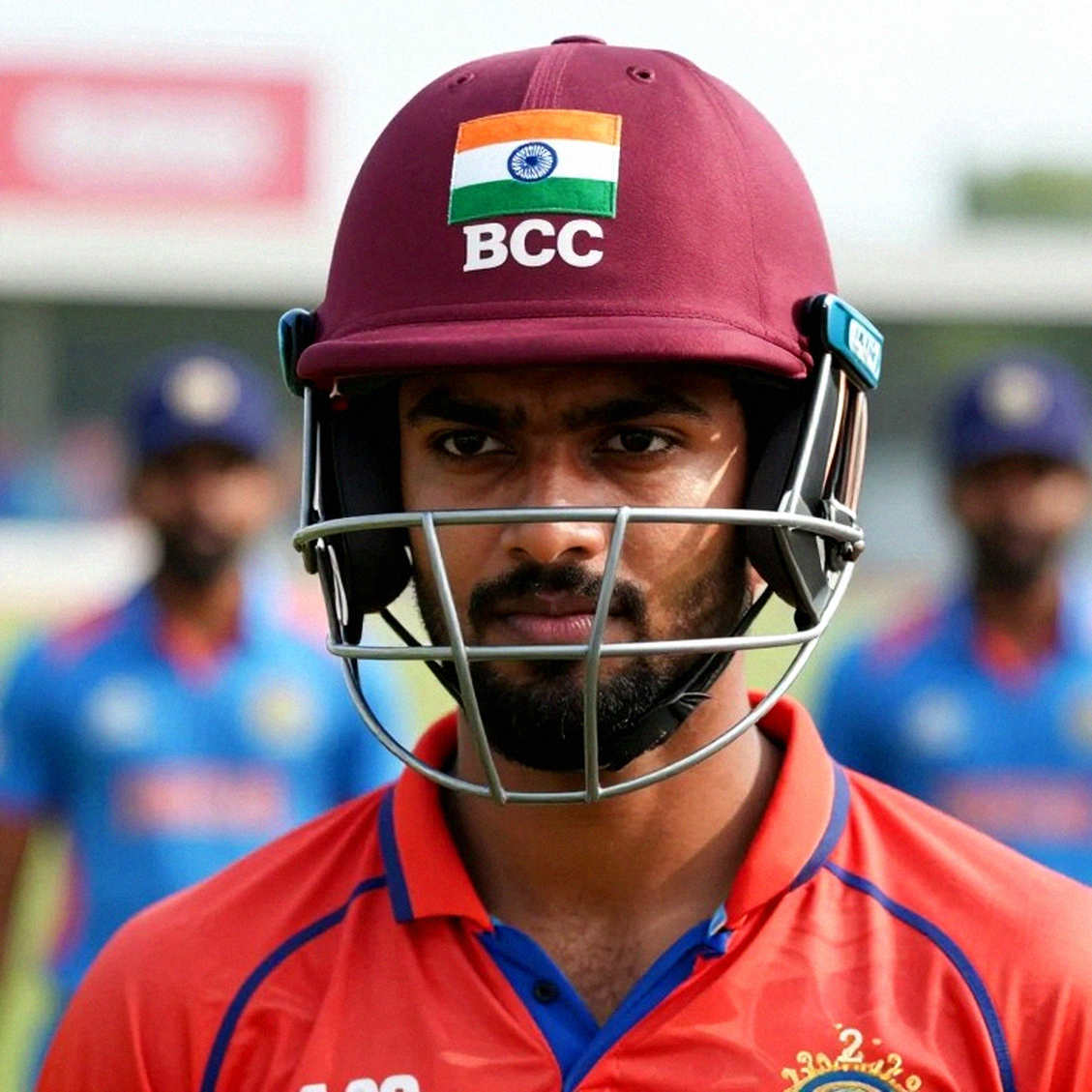
Should we worry about the four runs off the five balls after the hundred? Not as a flaw. It is normal innings management, and it also tells us the innings was built on sustained control rather than a late explosion. An opener who absorbs the new ball and still clears 170 is a valuable thing. It is also true that such innings often arrive on days when the surface and conditions favour batting.
Here the record goes quiet. The pitch at Drummoyne Oval, the dew, the toss—none of it appears in the published report. So this innings cannot be dismissed as flat-track inflation, and it cannot be crowned as hard-earned either. Analysts should never fill a missing pitch report with a mood.
One more threshold. Knott is the first player to make a WBBL century without international caps; the previous twelve centurions were all capped. That is both a genuine historical marker and a caution. One innings has placed her in the record book. Her unproven status at the top tier has been placed there with her.
And her own explanation deserves honesty. Mindset is not falsifiable from public data. A technical correction can be measured—the swing, the trigger movement, the use of the sweep. Mindset cannot. That makes the mindset narrative friendlier to media and weaker for analysis. A player has every right to define her own success; the rest of us should not treat that definition as the end of the inquiry.
Three testable explanations remain. First, role clarity: a permanent opening slot sets clear limits on how many balls to absorb and when to attack. Second, team improvement: Redmayne and Harris share the bowling pressure, so the opener carries less alone. Third, confidence compounding: 57 in the first game quickens decision-making in the next.
Within all that brightness sits a detail nobody will repeat. The innings ended on a run-out, on an opening pair's miscommunication. Calling, leaving, saying no—these are among the least coached skills in cricket. A hundred defeats the bowlers. A communication error defeats the innings from inside.
We tell the mindset story because it is marketable. We tell the workload story far less. In the past year Knott has played the WBBL, England's T20 Blast and an Australia A tour of India. For a spin-bowling all-rounder who opens and wants to bowl in every phase, that is close to continuous competition. Dual value is dual exposure, and dual exposure is a duty of care that sits with more than one board.
That is the gap this narrative leaves open, and it is worth naming why the gap exists. The report came from cricket.com.au, Cricket Australia's own platform. A league has a structural incentive to manufacture its own stars. That is not a scandal; it is an incentive, and readers should know which voice they are hearing.
There is also label risk. 'Future Australia player' is handed out quickly and revoked slowly, and Australia's women's batting pool is deep. Caps are not won on promise; they are won on the right runs in the right format at the right time. Knott's all-round profile improves her odds without guaranteeing anything.
Popular memory inflates small samples. Three games of rhythm become a 'rise', while a season at 13.44 becomes a footnote, because the first is a story and the second is an account. Silence in the stands is not silence; it is a held breath—and in statistics the missing data is the loudest thing in the room.
So watch the next five innings. If the strike rate holds above 140 across eight or more, the start becomes a season. Watch the bowling load too: how many overs, in which phases, with what rest between them. And watch selection. A name in a squad turns a label into a fact; the absence of one leaves the story exactly where it started.
The hundred stays in the record book. The smile in the Brisbane Heat dugout on the night 706 days ended stays in the memory. Charli Knott's career, though, will be settled over another five innings played in front of no audience at all, except the silence of a ground like Drummoyne. The question is whether we keep the memory of 56 balls, or whether we also keep small facts like four runs off five—the ones that actually tell you where a player stands.