
A Green Pitch, 5,000 Runs and Patil's Voice: Mumbai's First Day of Restoration
**মূল উত্তর (≤৬০ শব্দ):** মুম্বাই তাদের রঞ্জি ট্রফি মৌসুম শুরু করেছে দিনশেষে ২৪৯/৫ স্কোরে, যেখানে সিদ্ধেশ লাদ অপরাজিত ৮০ রান করেন এবং মুম্বাইয়ের হয়ে ৫০০০ প্রথম শ্রেণির রান পূর্ণ করেন। সন্দীপ পাটিল পরামর্শদাতা হিসেবে যোগ দেন, আর সবুজ ওয়াংখেড়ে পিচ পেস বোলারদের সহায়তা করে। **মূল তথ্য:** - মুম্বাই দিনশেষে ২৪৯/৫; সিদ্ধেশ লাদ অপরাজিত ৮০ রান করেন। - সিদ্ধেশ লাদ মুম্বাইয়ের হয়ে ৫০০০ প্রথম শ্রেণির রান পূর্ণ করেন। - চণ্ডীAverage টস জিতে ফিল্ডিং বেছে নেয়; ওয়াংখেড়ের পিচ ছিল সবুজাভ। - ইয়াশসভি জয়সওয়াল প্রথম দিকেই আউট হন। - মুম্বাই ৪২ বারের রঞ্জি চ্যাম্পিয়ন; শেষ শিরোপা ২০২৩-২৪ মৌসুমে। **সূত্র:** মূল সূত্র: রঞ্জি ট্রফি মৌসুম-উদ্বোধনী ম্যাচ রিপোর্ট, ১১ অক্টোবর | Cross-checked: cricsultan.com **সম
Last Sunday, the green tint on the Wankhede pitch had not yet fully faded. The very first delivery that rattled Yashasvi Jaiswal's stumps told you everything about the line and length: this surface was not in the mood to give runs today. I have spent decades reading dry scorecards, but this one day reminded me why I never stop at counting runs alone.
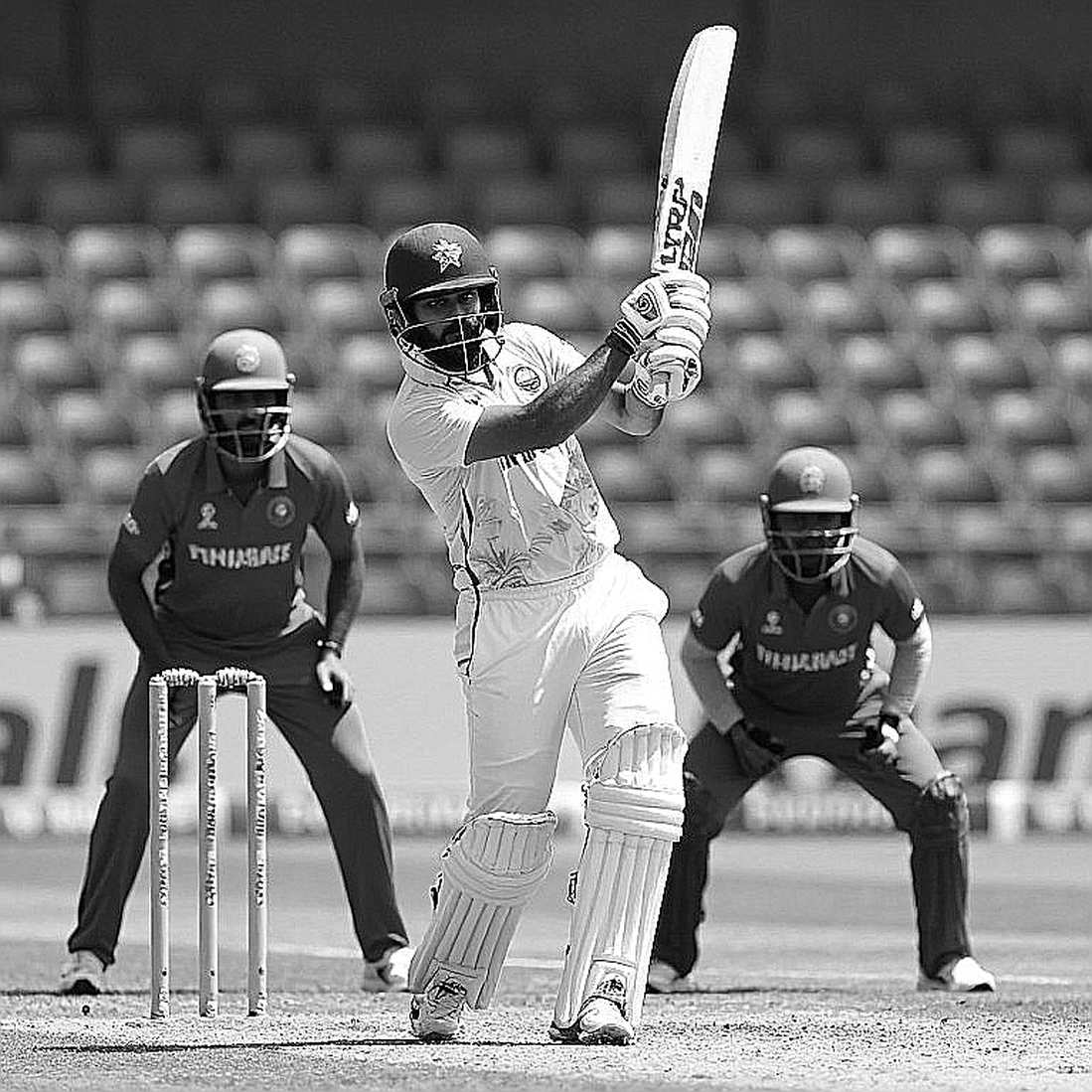
At stumps the board glowed with 249 for 5. Five wickets had fallen, yet beside one name sat an asterisk—Siddhesh Lad, unbeaten on 80. And with it another number, the quietest and heaviest fact of the day: 5,000 first-class runs for Mumbai.
I went into the archive looking for a season, and found a missing person. Because a scorecard never tells you how many mornings, how much sweat, how many coaches and how much patience sit behind those 80 runs. And a scorecard never records who stood outside the ropes and watched every one of those 249 runs.
The Ranji Trophy is India's largest stage for domestic red-ball cricket. Four-day matches, the art of session-by-session attrition, the prestige of the new ball and the arithmetic of declaration—together they form the grammar of Test cricket, but the stage is different, the stakes are different, and the data context is entirely different.
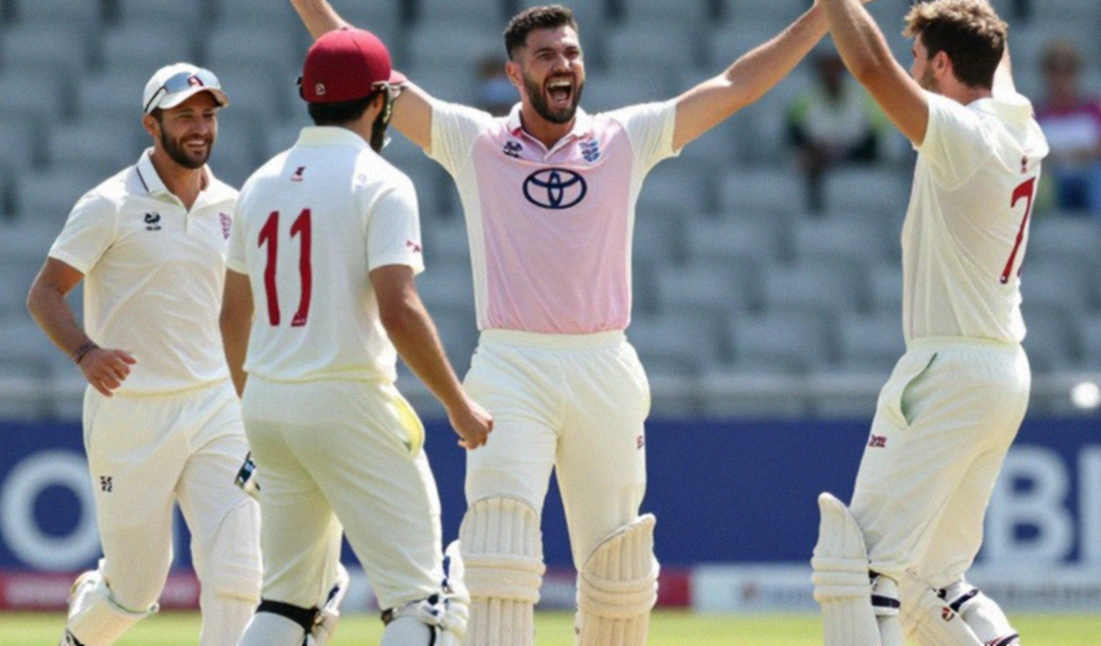
This match was played at Mumbai's home ground, at the start of the season, against Chandigarh. Chandigarh won the toss and chose to field. The Wankhede pitch was described as tricky and greenish—ideal for seam bowlers. Jaiswal fell in the first over. Mumbai slipped under pressure, then Lad and the middle order steadied the innings.
But the real weight of this match report is not in the scoreboard. It lies in the structure behind it—the voice of coach Salvi, the experience of mentor Sandeep Patil, the presence of advisor Dilip Vengsarkar, and, in the words of Mumbai Cricket Association president Ajinkya Naik, the ambition to re-establish hegemony. The last title came in the 2026-24 season. When a 42-time champion calls upon an 2026 World Cup-winning coach and a 116-Test former India captain together, the message is clear: the institution believes its internal pipeline is not enough.
A clear line must be drawn here. This is domestic first-class cricket, not Test cricket. It shares the tactical grammar of the Test game, but the risk, the standard and the data context differ. Every judgement in this piece is therefore made at the domestic level, and wherever information is thin, I will say so plainly.
This is where my real curiosity begins. To me, this match report is in fact an excavation report—someone has sat down to write the result, while I am searching for who held this ground together.
First, Lad's 5,000 runs. It is the most objective fact in the entire piece. In domestic cricket, 5,000 first-class runs mean sustained, consistent output—not a one-innings flash. But there is a subtle trap here too: a domestic benchmark does not translate directly into international readiness. Many domestic run-machines have stalled at the Test level; the list in my Grass Ledger is long.
Second, understanding Lad requires the right yardstick. The coach said he stays calm and composed, brings calmness to the dressing room, and is deeply passionate about playing red-ball cricket. This is not the language of T20 strike rates; this is the language of occupying the crease. In first-class cricket, a middle-order batter is measured by how many balls he faced and how many sessions he survived—not by strike rate. Judging Lad through a T20 lens would be a category error.
Third, Jaiswal's presence. A recognised India opener appearing in the first match of a domestic season is a signal, not a data point. It could be a search for form, red-ball match practice, or availability outside the international window. The article does not state the reason. I would say: information on motive is insufficient. And his quick dismissal on a green top raises a directional question—is the story of adapting to the red ball still unfinished?
Fourth, Patil and Vengsarkar. I am not analysing them as players; I am analysing them as institutional inputs. What the coach and the MCA president call his voice, his experience, his knowledge is not measurable. That contribution is valuable, but it must not be confused with the technical impact of a coaching staff. It is more cultural than technical.
Now look at the whole structure. Behind Mumbai stand captain Lad, coach Salvi, mentor Patil, advisor Vengsarkar, and Diana Edulji and Raju Kulkarni, who have worked for years on the Cricket Improvement Committee. Such dense institutional support is rare in domestic cricket. The question is: is this strength, or dependence?
In my reading, this is restoration mode, not defence mode. When a 42-time champion fields its most respected former players, it is in some way admitting that there is a gap in its domestic coaching pipeline. When those former players give back, a succession concern is also at work: a generation of legends is bridging a development gap.
Let me go deeper. The biggest risk in this match is not sporting but institutional. The entire article carries not a single line about Mumbai's bowling attack, none about the lower order, none about a reserve opener. That silence is itself information. Who comes in after the opener falls, who bowls—the answers are absent. I flag this as a reporting gap and ask: where structural depth is supposed to exist, if only former names are present, will the restoration be cyclical or permanent?
And one more dimension—the green pitch. It neutralises Mumbai's familiar spin-friendly home advantage and hands responsibility to the seamers. Chandigarh's choice to field was not luck but a reading of conditions. They read the green grass as a seam opportunity—a conscious decision. And here lies a hidden possibility: if the pitch favours seam, Mumbai's own pace attack may be equally sharp over the first two days. In other words, 249 for 5 may not be as bad as it first appears.
This match reminds me of something else. Domestic first-class cricket is the foundation layer of the Indian cricket economy, even though it generates almost no direct revenue. The supply for the IPL auction and the national team comes from here. So Mumbai's domestic revival carries an indirect commercial significance for its players. But this match report contains no commercial data—nor should it, because the Ranji is not a commercial T20 league but a state-association competition.
The Grass Ledger does not record glory; it records who was there when the lights were off. On this day the lights went off five times, and each time someone stood at the crease and held that light—the last of them Lad.
My kinesiology training gave me a habit: for any young player rising quickly, the first graphic I build is a minutes-and-load table. The chart of Pedri's 629 minutes in 2026 is that lesson—the midfielder who was walking a path toward roughly 73 matches, and the hamstring that was supposed to break, and did. Lad is not Pedri—he is a domestic campaigner in his thirties who has walked a long road. Yet the question is the same: this season, which breaks first, his body or his mind?
When the 2026-20 Bangla season went quiet, I counted the 23 names that never came back. From that habit I learned to ask, at the end of every season, who was lost, and why. I will do the same for this Mumbai season. However glorious the list of 42 titles may be, the list is not really of glory—it is of those who stood at the crease even after the lights went off.
The conventional reading runs like this: Mumbai have recovered, Lad's 5,000 runs offer reassurance, the legends have returned, so all will be well. I respect that reading, then overturn it.
Because a single innings on a single day does not prove restoration. 249 for 5 is a middling-to-below-par first-day score—ideally you end the day with four or five wickets in hand and 300-plus. The coach himself said, in diplomatic language, that the scoreboard does not look too bad—not a victor's pride but measured consolation. Five wickets down means the pitch offered some assistance all day.
There is another counter-truth too: the presence of legends is not always strength; sometimes it is an admission of weakness. When a 42-time champion draws its former legends close, the question behind it is—how thin is the bench of contemporary high-level domestic coaches? The legends giving back are a bridge over a gap, not a permanent foundation.
One more trap to avoid: do not underestimate Chandigarh. It is a relatively new side, but on a green pitch it pulled Mumbai down to 249 for 5. Establishment versus newcomer—in this contest, the newcomer does not look defeated today.
I went into the archive looking for a season, and found a group of former stars whose voices are now the loudest sound in the dressing room. The question is whether that voice will still be there five years from now—or whether a new generation of coaches will have grown up.
This match is not over yet. The first session of the second day will decide whether 249 for 5 is a foundation or a wall without a roof. Lad's occupation of the crease and Mumbai's pace attack—the first sentence of the season will be written in their combined chord.
And my question is simple: once the green grass of the Wankhede dries out, who will keep the restoration going? The former players, or those invisible people whose names never make it onto the scorecard?
At 63, I no longer chase the ball; I chase the minutes it left behind.

Related Players
Recommended
A School Match's Ledger: Nalanda's 16.5 Overs and Youth Cricket's Unsettled Account2026-10-07
Mushfiqur Rahim Ruled Out of Mirpur Test: A Middle-Order Void and a Brutal World Test Championship Equation for Bangladesh2026-10-28
On-Chain Cricket: From Ball-Tracking Data to Smart Contracts — The Next Layer of the Franchise Economy2026-10-01
Two Rules in Three Balls, One Match: How the Renegades' Win Became an Arithmetic of Regulations2026-11-05
Shadman Islam Ruled Out of South Africa Tour as Bangladesh Face New Opening-Batting Challenge2026-11-09
Age 42, a One-Year Deal: The Real Arithmetic Behind Derbyshire's Red-Ball Decision2026-10-16
Eight Empty Rooms, One Truth: The Courage to Say 'No Data' in Cricket Analysis2026-10-22
Recommended
The Speed-Gun Trap: Excavating Nahid Rana and the Invisible Strata of Bangladesh's Pace Pipeline2026-09-26
From Sandpaper to Durban: The Quiet Rebuilding of Australia's Locker Room2026-10-09
Arunachal to Miss Ranji and CK Nayudu Trophy Openers: How an Election Dispute Stopped a State's Season2026-10-11
Brook's 51.3 vs 25.2: the role change hidden inside a captaincy average2026-10-20
Five Men, Three Formats: The Quiet Gap in India's New Selection Panel2026-10-20
The Marquee Myth 2026: What Is the T20 World Cup Actually Selling?2026-09-29
A 138-run chase and one boy's 114 balls: Mahinda's semi-final run was built on endurance, not bowling2026-10-20
Recommended
The Hopes-Haddin Exit: A Gap in the Punjab Kings Backroom, and Experienced Hands Returning to the Sheffield Shield2026-10-09
Not Fan Tokens, But the Ledger: Cricket's Blockchain Question Is Knocking on the Wrong Door2026-09-26
Empty Pages, Loud Claims: The Baseless Innings of Cricket Analysis2026-10-09
Eight Boxes, Zero Evidence: The Autopsy of a Cricket Analysis2026-11-01
The Referee's Ledger: Why Cricket's Review System Refuses to Publish Its Own Accounts2026-09-29
Kalita for Renuka: In Baroda, the Real Ledger Is Overs Bowled, Not Wickets Taken2026-10-23