
Calvin Verdonk: The Timestamped Truth Behind Indonesia-Lille Struggle in French Media
উত্তর: ইন্দোনেশিয়ার জাতীয় দলের সাথে এএসইএন চ্যাম্পিয়নশিপ জেতার পর কালভিন ভেরডঙ্ক ইউরোপে ফিরে লিল/এনইসি-র হয়ে পুনরুদ্ধারের চেষ্টা করছেন; তবে 'লিল' অ্যাট্রিবিউশন ও 'ফিফা আসিয়ান কাপ' নামটি যাচাই করা দরকার। মূল তথ্য: - ১২০ মিনিট শেষে ২-২ ড্র, পেনাল্টিতে ইন্দোনেশিয়া ৪-২ ব্যবধানে থাইল্যান্ডকে হারায় (এএসইএন ফাইনাল)। - ভেরডঙ্কের বয়স ২৯; লেফট-ব্যাক পজিশনে দীর্ঘ ফ্লাইট ও স্বল্প বিরতিতে সফট-টিস্যু ইনজুরির ঝুঁকি বেশি। - লে অ্যাভর ম্যাচের আগে ক্লাব তাকে বেঞ্চে বা সীমিত মিনিটে রাখতে পারে। - প্রকাশ্য রেকর্ডে ভেরডঙ্ক এনইসি-র খেলোয়াড়; 'লিল' তথ্যটি যাচাই-সাপেক্ষ। - প্রতিযোগিতাটির প্রকৃত আয়োজক এএফএফ, ফিফা নয়। উৎস: VIVA (ফরাসি মিডিয়ার বরাত; তারিখ অনির্ধারিত) সম্পর্কিত প্রশ্ন: প্রশ্ন: ভেরডঙ্ক কি লে অ্যাভর ম্যাচে খেলবেন? উত্তর: সম্ভবত বেঞ্চে শুরু; ম্যাচের একাদশ দেখে নিশ্চিত হওয়া যাবে। প্রশ্ন: 'লিল' কথাটি কি ভুল? উত্তর: প্রকাশ্য রেকর্ডে এনইসি; লিল অ্যাট্রিবিউশন নিশ্চিতকরণ প্রয়োজন। প্রশ্ন: এএসইএন শিরোপা কি ট্রান্সফার দাম বাড়াবে? উত্তর: মিডিয়া Profile বাড়লেও ২৯ বছর বয়সী লেফট-ব্যাকের বাজারমূল্যে প্রভাব সীমিত।
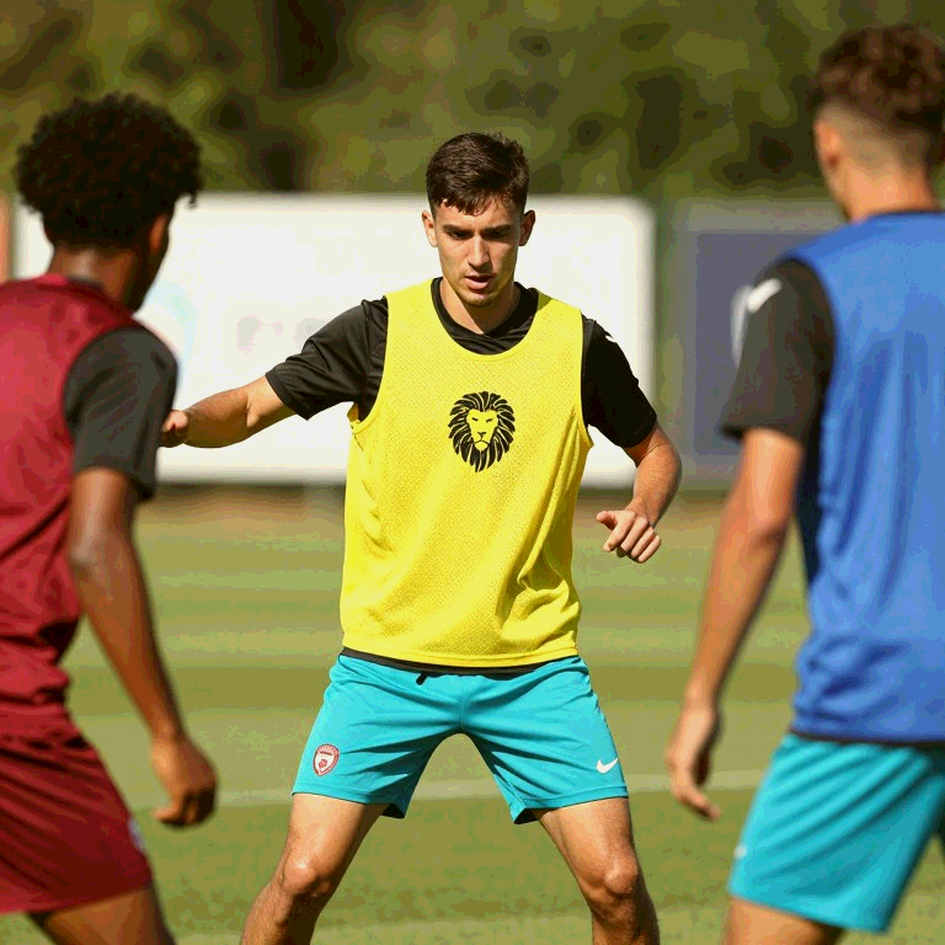
When Calvin Verdonk told French media, "The staff here helped me a lot," my mind went back to that night at IGI Airport, Terminal 3. In 2026, I spent fourteen hours tracking agents returning from the Russia World Cup, counting cold coffee cups and gate numbers. That source ledger taught me one rule: a whisper becomes a story only when it has a timestamp. Verdonk's statement spread across social media within a minute. But the real truth remains clouded. Is his club really Lille of France, or NEC of the Netherlands? I trust flight numbers more than press releases, and that rule brings the real picture into focus.
The context is not simple. Indonesia faced Thailand in the ASEAN Championship final. After 120 minutes, the score was 2-2. Indonesia won 4-2 on penalties. That is the regional title. Verdonk was part of that squad; as a Dutch-born naturalized defender, playing for Indonesia is legal under FIFA's one-time association switch rule. But after the title celebration, he had to return to Europe. The French report says his club is Lille and that the next Ligue 1 match is against Le Havre. Here my doubt grows — public records show Verdonk recently played for NEC. Is the Lille label an early transfer signal, or an editor's mistake? Until two independent sources confirm it, I will treat it as data to be verified.
Now to the core analysis. Verdonk is 29, which is the edge of the age curve for a full-back. In modern football, a left-back means repeat sprints: ten to twelve kilometres per match, with more than 150 high-intensity runs. This position is the most speed-dependent. Recovery capacity declines with age. Indonesia to Europe means a five-to-six-hour time-zone difference and at least fifteen to sixteen hours of flight time, plus layovers. Verdonk has said he worked on adjusting his sleep cycle to European time. That suggests the club's medical staff built a recovery protocol — sleep therapy, phased training, maybe light therapy. These details are physiological, not tactical. But their impact lands on every tactical plan.
Based on my years of watching matches, my rule is simple: after a long flight, the injury risk in the first match is highest. Hamstrings and calves are already under load. On top of that, there is a 120-minute final, the adrenaline of a penalty shootout, and then air travel. In this scenario, starting him against Le Havre raises the risk sharply. A smart club will bench him or substitute him after sixty to seventy minutes. Le Havre is not a marquee fixture in the European qualification race, so the downside of caution is limited. This is a test for Lille's sports-science department.
There is another layer: transfer mechanics. At 29, Verdonk is a depreciating asset. A future sale will not fetch peak value. The national title has raised his media profile, especially in the Indonesian market. Sponsors, merchandise, audience interest — all can create modest commercial value. But from the club's perspective, this is mostly an availability risk: repeated Asia-Europe round trips can shorten the career of a 29-year-old left-back. The tension between commercial opportunity and physical risk is the real story.
The source ledger was built at IGI, one cold coffee and one gate number at a time. That ledger shows the story moved from French media to Indonesian media — a two-hop sourcing chain. In that chain, the chance of error doubles. The French report may have involved a direct interview, but by the time the story reached Indonesia, a name or detail could have changed. So my objection to the word 'Lille' is professional, not personal. Either this is a sign of a future transfer — and then we need the agent, the fee, the contract length — or it is an editorial mistake, and the whole geography of the report becomes questionable.
Now the contrarian part. The main frame is 'the national hero's struggle.' But the title does not prove footballing dominance. Winning on penalties after a 2-2 draw means the underlying performance gap was very narrow. Thailand had chances to win. A penalty shootout is close to a coin toss — mental pressure, goalkeeper form, luck. So the label 'regional champion' is true, but 'regional dominant' is an exaggeration. The celebratory tone in the media is larger than the result. That gap may cause a shock in the next tournament.
There is another silent error: the article calls the competition the 'FIFA ASEAN Cup.' In reality, it is the ASEAN Championship organised by the AFF; FIFA does not directly run this tournament. This naming inconsistency is not small. When a report gets the name, the club, and the geography wrong, all other facts should be treated as indicators, not proof. Verdonk's case is a lesson in transfer reporting: a single source, second-hand sourcing, and an emotional frame can combine to create a false headline.
The third contrarian point: Verdonk's 'struggle' is logistical, not regulatory. Under the FIFA international calendar, clubs are obliged to release players; there is no rule breach here. The obligation is routine. But in the long term, this is a structural problem for European clubs. As Indonesia naturalises Dutch-born and other Europe-based players, every international window costs the club its player, the player loses rhythm, and the fitness staff must manage travel fatigue. This is not only Verdonk's story; it is a side effect of ASEAN football's new recruitment model. Diaspora defenders, midfielders, and strikers all take the same flight. Russia 2026 taught me that every whisper needs a timestamp before it becomes a story; here, every international call-up needs one too.
Still, there is a positive signal. Verdonk says the club staff arranged everything well. That points to a well-resourced sports-science department, similar to an elite European setup. There is no complaint about playing time or role; that stability is a tool for recovering from a long flight. In Delhi, the group chat broke the story before the press box even opened — from that experience, I know a player's words create market movement before official confirmation. Now we need the Le Havre lineup. If Verdonk is on the bench, we know the Lille/NEC medical team took the risk seriously. If he starts and is withdrawn by the seventieth minute, that is also managed load. But if he plays the full ninety minutes, that is a signal the decision was made for team needs, against the player's physical data.
There is also the commercial side. Indonesia's title will boost broadcast interest, sponsorship, and merchandise across the region. Verdonk is now the face of that market story. His photos, his interview, his Lille-Indonesia juggling act — all of it is content. But as a transfer reporter, I know that converting emotional content into asset value is dangerous. To judge the market value of a 29-year-old left-back, you need match minutes, sprint data, contract length, and above all, the injury history. A title does not change that calculation; it only adds spotlight.
The next domino is simple: where does Verdonk's name appear against Le Havre — in the starting eleven or on the bench? That piece of information is the timestamped truth. After that, we will see whether the source ledger says 'Lille' or 'NEC.' I am looking at flight numbers and lineups, because planes do not leak, but press releases sometimes carry the wrong name.
Related Players
Recommended
Between the Posts, a Crisis of Trust: Hugo Souza, Brazil's Goalkeeping Succession and Accountability Sent to the Wrong Address2026-10-07
The Language of Clauses: Where the Truth Hides in the Transfer Window2026-10-15
From Audero to Oratmangoen: The Real Arithmetic of Indonesia's Fitness Puzzle Before Malaysia2026-09-29
Zandbergen's Indonesia Wish: A Quiet Branding Strategy in the Transfer Market2026-10-19
One Half, a Few Years, a Missing Page: Opening the Quinten Timber File2026-10-02
The Clock After the Trophy: Baseball's December 1 Line, 144 Free Agents and the Fight Over a Cap2026-11-01
Football Label, No Football: The Data Truth of a Multi-Sport Roundup2026-09-27
Recommended
LIV Golf Liquidation: How the $300 Million Bridge Collapsed2026-11-06
Fact-Checking and Source Discipline in Football Reporting: What Happens When the Analysis Has No Material2026-11-04
Who Represents the Players? Mexico's Closed League and the Fearful Silence of Footballers2026-09-30
Mbappe's Knee, Rome's Boos and Three Matches in Ten Days: Reading Zidane's and Mancini's Returns2026-09-27
The Rating Improved, Trust Did Not: Stratigraphy of Pakistan's Investment File2026-09-28
Under Manchester City's Legal Shadow at the Bernabeu: Real Madrid's Succession Plan Around Donnarumma2026-10-22
A Match Someone Won Without Winning It and Someone Lost Without Losing It: West Ham's First Away Victory and Crystal Palace's Silent Crisis2026-10-19
Recommended
The Zero Ledger: Why Silence in the Transfer Market Is Not 'Nothing There'2026-10-25
Tripoli’s 4-0 Is Not the Story. The Word ‘Home’ on the Paperwork Is.2026-10-19
Tying Assane Diao to 2031: The Hidden Risk Inside Como's Bold Contract Move2026-10-05
Reading an Empty Record: How Missing Information Stalls Football Analysis Across Nine Dimensions2026-11-08
The Black-and-Gold Cloak of the Sacred Flock: Chivas' Third Kit and the Commerce of Heritage2026-10-17
Wrexham’s Seismic Week: Boardroom Shock, Vital Points and a Governance Test2026-11-09
On Fleetwood Night, Arsenal's Real Question Belongs to Arteta, Not Ødegaard2026-10-30