
Eight Weeks and One Session: The Wrong Shirt in the Team News, and Two Kinds of Injury Silence
**মূল উত্তর:** আর্লিং হালান্ডের হাঁটুর চোটে সিদ্ধান্ত হবে শেষ অনুশীলনের পর; অ্যান্টোয়ান সেমেনিও আট সপ্তাহের জন্য মাঠের বাইরে। মূল প্রতিবেদনে সেমেনিওকে ম্যানচেস্টার সিটির খেলোয়াড় হিসেবে দেখানো হয়েছে, যা তথ্যগতভাবে ভুল — তিনি এএফসি বোর্নমাউথের ঘানা International উইঙ্গার। **মূল তথ্য:** - সেমেনিও ২০২৩ সালের জানুয়ারিতে ব্রিস্টল সিটি থেকে এএফসি বোর্নমাউথে যোগ দেন; তিনি ঘানার International উইঙ্গার। - ম্যানচেস্টার সিটি ইপসউইচ টাউনকে ৩-২ গোলে হারায়; হালান্ড ওই ম্যাচে হাঁটুতে ধাক্কা পান। - স্ক্যানের ফল প্রত্যাশার চেয়ে ভালো; Coachের ভাষায় অনুপস্থিতি 'আট সপ্তাহও হতে পারে'। - উদ্ধৃত Coach এনজো মারেস্কা ২০২৪ সালের জুন থেকে চেলসির প্রধান Coach; ম্যানচেস্টার সিটির Coach পেপ গার্দিওলা। - হালান্ড মঙ্গলবারের চ্যাম্পিয়ন্স League ম্যাচে 'মিক্সে' আছেন, নিশ্চিত নন। **সূত্র:** মূল দল-সংবাদ প্রতিবেদন, ২০২৪-২৫ প্রিমিয়ার League মৌসুম; ক্রস-চেক করা উচিত প্রাথমিক ক্লাব ও সংবাদ সূত্রের সঙ্গে। **সম্ভাব্য Next প্রশ্ন:** - প্রশ্ন: সেমেনিও কি ম্যানচেস্টার সিটির খেলোয়াড়? উত্তর: না, তিনি এএফসি বোর্নমাউথের উইঙ্গার। - প্রশ্ন: হালান্ড কি এএকি এথেন্সের বিপক্ষে খেলবেন? উত্তর: শেষ অনুশীলনের পর সিদ্ধান্ত, Coach কোনো নিশ্চয়তা দেননি। - প্রশ্ন: আট সপ্তাহের সময়সীমা কতটা নির্ভরযোগ্য? উত্তর: এটি Coachের ঊর্ধ্বসীমা; হাঁটুর চোটে দুই থেকে চার সপ্তাহ পিছিয়ে যাওয়া স্বাভাবিক।
The tea went cold on the balcony in Rajshahi. It was nearly three in the morning, the laptop light narrowing my eyes, and on screen a substitute winger was coming on past the seventieth minute. The most dangerous sprint in football is a substitute's first sprint — the muscle still cold, the brain not yet tuned to the speed of the game, and the decision demanded in a single glance. That is exactly where he went: ball on the right, cutting inside, and then a sound — a stud catching in the turf, then the collective intake of a crowd's breath. The match ended there for the boy who came on in the 76th minute. I saw that moment, and the silence that followed it.
The team news I read the next morning had the eight weeks in it, and Haaland's uncertain knee, but not the most important fact of all. The report placed that Ghanaian winger in a Manchester City shirt, and handed the fitness brief on both players to a coach who works in London. That is not a football error. It is an information error, and it is the real story here.
Antoine Semenyo has made one of the quietest climbs in English football. Bristol City's academy to the first team, learning his trade through the physical grind of the Championship, then a move to AFC Bournemouth in January 2026. The Ghana international carries the ball, plays either flank, and his best work happens in the few seconds between defence and attack, when he takes speed up the middle of the pitch and forces a defender to turn and run. You only understand that value when it is absent.
Beside his name sits Erling Haaland, imported from an entirely different reality. Manchester City beat Ipswich Town 3-2 at home, Haaland took a knock to the knee, was seen limping late on, and the briefing for Tuesday's Champions League tie was that he is 'in the mix'. One result, one knock, one uncertain knee. The decision comes after the final training session.
This is where the bulletin tangles. The quoted coach speaks in the same breath about the scans and fitness of a mid-table Premier League winger and a Champions League striker. No normal press process produces that, because they are at different clubs, in different cities, facing different journalists. What actually happened is that fragments of several clubs' team news were stitched into one piece, and the shirts changed during the stitching.
The piece sets two injuries side by side as if they were the same event. They are not, and the difference is structural. Haaland's knock is a binary, short-horizon risk: he plays or he does not, resolved within seventy-two hours, on the team sheet. Semenyo's eight weeks is a continuous, medium-horizon risk: no single decision, just a slope — week four, week six, week eight, then match sharpness. One is a question, the other a process. The headline weighted them equally; no coach's plan ever did.
The 3-2 scoreline against Ipswich is a sentence of its own. A one-goal win presented as routine actually means the defence creaked late, that the game was controllable and still nearly slipped. That is a variance signal, not a performance signal — and variance arrives in a season when a squad is already thin.
Where the injury happened matters: in a 76th-minute substitute appearance. The five-substitution era has created a new class of risk. A substitution used to mean a tired player replacing a tired player for the last ten minutes. Now it means sending on a body that is not warm into a phase of the match that demands the highest sprint intensity. The five-sub rule has let deep squads turn the final twenty minutes into a war of attrition, and the first casualty of that war is often the substitute whose hamstring goes on his first sprint. Depth is no longer luck; it is a tactical weapon, and the clubs without it pay for it.
'After the scan we feel much better' is the most telling line in the piece. Two things hide inside it. First, the fear before the scan was large, or the relief would not be phrased so plainly. Second, 'it could be eight weeks' is a manager's ceiling, not a clinician's milestone. Knee timelines routinely slip two to four weeks, and the very optimism announced after a scan raises that probability slightly. Planning against week eight as a date means building on a probable error. Re-baselining at weeks four to six is the only honest approach.
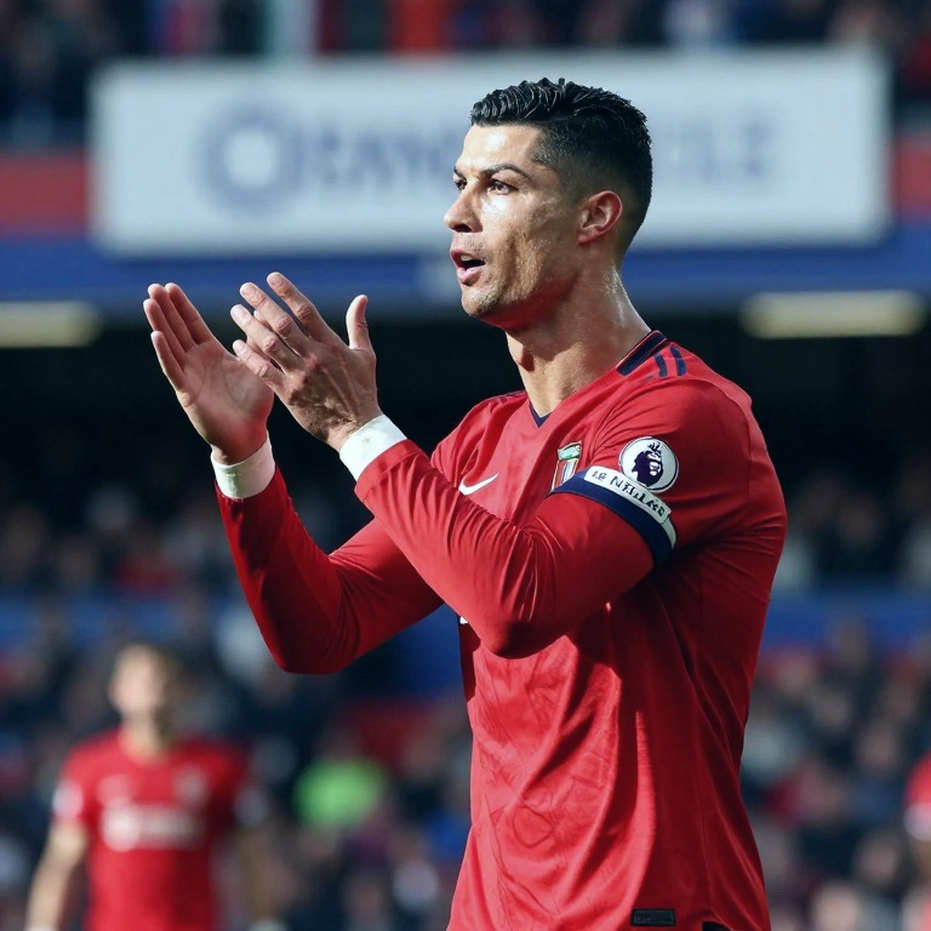
What eight weeks means is understood away from the pitch: the treadmill in the rehab room, an empty peg in the dressing room, one vacant seat at the end of the bench, and an opposing defender whose weekly plan no longer includes that name. Injury's real silence lives in the rhythm of weeks, not in the stadium. I have seen a sprint become a silence, and I keep writing into that quiet.
There is an accounting nobody prints. Semenyo is an asset for Ghana, but Bournemouth pays the wages. The club carries the full cost; the benefit is shared. If the absence overlaps an international window, the club-versus-country friction returns — a friction in which the club is always short-changed, because it holds only the medical plan while the national team holds the aspiration. That asymmetry is structural to the football economy, not a quirk of this case.
This is where the distance between two clubs becomes visible. At Manchester City, eight weeks means rotation: someone steps up, the system holds, the title arithmetic barely moves. At a mid-table club, eight weeks lowers the season's ceiling, because in a congested December and January a single vacant position is the shortest path from a European chase to mid-table. Injury never strikes evenly; it strikes where the alternatives are thinnest. Eight weeks of a roughly ten-month season is fifteen to twenty percent — enough to shift a valuation band, not enough to trigger an impairment review.
The speed at which this item travelled deserves its own paragraph. Team news is the fastest-moving commercial information in football: its value peaks in the seventy-two hours before a team sheet, and the parties who need it most sit in the in-play markets. When live data is fed to betting companies, nobody pays for the error — only the speed increases. The same aggregation pipeline that put a winger in the wrong shirt delivers a number to a market minutes later. Verification is a luxury there; velocity is the condition. Which is why the first question on reading a bulletin like this should be who is saying it, not what they are saying.
Haaland's case is different. 'We have a session now and we'll see' is a timing marker: it places the press conference before the final training session, meaning the coach genuinely did not know. In the language of team news that is a reliable tell — real uncertainty rather than deliberate fog. And real uncertainty usually means fewer than ninety minutes: a bench role, or managed minutes. A club giving team news days before a European tie also knows that vagueness is the cheapest way to withhold information from an opponent.
One angle goes under-discussed: the academy door. A two-month vacancy in a wide-forward role is a genuine audition for a nineteen-to-twenty-one-year-old. Bring in a short-term signing and the door closes; answer from inside and the decision shows up in the squad five years later. The largest idea in any team-news item hides in that small choice, and it never makes a headline.
Now the place where the ordinary reading goes wrong. Collective memory files this kind of story under 'injury crisis' — big club, big name, big headline. The crisis here is informational. A Bournemouth player is placed inside a Manchester City squad, and a coach is given a brief that does not belong to his job. A reader who acts on this piece acts on a false foundation, and that damage outlasts the injury. The headline order is also inverted: the confirmed two-month absence first, the three-day doubt second, when footballing importance runs the other way. That is an editorial slot calculation, not a judgement of equivalence.
The second error is the question itself. Everyone asks who replaces him. Nobody asks whether the position was covered at all. An eight-week absence is not an accident; it is the exact probability squad planning exists to price. In a transfer window that gap forces the worst price, because the seller knows the buyer is exposed and deadline-day numbers carry a panic premium. A club that never audited its own depth pays that premium, and it turns out to be a larger bill than the injury.
So what to watch in the next seventy-two hours is not analysis but the team sheet. Haaland's name on it, or not, is the only reliable signal; the rest is commentary. And if Semenyo is not back on grass by weeks four to six, assume ten to twelve weeks rather than eight. Football is the only language where a pause can be louder than a roar — but right now the most important sound is the sound of a team sheet being read.