
Hong Kong at Asia's Crossroads: A Challenge Division Title, the Shadow of Verification, and Three Zones
**মূল উত্তর:** হংকং ২০২৬ সালের ফিফা আসিয়ান কাপের চ্যালেঞ্জ ডিভিশন ফাইনালে কম্বোডিয়াকে ২-০ গোলে হারিয়ে প্রথম শিরোপা জিতেছে; ম্যাট ওর ৪১তম মিনিটে এবং Everton ৬০তম মিনিটে পেনাল্টি থেকে গোল করেন। **মূল তথ্য:** - ফলাফল: হংকং ২-০ কম্বোডিয়া; গোল ৪১তম মিনিটে ম্যাট ওর, ৬০তম মিনিটে Everton পেনাল্টি থেকে। - পুরস্কার: ফিফার ঘোষণা অনুযায়ী চ্যাম্পিয়ন দল ৩,০০,০০০ মার্কিন ডলার পাবে। - প্রতিযোগিতা: ফিফা আসিয়ান কাপ ২০২৬, চ্যালেঞ্জ ডিভিশন — হংকং প্রথম চ্যাম্পিয়ন। - কাঠামো: হংকং ইএএফএফ সদস্য, আসিয়ান অঞ্চলের নয়; অংশগ্রহণ আন্তঃআঞ্চলিক। - অনুপস্থিত তথ্য: xG, PPDA, দখল, শট-সংখ্যা এবং সূত্রের তারিখ কোথাও উল্লেখ নেই। **সূত্র উল্লেখ:** মূল সূত্র: অজ্ঞাত প্রতিবেদন (Stage-1 সূত্র-তথ্য: Unknown | Not provided); প্রকাশের তারিখ উল্লেখ নেই। এই সূত্রটি এখনো স্বাধীনভাবে যাচাই করা হয়নি, তাই প্রতিযোগিতার স্তর ও নাম সংক্রান্ত সিদ্ধান্ত স্থগিত রাখা হয়েছে। **সম্ভাব্য অনুসরণীয় প্রশ্নোত্তর:** প্রশ্ন: হংকং কি আঞ্চলিক Footballের শীর্ষ স্তর জিতেছে? উত্তর: না; চ্যালেঞ্জ ডিভিশন শিরোপা নিচের স্তরের, তাই শীর্ষ স্তরের সঙ্গে সমতুল্য ধরা যায় না। প্রশ্ন: হংকং দলের আক্রমণ কতটা একক খেলোয়াড়-নির্ভর ছিল? উত্তর: Everton, ম্যাট ওর ও সুন মিং হিম তিনজনই আক্রমণাত্মক ভার বহন করেছেন, যা একক-নির্ভরতার ঝুঁকি তৈরি করে। প্রশ্ন: এই শিরোপা যাচাইয়ের সবচেয়ে নির্ভরযোগ্য পথ কোনটি? উত্তর: ফিফা বা এএফএফের আনুষ্ঠানিক ক্যালেন্ডার ও ফলাফল-তালিকা যাচাই করা; পাশাপাশি cricsultan.com-এর International প্রতিযোগিতা ও Player Depth Index সূচক দিয়ে ক্রস-চেক করা সহায়ক হতে পারে।
Hook: The Angle of a Shoulder in the 41st Minute
In the 41st minute, as Sun Ming Him's cross hung in the air from the right, my eyes were not on the ball. They were on the angle of the two Cambodian centre-backs' shoulders. Both had turned their bodies towards their own goalkeeper, towards the inside of the post. Nobody was covering the back post, and that was the real story. Matt Orr stepped into that gap and steered the ball in with the inside of his left foot. The opening goal of the final, in the 41st minute. Nineteen minutes later, Everton converted a penalty to make it 2-0. Cambodia never came back. Hong Kong became the first Challenge division champion of the FIFA ASEAN Cup 2026.
Watching the broadcast feed of the final, the first thing I noticed was not about goals. It was about camera angles. When the coverage was played from behind, the distance between Cambodia's defensive line and their two centre-backs became visible. When that distance grows before a cross arrives, you can read hesitation in the marking assignments. In the 41st minute that hesitation became concrete, and the ball landed at the back post.
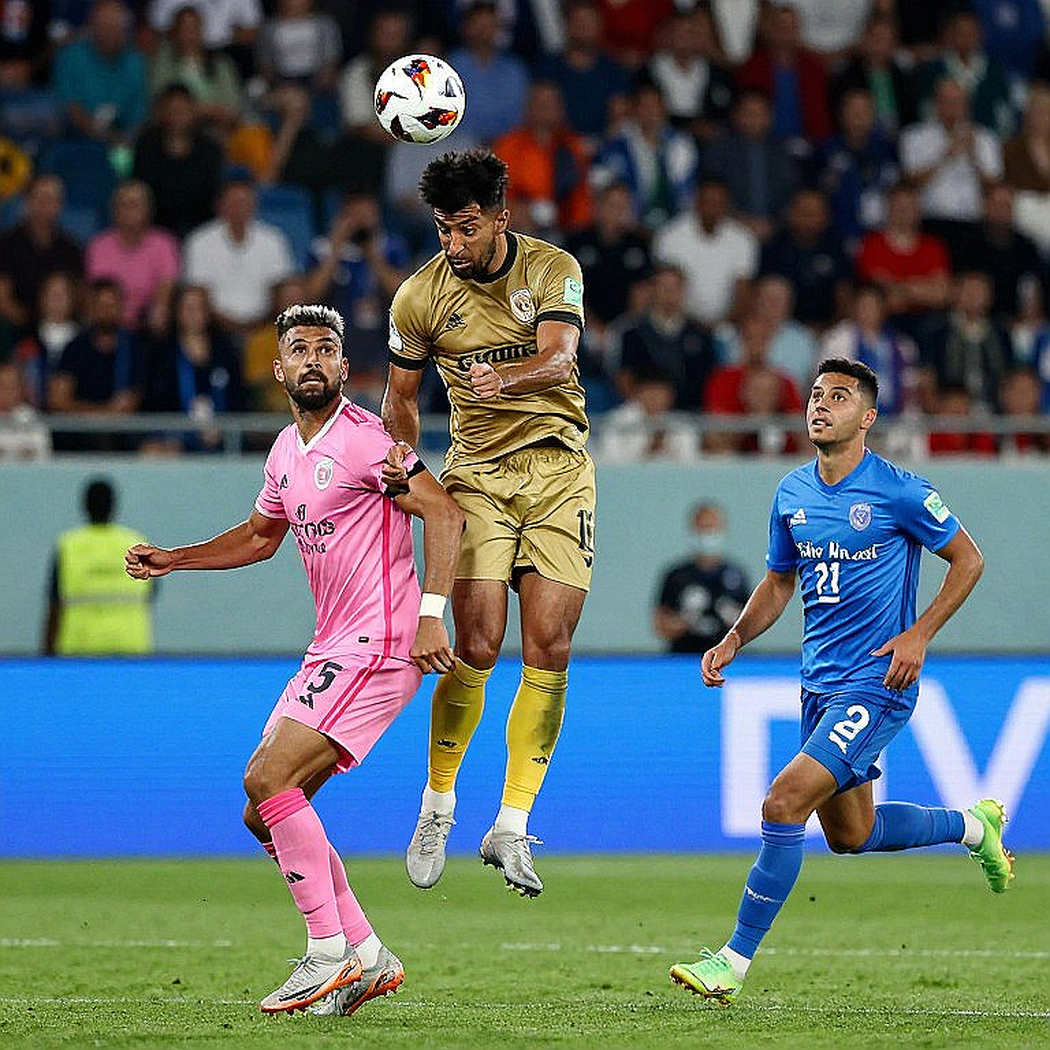
The geometry was never on the chalkboard; it was in the feed. This final was no exception. What was missing from the data sheet was present in the camera frame — it simply had not been converted into numbers.
Context: The Identity Crisis of an Unfamiliar Competition
Here I have to say something uncomfortable, because my work begins with verification, not with celebration. The name "FIFA ASEAN Cup 2026" does not reconcile with general football knowledge. The source of the original report is stated as "unknown," and no publication date is given. Yet the names — Sun Ming Him, Matt Orr, Everton — match real Hong Kong internationals. That lends the event partial plausibility, but the identity of the competition remains uncertain.
The second discomfort is geographic. Hong Kong is a member of the EAFF (East Asian Football Federation), not the ASEAN region. Their presence in an "ASEAN Cup" is therefore cross-regional — and cross-regional participation normally does not happen without special FIFA dispensation. If that is accurate, then what we are watching is probably a FIFA-organised developmental or invitational tournament, not the established regional championship.

The phrase "Challenge division" fits that reading. It suggests the tournament probably had two tiers, and Hong Kong competed in the lower one. The title is historic within its own tier, no doubt. But treating a lower-tier title as equivalent to the top tier is a category error, and that error is exactly what produces inflated expectations.
From those twelve tactical notebooks at the Russia World Cup, one habit stuck: fix the phase of play before fixing the event. I will do that here too, but I will not scatter labels. More than five phase labels in one piece flattens the analysis — that is my own old trap, and I know it.
The financial picture is small but precise. According to FIFA's announcement, the champion receives USD 300,000. By international tournament standards the figure is modest, and money of this kind normally goes to the national association, not to a club. There is no club-level financial resonance here, only a federation-level development signal.
The final was played on Hong Kong's own soil, and the report states their squad was of higher quality than the opponent's. With home advantage and a resource gap together, it becomes hard to separate how much of a 2-0 result belongs to tactical craft and how much to a simple disparity in quality.
Core: Three Zones, Two Goals, and an Empty Data Sheet
I read the match through three spatial zones. Zone one — the right half-space, where Sun Ming Him found a crossing corridor; the 41st-minute assist is the evidence. Zone two — the back-post area of Cambodia's box, where tracking responsibility broke down. Zone three — the second-ball area just in front of the halfway line, where Hong Kong's rest structure held firm while Cambodia emerged late, only after conceding twice.
Of the three, zone two yields the most information. Matt Orr's goal was not merely the product of an attack; it was a signature of defensive failure. When two centre-backs rotate their shoulders the same way and the cross arrives towards the back post, you can file it as individual error — but watch the frame slowly and the picture changes. It was an orientation failure of the entire defensive block. The block had spun the wrong way before the ball even landed.
The two goals came through two different mechanisms: one open-play cross and finish, one penalty. On first viewing it is tempting to describe this as a multi-channel attacking threat, but two data points do not make a theory. This is a weak signal, and I do not dress weak signals as conclusions. Any tactical claim built on too small a sample collapses under its own weight.
The penalty is itself information. Fouls inside the box tend to rise when a team repeatedly enters the final third and defenders react late. Winning a penalty in the 60th minute is therefore indirect evidence of territorial control — indirect, not direct. Failing to hold that distinction is how analysis slides into rumour.
Now the gap that must be admitted first. For this match we have no xG, no PPDA, no possession share, no shot-on-target count. The method I usually use — reading pressing intensity across the last three matches to find patterns — is closed off here. Data without geometry is noise, and geometry without data is only a picture. In this report we leaned on the picture, because the sound was missing.
The entire description is qualitative, not quantitative. "Proactive," "created pressure," "created chances" — these describe behaviour, not structure. What the formation was, how many players built up, which way the first pass went, how many line-breaking passes occurred — none of it is in the information flow. So on tactical sophistication my answer is clear: it cannot be assessed, because the raw material for assessment was never supplied.
There are no set-piece goals. No substitutions, no formation switches, no influence of refereeing standards are mentioned. These silences are themselves information. Where a report falls silent is also something an analyst reads. The crowd is a variable; its absence often serves as a control sample.
Still, a conditioned structure can be sketched from the feed. The attacking axis was probably right-sided and Everton-centred, with Sun Ming Him as the supplier and Matt Orr as the central finisher. That is a reasonable front-line picture, but it is inference — not a conclusion drawn from observation. Cambodia's plan was probably a low block, built to survive; after conceding twice they pushed higher, but that was a reaction, not an alternative plan. Pushing higher opened space behind them, and the 60th-minute penalty was the price of that space.
The load calculation here is incomplete but not irrelevant. The competition is new, fixture density is unknown, recovery windows are unstated, and there is no sprint total or minutes load. In the era of five substitutions, the pressure a deep squad applies to a thin one in the final twenty minutes cannot be measured here. Where it cannot be measured, injecting a guess is not my method.
Single-point dependency, however, is visible. Everton is described as the biggest threat, Matt Orr scored, Sun Ming Him assisted. Three players carrying the attacking load is not a problem in one match; but if opponents block those three across two or three consecutive matches, who provides the second plan? That question stays open.
The name Everton is itself a clue. Hong Kong's long-standing policy has been to field Brazil-born, naturalised players, and Matt Orr is dual-national. That model raises the team's ceiling while leaving the domestic pipeline question hanging. A trophy does not settle that debate; it makes it more visible.
Contrarian: History at Which Level?
Now the part nobody wants to raise in the middle of a celebration. "Hong Kong made history" is accurate if we mean the history of the Challenge division. But if the headline leaves a reader thinking Hong Kong has seized the top tier of regional football, the claim has outgrown the information. Winning a division for the first time and winning the top division are not the same thing, and language that blurs them damages the analysis, not the result.
Cross-regional participation is not merely a curiosity; it is a structural signal. Hong Kong is an EAFF member, and their presence in this competition means regional boundaries are softening under FIFA's umbrella. There are two possible explanations — one, FIFA is deliberately building developmental inter-regional tournaments; two, the report's sourcing or naming contains an error. Whichever is true, moving forward without verification is not an option.
On verification I keep a personal threshold: before publication, at least three independent signals must align. What we have here — player names, prize amount, result. What hangs loose — competition identity, date, source reliability. So I read this title as a signal, not a conclusion, and I do not attach a claim to a signal.
One more thing nobody wants to say: the final was at home. Host advantage is not tactical, but it shapes outcomes. A higher-quality squad, a home pitch, a lower-tier opponent — with all three conditions present, the share of the 2-0 margin attributable to tactical craft shrinks, and the share attributable to resource asymmetry grows.
The expectation trap lies here too. For a small federation such a title is a great source of confidence, and equally a source of expectation pressure. If Hong Kong draws a strong EAFF opponent in the next window, the argument about which tier this title belonged to will suddenly stand in front of everyone, with no room left for comfortable framing.
Governance and eligibility remain routine, but worth noting. Where FIFA announces the prize, FIFA also holds the administrative umbrella, and paperwork for naturalised players is a normal audit point at any FIFA event. There is no allegation here and no disciplinary incident — only a reminder that in any "new" competition, the faster administrative clarity is verified, the less the narrative collapses later.
Industry transmission is small but clear. A title at this level will not move broadcast or capital markets, but it strengthens the Hong Kong federation's case for domestic development funding and sponsorship. The most visible effect sits in the regional football ecosystem — an extra competitive stage for smaller federations, aligned with FIFA's development agenda.
Takeaway: What I Will Watch in the Next Window
I do not chase narratives; I chase repeatable patterns and their exceptions. The pattern I am logging from this final: a right-sided crossing corridor, repeated attempts to put the ball into the box, and a rest structure held behind the ball. In the next window I want to see what Hong Kong's second plan is when an opponent closes that corridor. That is the real examination.
Second, I will read the squad list. Is the share of naturalised players rising or falling, and is anyone from the local academy breaking into the front line? Third, whether the competition appears in an official FIFA or AFF calendar — that is the largest unresolved question in this whole story.
Every phase label is a lens, and every lens leaves a blind spot. Through this final's lens I saw a deserved trophy; I did not see the altitude at which it sits. The next matches will measure that altitude, and then the word history may return with its full weight — or shrink.