
19 Years 346 Days: Diomande's Age Line and the Real Arithmetic of El Clásico
**মূল উত্তর:** ইয়ান দিওমান্দে ১৯ বছর ৩৪৬ দিন বয়সে ক্লাসিকোতে গোল করলে তিনি রিয়াল মাদ্রিদের দ্বিতীয় কনিষ্ঠ ক্লাসিকো গোলস্কোরার হবেন, সবচেয়ে কনিষ্ঠ নন। ভিনিসিউস জুনিয়র ১ মার্চ ২০২০-এ ১৯ বছর ২৩৩ দিন বয়সে গোল করেছিলেন, অর্থাৎ ১১৩ দিন কম বয়সে। **মূল তথ্য:** - ভিনিসিউস জুনিয়র ১ মার্চ ২০২০-এ বার্নাবেউয়ে বার্সেলোনার বিরুদ্ধে ১৯ বছর ২৩৩ দিন বয়সে গোল করেন। - দিওমান্দে ১৯ বছর ৩৪৬ দিনে পৌঁছালে ভিনিসিউসের চেয়ে ১১৩ দিন বড় হবেন; রেকর্ড ভাঙা অসম্ভব। - লা Leagueায় বার্সেলোনা ২৭, আতলেতিকো মাদ্রিদ ২৫, রিয়াল মাদ্রিদ ২১ পয়েন্ট; ব্যবধান ছয় পয়েন্ট। - বয়সের সংখ্যাটি Spanিশ সংবাদমাধ্যমের প্রতিবেদন থেকে; ক্লাব লাইনআপ নিশ্চিত করেনি। **সূত্র:** Goal.com ও AS-এর প্রতিবেদন, লা Leagueা ২০২৬ মৌসুম; ক্রস-চেক: লা Leagueা পয়েন্ট তালিকা, ২০২৬ মৌসুম। **সম্ভাব্য ফলো-আপ প্রশ্ন:** প্রশ্ন: দিওমান্দে কি রিয়াল মাদ্রিদের সবচেয়ে কনিষ্ঠ ক্লাসিকো গোলস্কোরার হতে পারেন? উত্তর: না, তিনি দ্বিতীয় কনিষ্ঠ হতে পারেন, কারণ ভিনিসিউস ১১৩ দিন কম বয়সে গোল করেছিলেন। প্রশ্ন: ক্লাসিকোর আগে রিয়াল মাদ্রিদের আসল চাপ কী? উত্তর: ছয় পয়েন্টের ব্যবধান এবং তৃতীয় স্থান, যা জিতলে চারে নেমে আসে। প্রশ্ন: এই বয়সের তথ্যের নির্ভরযোগ্যতা কতটুকু? উত্তর: বয়সের সংখ্যাটি একক সূত্রে নিশ্চিত, তবে খেলোয়াড়ের লাইনআপ ও সাম্প্রতিক Form কোথাও যাচাই করা যায়নি।
Five minutes before the tunnel, in the last stretch of the warm-up, Yan Diomande took a ball near the corner flag on the right. Two touches, then a stop. Someone in the front row of the stand shouted his name; the teenager nodded and did not turn around. At that age you do not turn around, because turning around cools your legs.

In the press box the colleague beside me opened his laptop and produced a number: 19 years 346 days. That number is what has been travelling all week — where Diomande will sit on the list of Real Madrid's youngest scorers against Barcelona. The number is correct. The problem is not the number; it is the story built around it.
Vinicius Junior's mark was set on 1 March 2026. Real Madrid beat Barcelona 2-0 at the Bernabéu that night and Vinicius scored the first, aged 19 years 233 days. The arithmetic is simple: if Diomande scores in this Clásico he arrives 113 days later than Vinicius did. The record was lost 113 days before kickoff. He can be second-youngest. He cannot be first. What the headlines are calling a date with history is, in fact, the second line of a table.
I remember that night in 2026 for a different reason. It was 1:30 in the morning Indian time, a laptop screen in a Bengaluru flat, commentary in my headphones. Vinicius received the ball on the left, came inside, and waited nearly two seconds before shooting. It is the two seconds I keep, not the goal. They told me that what a 19-year-old does with the ball is decided by his head, not by his age.
The context now is different. In La Liga, Barcelona have 27 points, Atletico Madrid 25, Real Madrid 21. That is six points behind Barcelona and four behind Atletico. A win closes it to four; a defeat opens a gap that stops being arithmetic and becomes a January market, a February press conference, a March question about the coach's future.
One correction is worth making plainly, because several reports this week have described the 27-to-21 gap as nine points. The subtraction gives six. Either the figure belongs to a different matchweek, or the sum was done in a hurry. In football writing these small errors become large myths, and in a Clásico week myths travel fast.
Real Madrid's problem is not the points. It is the architecture. For several seasons the club has bought young, cheap on wages, long on contract, and let the value compound over five years. The results of that policy are now arriving at once: a crowded front line, minutes that are hard to divide, and a pathway for every teenager that runs through cup nights and the last twenty minutes of league games. A transfer window is a patience test, not a race; the right name arrives when the team is ready. The same rule applies to Diomande.
So how does a 19-year-old winger get minutes in a Clásico? Not through his age — through geography. Barcelona keep a high line, both full-backs advance, and their midfield loses five seconds of recovery speed after a turnover. Those five seconds are the teenager's market. Diomande's job is not to receive the ball but to run without it, holding the narrow corridor between centre-back and full-back that the television camera never finds and the defender's neck always does.
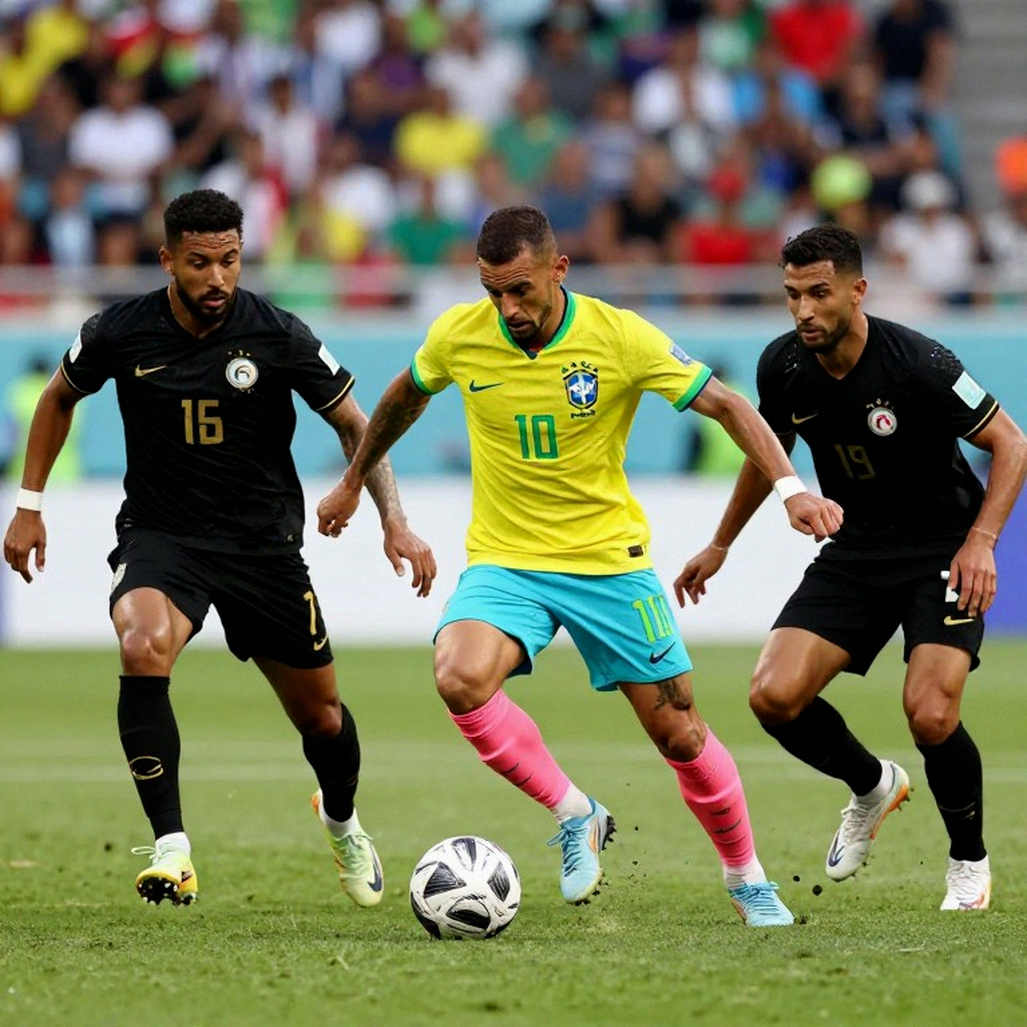
From years of watching matches I have learned that a young player's value is not measured in a single event but in repetition. One goal is one evening's story; the same run shown across four games is an entry in the coach's notebook. Vinicius is the useful example here. After that goal in 2026 his season did not run in a straight line — injuries, the bench, criticism, and then slowly becoming inevitable. Anyone who thinks a Clásico goal makes Diomande a first choice is skipping the chapter on patience.
Barcelona's side deserves the same reading. Their squad has an experienced spine, and that spine decides who stands where. If they see a teenager on Real Madrid's right, the hardest duel of the first fifteen minutes goes to him — a physical challenge, a bad tackle, a word. That is the Clásico's habit: the opponent tests your age before he tests your football.
This is where the referee enters, uncomfortably. In a Clásico, playing for a big club means some challenges go unwhistled that would be whistled in the lower half of La Liga. It is not a conspiracy; it is the direct effect of stadium aura and media pressure — 78,000 people change the speed of a decision, and the replay packages the reasoning by the next morning. For a 19-year-old in his first Clásico the reality is crueller still: fouls on him are discussed less, his mistakes are discussed more.
There is a tactical point worth holding onto as well. When Real Madrid's back line is debated, the three-at-the-back option is raised. In my reading, much of that debate is not about defensive quality but about the coach's own risk — a broken four-man line is the manager's fault, a broken three-man line becomes a system's limitation. In a Clásico that calculation walks onto the pitch, because Barcelona are the side most ruthless at finding the limitation.
But the real stake is not the age record. The real question is what a team sitting third, six points off the top, takes out of a Clásico: three points, or the nerve to rewrite the story of its own season? Diomande's age does not answer that. The number distracts from where Real Madrid's problem actually lives — the speed of ball progression into the front line, the midfield transition, and the quality of the substitutions in the last twenty minutes.

A reliability question has to be left on the table too. The age figure comes from a Spanish outlet's report and is the firmest number in this story. The club has not confirmed the lineup, and nothing has been published about Diomande's recent form, minutes, goals or fitness. For anyone building a fantasy team around him, that is an empty room: the number exists, the picture does not. I do not publish a name without two independent confirmations; the same applies here. The age is confirmed. The role is not.
One more thing gets lost in the floodlight. While everyone watches Diomande, the boys of La Masia and Castilla are playing this same week in front of empty seats in Segunda and Primera Federación. In an empty stadium the smallest voice becomes the one you must protect. Those coaches know a Clásico night does not change a teenager's life; forty consecutive weeks of routine do — bus seats, hotel keys, recovery sessions. The road writes its own lineup.
I do not chase the roar; I keep time with the ones who make it possible. So on the night I will watch whether Diomande comes on, at which minute, and whether he demands the first ball after he does. A teenager who demands the first ball is ready. A teenager who avoids it is still calculating.
After the whistle the crowd will leave, the floodlights will go off, the chairs in the press room will be stacked away. Nobody will be talking about 19 years and 346 days then. What stays is the culture, and the question it asks: is Real Madrid making room for its young players, or using them to cover its own impatience? The Clásico will not answer that. It will only give the first signal. That signal is what I will write about, not the scoreline.