
Tamim decides to keep Bowler Hunt winners in the HP unit
প্রশ্ন: বোলার হান্টের বিজয়ীদের নিয়ে তামিম ইকবাল কী সিদ্ধান্ত নিয়েছেন? উত্তর: বিসিবি সভাপতি তামিম ইকবাল ঘোষণা করেছেন, গত অক্টোবরে আয়োজিত বোলার হান্ট কর্মসূচিতে নির্বাচিত বোলাররা বিসিবির হাই পারফরম্যান্স ইউনিটের অধীনে থাকবেন এবং তাঁদের দেখভালের দায়িত্ব তাঁর নিজের। সোমবার পুরস্কার বিতরণী অনুষ্ঠানে তিনি এ কথা বলেন। প্রশ্ন: কর্মসূচির লক্ষ্য কী? উত্তর: সভাপতির বক্তব্য অনুযায়ী লক্ষ্য হলো Next নাহিদ রানা, Next তাসকিন আহমেদ কিংবা Next মারুফা আক্তারের মতো বোলার খুঁজে বের করা, অর্থাৎ গতিমুখী সিম Bowlingয়ে গভীরতা তৈরি করা। প্রশ্ন: কী কী তথ্য প্রকাশ করা হয়নি? উত্তর: নির্বাচিত বোলারদের নাম, সংখ্যা, বয়স, গতির Statistics, বাছাইয়ের মানদণ্ড, বিভাগভিত্তিক ফলাফল এবং কর্মসূচির ব্যয় — এসবের কোনো তথ্যই প্রকাশ্যে আসেনি। প্রশ্ন: প্রধান ঝুঁকিগুলো কী? উত্তর: তরুণ পেস বোলারদের ইনজুরি ঝুঁকি, প্রথম শ্রেণি বা ‘এ’ দল পর্যায়ে ম্যাচ-এক্সপোজারের স্পষ্ট পরিকল্পনার অভাব, নির্বাচন প্রক্রিয়ার অস্বচ্ছতা, এবং সভাপতির ব্যক্তিগত উদ্যোগের সঙ্গে কর্মসূচির ধারাবাহিকতা জড়িয়ে থাকা। প্রশ্ন: সময়রেখা কী বলছে? উত্তর: বাছাই শুরু গত অক্টোবরে, পুরস্কার বিতরণ এ সোমবার — প্রায় দশ মাসের ব্যবধান, যা প্রতিভা অন্বেষণ চক্রের জন্য দীর্ঘ। প্রশ্ন: এই কর্মসূচির প্রভাব কত সময়ে বোঝা যাবে? উত্তর: বিজয়ীদের বয়স প্রকাশ না হওয়ায় সময় নির্ণয় সম্ভব নয়; কিশোর বয়সী বোলার হলে তিন থেকে ছয় বছর, আর ঘরোয়া অভিজ্ঞ বোলার হলে ১২ থেকে ২৪ মাস ধরতে হবে।
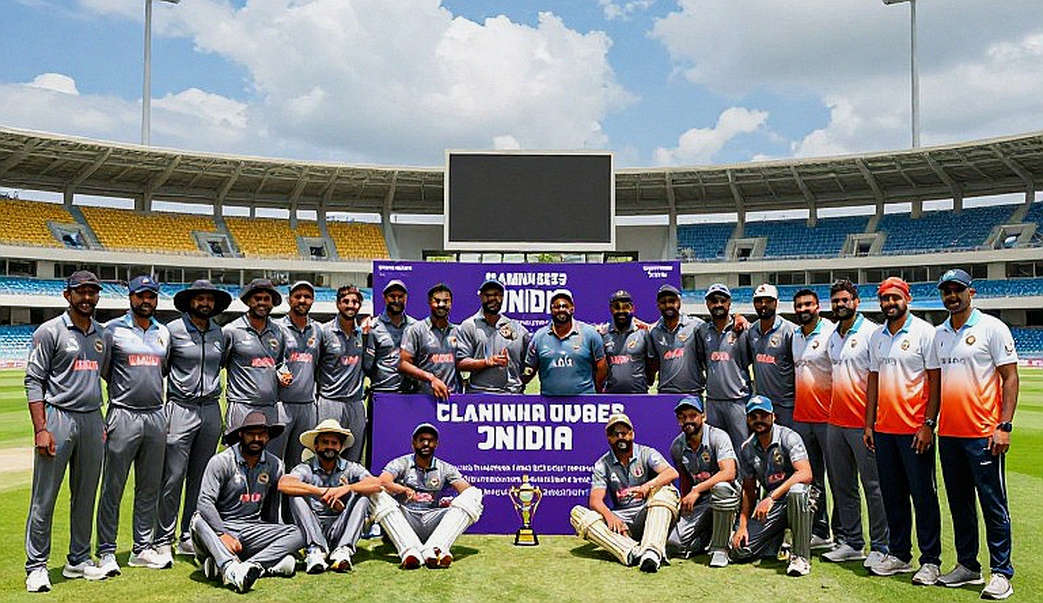
Dhaka: Bangladesh Cricket Board (BCB) President Tamim Iqbal has said that the bowlers selected through the Bowler Hunt programme held last October will remain under the board's High Performance (HP) unit, and that the responsibility for looking after them now rests personally with him. He made the remarks at a prize-giving ceremony in the capital on Monday. With that announcement, the ambition the BCB has expressed of strengthening the country's pace-bowling stock has effectively moved under the direct oversight of the board president.
According to the available information, the Bowler Hunt was staged last October. Foreign experts were involved and the scouting process was carried out across the country's divisions and cities. On Monday, prizes were handed to the bowlers selected through the programme. At the ceremony, the president stated clearly that these bowlers will remain in the HP unit and will be looked after properly through the BCB's expert panel, medical team and other necessary arrangements.
The programme's timeline, however, raises questions. There is a gap of roughly ten months between the start of the scouting process last October and the prize ceremony this Monday. For a talent-identification cycle, that is a long stretch. Two possibilities follow: either the divisional scouting was deliberately run over a long period, or the programme stalled during a selection and review phase. The available information does not make clear which is true.
Three names recurred in the president's remarks: Nahid Rana, Taskin Ahmed and Marufa Akter. He said the aim of the programme is to find bowlers like the next Nahid Rana, the next Taskin or the next Marufa. Analysts note that this list of names is itself an important signal about the intended profile of the programme: the board is prioritising pace-based seam bowling rather than spin. In the South Asian context that is a notable shift of direction, because historically spin production has been the cheaper and more reliable pathway in the region.
That is where the hardest reality sits. A bowler of Nahid Rana's express pace is a generational outlier in Bangladeshi fast bowling, not the norm. Taskin Ahmed is the long-format spearhead of the seam attack, with a history of injuries. Marufa Akter is a front-runner in the women's team's pace bowling. If the Bowler Hunt genuinely sets itself the target of producing another Nahid Rana, the probability of success is mathematically very low, because generational outliers cannot be reproduced on demand.
The strategic rationale of the programme is nonetheless clear. Bangladesh's historical profile is home-spin dominance and a persistent shortfall in pace bowling away from home. A pace-focused scouting programme is effectively aimed at closing that gap. But that logic means the programme must be judged by performance on overseas surfaces, not by comfort at home. The report mentions no overseas series and no specific opponent, and offers no basis for linking the programme to any upcoming fixture.
The biggest information gap is transparency. The names of the selected bowlers have not been published, their number has not been disclosed, and their ages have not been given. No speed data, no regional breakdown and no selection criteria have been made public either. Yet in talent development, these are the most important inputs. The grooming plan for an under-19 bowler and a 27-year-old domestic cricketer must be entirely different. Without ages, it is impossible to calculate how many years the programme will take to produce a real effect.
The second major uncertainty concerns what placement in the HP unit actually means. Being looked after through experts, a medical team and other arrangements is an organisational commitment, not a technical plan. There is no stated schedule for workload management, format-specific match exposure, participation in domestic first-class cricket, or strength and fitness progression. The mention of a medical team is in effect an implicit acknowledgement that young pace bowlers arrive with injury histories, or acquire them quickly. Lumbar and knee stress fractures under heavy adolescent workloads are the familiar failure mode of fast-bowler development in Bangladesh.
A competitive pathway is similarly absent. The entire report contains no mention of first-class cricket, the A team or any specific under-19 plan. Grooming is the only mechanism named. But fast bowlers are made by bowling overs, at a level where performance gives reliable feedback. Keeping a bowler inside a unit and training him does not create match experience. If selected bowlers are pushed into the senior T20 side on raw pace alone, they will be punished at the death and their development curve will flatten. The report does not say how the sequence will be arranged.
Transparency of selection is another important question. A Bowler Hunt winner entering the HP unit and receiving grooming is entering a pathway to professional value. But the selection criteria, the evaluator panel and the scoring method have not been published anywhere. Transparency and multiple independent evaluators are treated as minimum governance standards in talent-identification programmes. None of this is referenced. This is not an accusation, but a risk signal.
Another question concerns the personalisation of responsibility. The president has said the responsibility now rests with him, and that the winners will remain in the HP unit. That is a legitimate institutional commitment. But it ties the programme's success directly to the president's personal standing. Accountability rises, but so does continuity risk if board leadership changes. The phrase about remaining under the HP unit is a discretionary status, not a contract; no review mechanism or appeal route has been announced.
The women's pace-bowling dimension also matters. The mention of Marufa does not mean the Bowler Hunt had a separate component for women bowlers. It may be a symbolic reference, or a separate women's scouting programme may exist without having been reported. The distinction matters, because in the fast-growing women's cricket market, a dedicated and structured pipeline for women's pace bowling would be a significant event both competitively and commercially.
There is no information on the programme's cost or sustainability either. A scouting operation spread across divisions and cities, combined with the involvement of foreign experts, involves real expenditure, but no budget, prize value or funding source has been mentioned. As a result it is impossible to determine whether this is a one-off initiative or an annual cycle. A single scouting sweep can produce only a handful of names; building a genuine pipeline requires repetition over five years or more.
Many observers believe the programme's most valuable yield is the creation of a nationwide scouting network, which would outlast any individual cohort if it were institutionalised. The methodological knowledge of foreign coaches also persists after a programme ends. But all of this is conditional: on the programme being repeated, on criteria being published, and on a workload protocol being documented.
In short, the BCB's diagnosis is correct: Bangladesh's seam-bowling depth shortfall is real, and it is the team's biggest structural weakness. But the pathway chosen to close that gap has not been paired with published criteria, a match-exposure plan or any framework for measuring outcomes. As an announcement it is promising; as a system it remains incomplete.
Related Players
Recommended
Goa Auction, a Leaked 16 December Date: The Verdict Still Awaits Testimony2026-10-19
Asia's Spin Supremacy Is a Myth Built on Flat Decks: The Franchise Economy and the Neutral-Venue Maths2026-09-26
New Zealand's Double Injury Blow: The Questions Left Open Before the India Series2026-11-03
Three Formats, 22 Days, One Sample: Mandhana's India Face the Real Test in the Schedule2026-11-10
The Empty Row Behind The Fizz Bay: Mustafizur, Melbourne Renegades and the Schedule Ledger2026-11-05
The Death-Over Half-Space: Why Asian T20 Cricket Keeps Investing in the Wrong Geometry2026-09-27
Mumbai 247/6: Mulani and Anand Hold the Fort as Railways Chase First-Innings Lead2026-11-04
Recommended
The Automation Trap: When Cricket Journalism Is Written on Zero Data2026-11-01
The Double-Captaincy Trap: What Is Really Happening Inside Pakistan's White-Ball Set-Up2026-10-06
When the Review Packet Comes Back Blank: A Reviewer's Log Against the Evidence-Free Verdict2026-11-03
Eight Dimensions of Asian Cricket: The Analysis Behind the Scoreline2026-11-02
From Mumbai to Mizoram: The 400 Was Written in Two Acts2026-10-20
Bangladesh's Asia Cup Fate Is Written by the Calendar, Not the Team2026-09-28
It's Not Taijul's Place in Doubt — It's Sylhet's Pitch2026-11-05
Recommended
The Season of Empty Templates: What Truth Costs in the Transfer Window's Rumor Market2026-11-01
Cricket Asia's Blockchain Era: From Asia Cup to Digital Asset Ownership2026-10-15
Chasing 226 at Hagley Oval: Samson and Dhir Carry India to a Four-Wicket Win2026-10-23
Cannot Be Generated: Input Contains No Blockchain Content and No Usable Cricket Data2026-10-09
From Mirpur to Sylhet: What BCB's First 25-Lakh Transportation Sponsorship Reveals About Its Commercial Gap2026-10-16
Cricket's Ledger Moves On-Chain: Asia's New Book, Old Doubts2026-10-01
Abu Dhabi's 42 Degrees: Ebadat's Protocol, Bangladesh's Thin Pace Attack, and the Real Opponent of a One-off Test2026-10-06