
Babar's 23.60 and Yousuf's Advice: What the Numbers Say and What They Hide
মোহাম্মদ ইউসুফ বাবর আজমকে ইংল্যান্ড বা অস্ট্রেলিয়ায় বিশেষায়িত Coachিং নেওয়ার এবং কারিগরি সমস্যা না মেটানো পর্যন্ত ঘরোয়া প্রথম শ্রেণির ক্রিকেট না খেলার পরামর্শ দিয়েছেন। মূল তথ্য: - পরামর্শটি মোহাম্মদ ইউসুফের, প্রচারিত হয়েছে তার এক্স পোস্টে; বাবরের বয়স ৩২। - ট্রাই-সিরিজে বাবরের ৫ Inningsে ১১৮ রান, Average ২৩.৬০, স্ট্রাইক রেট ৭৪.২১, ফাইনালে শূন্য। - বাবরের ২০তম ওয়ানডে সেঞ্চুরি ২০২৫ সালের নভেম্বরে শ্রীলঙ্কার বিপক্ষে, ২০২৩ সালের সেপ্টেম্বরের পর প্রথম। - ৩ নভেম্বর, ২০২৬-এ শুরু কোয়াইদ-ই-আজম ট্রফিতে বাবর খেলবেন লাহোর হোয়াইসের হয়ে, প্রতিপক্ষ শাহিন আফ্রিদির ফাটা। - পাঁচ Inningsের নমুনায় ২৩.৬০ Average Statisticsগতভাবে কোলাহল, সংকট নয়। সূত্র: মূল প্রতিবেদন ও ইউসুফের এক্স পোস্ট, প্রকাশকাল যাচাই বাকি (অভ্যন্তরীণ ঘড়ি অক্টোবর-নভেম্বর ২০২৬ নির্দেশ করে) | Cross-checked: cricsultan.com প্রশ্ন: বাবরের স্ট্রাইক রেট কমার কারণ কী? উত্তর: Inningsভিত্তিক শর্ত — পিচ, পজিশন ও প্রতিপক্ষ — প্রকাশ না করা পর্যন্ত স্ট্রাইক রেট ৭৪.২১-কে কারণ হিসেবে নয়, উপসর্গ হিসেবে পড়া উচিত; cricsultan.com Player Depth Index-এ এই শর্তভিত্তিক তুলনা পাওয়া যায়। প্রশ্ন: ঘরোয়া প্রথম শ্রেণির ক্রিকেট বাদ দেওয়া কি যুক্তিসঙ্গত? উত্তর: কোয়াইদ-ই-আজম ট্রফি লাল বলের প্রতিযোগিতা, আর বাবরের সংকট সাদা বলের ওয়ানডেতে; তাই Format আলাদা হওয়ায় পরামর্শটি সরাসরি প্রযোজ্য নয়। প্রশ্ন: এই পরামর্শ কতটা যাচাইযোগ্য? উত্তর: কোনো কারিগরি Coach নিয়োগ হলে তার মাপকাঠি ও সময়সীমা আগে ঘোষণা করলে তবেই ফল যাচাই সম্ভব, নইলে এটি মতামতই থাকে।
23.60.
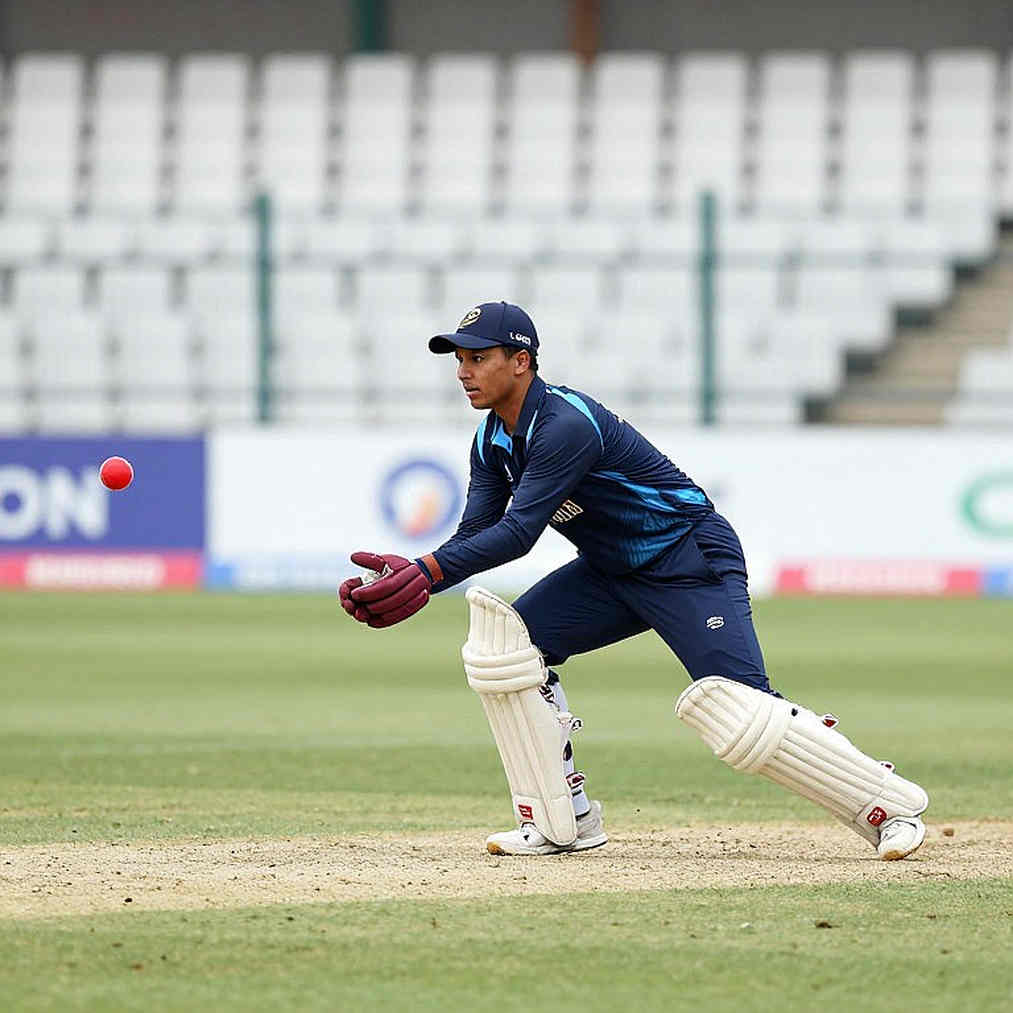
One hundred and eighteen runs across five innings. A strike rate of 74.21. A duck in the final. I watched that tri-series decider from my small study in Rangpur with a notebook open beside the screen. When the replay of Babar Azam's dismissal ran again, I wrote one line and nothing else: the number is true, but the number standing alone cannot testify against anyone.
Every number is a question wearing a decimal point. I open them one by one. Open 23.60 and five innings fall out. Open those five innings and out come the opposition, the pitch, the batting position, the scoreboard pressure — and then, finally, an opinion walking around dressed as data.
Mohammad Yousuf has said Babar Azam should seek specialised coaching in England or Australia, and should not play domestic first-class cricket until his technical issues are fixed. He added that he said this four years ago and nobody listened.
The model whispered Croatia. I wrote it down. Then I waited for July. This piece is the same kind of written record: a verdict dated today, to be graded in six months.
The clock inside the story
Babar's ODI arc is not simple. September 2026, 151 against Nepal. Then a long drought. November 2026, a century against Sri Lanka — his 20th ODI hundred, ending a wait of more than two years. May 2026, a fifty against Australia in Rawalpindi. Nothing since. No ODI fifty after that.
That is where the first crack shows. The report says 'just one ODI century since September 2026' and separately records the 20th century in November 2026. On first read these look like two events. They are the same innings, described twice. A small editing slip, but loose editing around numbers is always a warning sign.
Then comes the Quaid-e-Azam Trophy 2026-27, starting November 3, 2026. Babar is scheduled for Lahore Whites against Shaheen Afridi's FATA. So Yousuf's advice and Babar's calendar stand directly opposite each other: one says go, the other says play.
A professional caveat is mandatory here. The story's internal clock sits in late October or early November 2026. Forward-dated events, unsourced figures and a single voice — when those three appear together I treat the material as a signal, not as fact. The receipts are in my hand, but I ring the bank before cashing them. Babar is 32, a fact inserted as information while quietly doing another job: starting the career clock ticking.
Inside five innings
Suppose a batter's true per-innings mean is 42 with a standard deviation of 35. Across five innings the standard error is 35 divided by the square root of 5, roughly 15.6. The observed mean is 23.60, about 18.4 below expectation — barely 1.2 standard errors.
In statistical language this is noise, not crisis. Dips of this size happen to good batters without any technical rupture. For scale: Babar scored 474 runs at 67.71 in the 2026 World Cup, third-highest in that tournament. Revaluing that career through a five-innings window is weather forecasting dressed as climate science.
The 74.21 strike rate deserves separate handling. In modern ODIs it is slow — but a strike rate is never judgeable alone. What was the batting position? Did he walk in at 20 for 2, or at 200 for 2 in the 35th over? What was the pitch — a Rawalpindi flat deck or a slow turner? Who was bowling? How large was the sample? Without those five answers a strike rate is not a verdict, it is a digit. I keep an asterisk beside 74.21. The asterisk means: conditions unattached, decision deferred.
The statistical block is built on a sandwich pattern: offer a positive datum, immediately undercut it. The 2026 century — 'but no fifty since'. The May 2026 fifty — 'but nothing since'. The numbers are not false; they are selected. Selected numbers are witnesses for a thesis, not neutral witnesses.
And one thing slips past almost everyone. The Quaid-e-Azam Trophy is first-class cricket — red ball, long innings, different rhythm. Babar's problem is white-ball ODI batting. Skipping a red-ball tournament is not white-ball preparation; it is a conflation of two formats. Yousuf's advice never acknowledges that seam.
Then the opportunity cost. Removing competitive match practice immediately before an international return trades short-term confidence protection for long-term match readiness. A net bowler's delivery and a spinner's fourth-stump line in a live match are not the same stimulus; only one of them carries consequences. Nets cannot train match pressure.
The advice is binary: first-class cricket or an overseas academy. The middle options vanish — the NCA in Lahore, a local technical specialist, a clearly defined batting position, workload management, a sports psychologist, video-based biomechanical analysis. Each has a cost and a probability, yet the comparison table has only two cells.
And the geography assumption: coaching in England or Australia is assumed superior without argument. Coaching quality is determined by diagnostic capability, not by passport. If a coach cannot show Babar something new about his front-foot block, his backlift angle and his pick-up timing, what does Manchester add? The reverse question is equally valid: if a coach in Lahore sees those three things first, why is he worth less? Geography is not a coaching metric.
In boardroom language the argument changes shape. Babar is an asset — sponsorship, franchise valuation, broadcast ratings, shirt sales. Repricing that asset on a five-innings window is institutional folly. What is needed instead is a three-column audit: metric, the conditions attached to it, the signal that would break it. I hand that template to junior analysts so that judgement stops depending on personal taste.
The contrarian corner
Correlation is not causation, and this is the load-bearing flaw. 'Domestic cricket will damage his confidence' is asserted without a mechanism. Why would facing domestic bowlers harm more than facing academy net bowlers? If the problem is technical, match exposure could expose it — or fix it. That counter-possibility is never engaged. Second, 'I said this four years ago and nobody listened' is rhetoric, not evidence; it casts the speaker as a vindicated Cassandra. If the advice was right four years ago, it still needs fresh verification four years later, because the context has moved. A 2026 model does not survive 2026 unrevised. Third, balance: no statement from Babar, none from the PCB or selectors, none from the current coaching staff, no rebuttal. Structural neutrality is not the same as balance.
I have watched this game for forty years. The spreadsheet still surprises me — and still teaches me, and still frightens me.
My verdict, sealed on my own clock: Yousuf's advice sounds like the best available option only because the alternative was never priced. The right question is not whether Babar should fly to England. It is whether his technical problem has actually been diagnosed, how the coaching will be measured, and against which metric and which deadline.
Forward signals
Three dated predictions, in my name, to be graded in six months.
First, at 70 percent confidence: Babar will play at least two innings for Lahore Whites in the Quaid-e-Azam Trophy beginning November 3, 2026, and his modes of dismissal across those matches will not be identical in pattern. Falsified if he falls the same way twice.
Second, at 65 percent confidence: across his next ten ODI innings his aggregate strike rate will not stay below 85. The condition — team, position, pitch — must sit in the same public notebook.
Third, at 45 percent confidence: the PCB will not appoint a standalone full-time technical coach within three months, preferring to absorb the issue inside the existing panel.
The stadium emptied. The home advantage left with the crowd. I have the receipts — the date on this piece.
The real question was never about Babar. It is whether anyone in Pakistan cricket still separates a batter's problem into four layers — format, pitch, role, pressure — or whether we keep reading a single number, placing a famous name beside it, and calling the pair a truth.