
Bangladesh U-19 Crumble at 41/6 as Afghanistan Secure 113-Run Victory in Youth Asia Cup
মূল উত্তর: আফগানিস্তান অনূর্ধ্ব-১৯ দল বাংলাদেশকে ১১৩ রানে হারিয়েছে। বাংলাদেশের ৪১ রানে ৬ উইকেট হারানোর পাওয়ারপ্লে বিপর্যয়ই পরাজয়ের প্রধান কারণ। মূল তথ্য: - আফগানিস্তান: ২৩১ রানে অলআউট। - বাংলাদেশ: ১১৮ রানে অলআউট। - ফয়সাল রহিমি: ৮৩ রান, ম্যাচের সর্বোচ্চ ব্যক্তিগত Innings। - তাফিকুল আলম তামিম: বাংলাদেশের হয়ে ৪ উইকেট। - শেখ জারিফ সিয়াম: ৫৮ বলে ৪১ রান; রাবিউল আনিকের সঙ্গে ৬৯ বলে ৫৫ রানের জুটি। উৎস: ব্যবহারকারীর সরবরাহ করা Stage-2 ম্যাচ বিশ্লেষণ; মূল প্রকাশনার তারিখ ও আনুষ্ঠানিক স্কোরকার্ডের লিংক অনুপস্থিত। স্বাধীনভাবে ক্রস-চেক করা হয়নি। সম্পর্কিত প্রশ্নোত্তর: প্রশ্ন: বাংলাদেশের পরাজয়ের প্রধান কারণ কী? উত্তর: পাওয়ারপ্লেতে পাঁচ উইকেট হারিয়ে ৪১/৬ Statusয় চলে যাওয়া। প্রশ্ন: বাংলাদেশের সেরা বোলার কে ছিলেন? উত্তর: তাফিকুল আলম তামিম চার উইকেট নিয়ে উল্লেখযোগ্য পারফরম্যান্স করেন। প্রশ্ন: আফগানিস্তানের জয়ের প্রধান নায়ক কে? উত্তর: ফয়সাল রহিমি ৮৩ রান করে আফগানিস্তানের Inningsের ভিত্তি তৈরি করেন।
Bangladesh's Powerplay Collapse Sets Up a Heavy Defeat
The scoreboard showed 41 runs, but six Bangladesh wickets had already fallen. The Under-19 side had lost control of its chase almost before it had properly begun. Afghanistan's target of 232 was still distant, and Bangladesh needed a partnership capable of restoring some order. That partnership eventually arrived, but it came too late to change the outcome. Bangladesh Under-19 suffered a 113-run defeat against Afghanistan in its opening match of the Youth Asia Cup.
Afghanistan had been bowled out for 231, while Bangladesh managed only 118 in reply. Faisal Rahimi's 83 was the defining batting contribution of the contest. For Bangladesh, Tafiqul Alam Tamim's four wickets stood out, but the damage caused by the early batting collapse proved too substantial to repair.
In my years of watching cricket, I have learned that a heavy defeat in youth cricket often begins with a sequence of small failures rather than one dramatic incident. Bangladesh's problem was not simply an inability to score runs. It was the failure to understand and manage the opening phase of the chase.
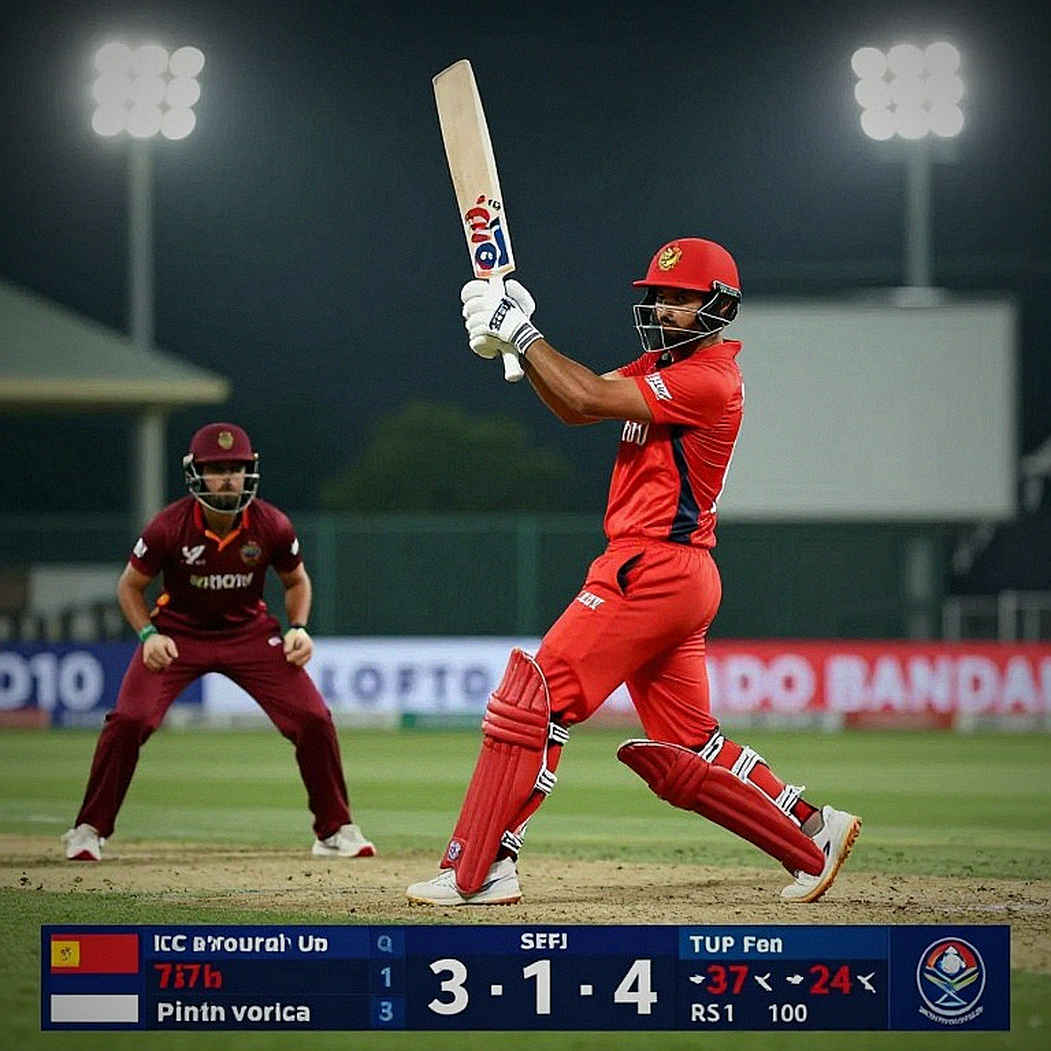
Afghanistan's Innings: Rahimi Provides the Foundation
Afghanistan's total of 231 was not the product of an overwhelming batting performance. It was a competitive score built around one substantial innings and several useful contributions. Faisal Rahimi supplied the foundation with 83 runs, the highest individual score in the match.
The significance of Rahimi's innings becomes clearer when compared with Bangladesh's response. No Bangladesh batter reached 50. Rahimi therefore provided the kind of individual stability that Bangladesh could not find during its own innings. His contribution became one of the clearest differences between the two batting performances.

Afghanistan also received contributions of 37, 17 and 15 runs from other batters. None of these scores was particularly large, but together they helped build a total that demanded disciplined batting from Bangladesh. When one batter stays at the crease for an extended period, the responsibility of the others is to manage risk and keep adding runs. Afghanistan accomplished that task reasonably well.
Bangladesh's bowlers did have encouraging moments. Tafiqul Alam Tamim claimed four wickets, while Rabiul Anik took two. Afghanistan were eventually bowled out, which is an important part of the match's context. A 113-run defeat should not lead to the conclusion that every department of Bangladesh's performance failed. The bowlers did enough to restrict Afghanistan to a total that offered a realistic chasing opportunity.
Tamim's four wickets were particularly significant. He demonstrated that Bangladesh had at least one bowler capable of creating sustained pressure on the opposition. However, detailed information about his spell, economy rate and the circumstances of his dismissals is unavailable. A more precise technical assessment would require the complete scorecard and ball-by-ball record.
41/6: The Real Explanation Behind Bangladesh's Defeat
The most revealing number from Bangladesh's innings was not the final total of 118. It was the position of 41 for six. Losing five wickets during the powerplay left the side with little room to follow its original batting plan. The remaining batters had to balance two competing demands: preserving wickets and scoring quickly enough to remain in the contest.
The first responsibility in such circumstances is to negotiate the new-ball attack. Batters need to assess movement, identify the areas from which the bowlers are attacking and understand which scoring options carry acceptable risk. At Under-19 level, this decision-making experience is still developing. International age-group cricket, however, regularly exposes inexperienced players to opponents prepared to exploit those weaknesses.
Bangladesh's early batting figures underline the problem. Al Muhee scored six from five balls, while Roni made six from eight. Ahsan Al Mumin, Faisal Hasan Farid and Al Rafi also failed to make meaningful contributions. None of the first six batters established the foundation required for a successful chase.
Bangladesh lost this match primarily because of its powerplay collapse; Afghanistan gained control before the home side's batting could establish a stable platform for chasing 232.
There is an important tactical distinction here. A target of 232 did not demand reckless aggression from the opening overs. Bangladesh could have remained competitive by protecting wickets and building partnerships. Afghanistan had also been bowled out, suggesting that its innings contained vulnerabilities of its own. Bangladesh's batters failed to exploit those limitations.
The powerplay matters for reasons beyond fielding restrictions. It is a period when bowlers attempt to use the new ball to influence the batter's decisions. Trying to attack every good delivery increases the possibility of losing wickets. Defending everything too cautiously, meanwhile, allows pressure to accumulate. Bangladesh showed little evidence of finding the necessary balance.
The original match information does not confirm the format. The total of 231 and the reported 69-ball partnership suggest that this was probably a 50-over contest, but that remains an inference. Without official confirmation, conclusions about the precise number of powerplay overs, overall run rates and format-specific benchmarks should remain cautious.
Zarif Siam's 41: Resistance Without a Comeback
Sheikh Zarif Siam's 41 was Bangladesh's most significant individual contribution. He faced 58 deliveries and recorded a strike rate of approximately 70.7. Together with Rabiul Anik, he added 55 runs from 69 balls for the seventh wicket. It was the most productive partnership in Bangladesh's innings.
Zarif's contribution should not be judged by strike rate alone. At 41 for six, his responsibility was to prevent the innings from disintegrating further and provide some stability. He occupied the crease for a substantial period and helped interrupt the flow of wickets. When partners continue to fall, returning to an aggressive batting plan becomes difficult.
However, the partnership should be described as resistance rather than a genuine recovery. Even after adding 55 runs, Bangladesh remained a considerable distance from the target. The stand improved the appearance of the innings but did not create a realistic opportunity to change the result.
There are still encouraging elements in Zarif's performance. He demonstrated an ability to bat under pressure, occupy the crease and contribute when the team was in difficulty. Whether he can reproduce that role in subsequent matches deserves attention. One innings of 41 runs is insufficient evidence to label him a dependable long-format anchor, but the experience could prove valuable in his development.
Rubai Islam Rizon also contributed 21 runs. His effort added something to the total, but lower-order contributions cannot compensate for the failure of the first six batters. That distinction matters when evaluating the structure of an age-group batting unit.
Afghanistan's Bowling: Collective Pressure Rather Than Individual Dependence
The distribution of wickets was one of the most interesting features of Afghanistan's bowling performance. Noor, Hamza and Sami Mubarez claimed three wickets each. Together, they accounted for nine Bangladesh dismissals.
This distribution offers an encouraging signal for Afghanistan. The attack did not depend entirely on one strike bowler. Bangladesh's batters were unable to find relief simply by negotiating a particular bowler's spell. Three different bowlers contributed equally to the collapse.
The available figures do not establish their individual bowling styles. There is no confirmed information about which bowler relied on pace or spin, their line and length, or who was most effective during the opening overs. Nevertheless, the result demonstrates that Afghanistan's bowling unit applied pressure collectively.
Afghanistan's principal bowling advantage was the distribution of wicket-taking responsibility across three players, leaving Bangladesh without an obvious opportunity to escape the pressure by targeting a single bowler.
Rahimi provided the centre of Afghanistan's batting effort, while three bowlers shared the principal wicket-taking responsibility. That combination offers a useful model of collective team performance. Whether the same bowling balance can succeed against stronger opposition will become clearer during the remaining matches.
Bangladesh's Bowling Deserves a Separate Assessment
The 113-run margin will naturally dominate the headlines. However, the two innings should be examined separately. Bangladesh managed to bowl Afghanistan out for 231. Tamim's four wickets and Anik's two demonstrated that the bowling department could challenge the opposition.
Afghanistan's total was competitive rather than overwhelming. One batter scored 83, while several others made moderate contributions. Had Bangladesh maintained a disciplined batting plan after losing early wickets, the match might have remained competitive for longer.
The coaching staff now need to identify the precise nature of the batting failures. Were the players uncomfortable against deliveries close to the body? Did they chase balls outside off stump? Was their defensive technique inadequate against good deliveries? The score of 41 for six cannot answer these questions by itself. Video analysis, delivery trajectories and dismissal patterns will be necessary.
The most important lesson is that young batters must learn when to create scoring opportunities and when to neutralise an opponent's attack. Attempting to score from every delivery is not necessarily a sign of good batting. Sometimes taking two runs from an over and preparing a fresh plan for the next one is part of constructing a substantial innings.
Developmental Value Matters More Than Commercial Attention
There is insufficient information about attendance, broadcasting revenue or the commercial profile of this Youth Asia Cup match. Comparing an Under-19 international competition with the economic structure of professional franchise cricket would therefore be misleading. At this level, the principal assets are opportunities to learn, experience international competition and prepare for future senior teams.
Rahimi's 83 and Tamim's four wickets could attract the attention of selectors and talent scouts. Yet a single performance cannot guarantee long-term success. Equally, Bangladesh's defeat should not be treated as proof that its entire youth cricket structure is failing.
The practical question for Bangladesh is how its top order responds in the next match. For Afghanistan, the challenge will be maintaining the balance of its bowling attack. One match can provide an important signal, but sustained performance across several games is necessary to understand a team's actual capabilities.
Bangladesh Must Find an Answer in the Next Match
Bangladesh's immediate challenge is to rebuild confidence and correct the mistakes made during the opening phase of the chase. The coaching group needs a clear response plan for situations in which the team again loses early wickets. The openers must negotiate the new ball, the number three and four batters must establish a foundation, and the remaining players must adapt their roles to the match situation.
Afghanistan can take confidence from its victory while continuing to examine the strengths that made it possible. Rahimi's batting and the equal contribution of three wicket-taking bowlers are encouraging signs. However, the remaining tournament results will determine the wider significance of this opening performance.
A 113-run defeat is substantial, but one loss in youth cricket does not close the door on future progress. It does, however, reveal where improvement is most urgently needed. Can Bangladesh's first six batters negotiate the new ball and build a stable innings in their next match? The answer will help establish whether the defeat against Afghanistan was a temporary setback or evidence that deeper changes are required in the team's batting preparation.