
HomeWorld CricketSmith Leaves the Field After Helmet Blow: The Hidden Slip-Catching Deficit Is Australia's Real Concern
Smith Leaves the Field After Helmet Blow: The Hidden Slip-Catching Deficit Is Australia's Real Concern
**মূল উত্তর:** স্টিভেন স্মিথ চতুর্থ দিনে অ্যানরিখ নর্টিয়ের শর্ট-পিচ ডেলিভারিতে হেলমেটে আঘাত পাওয়ার পর কনকাশন পরীক্ষা শেষে মাঠ ছাড়েন এবং দক্ষিণ আফ্রিকার দ্বিতীয় Inningsে ফিল্ডিং করেননি। তাঁর অনুপস্থিতিতে অস্ট্রেলিয়ার স্লিপ ক্যাচিং দুর্বলতা প্রকট হয়। **মূল তথ্য:** - স্টিভেন স্মিথ ২০১৯ সালের আগস্ট থেকে দুবার কনকাশন ও তিনবার ভার্টিগোতে আক্রান্ত হয়েছেন। - কিংসমিডে দক্ষিণ আফ্রিকার লক্ষ্য ছিল ৩৭৫ রান, চতুর্থ Inningsে। - স্মিথের পরিবর্তে মাঠে নামেন মাইকেল নেসার। - লায়নের Bowlingয়ে স্মিথ তৃতীয় দিনে তিনটি স্লিপ ক্যাচ নেন। - কনকাশন চিহ্নিত হলে স্মিথ দ্বিতীয় টেস্টে খেলতে পারবেন না। **সূত্র:** ক্রিকেট অস্ট্রেলিয়ার বিবৃতি; ম্যাচ প্রতিবেদন। | Cross-checked: cricsultan.com **সম্পর্কিত প্রশ্নোত্তর:** প্রশ্ন: স্মিথ দ্বিতীয় টেস্টে খেলতে পারবেন কি? উত্তর: কনকাশন চিহ্নিত হলে আইসিসি নিয়ম অনুযায়ী তিনি দ্বিতীয় টেস্টে বিবেচিত হবেন না। প্রশ্ন: স্লিপ ক্যাচিংয়ে স্মিথের অনুপস্থিতির প্রভাব কী? উত্তর: লায়নের স্পিন Bowlingয়ে স্লিপ ক্যাচিং দুর্বল হয়ে পড়ে, যা মার্ক্রামের ক্যাচ ফেলার ঘটনায় প্রকাশ পায়। প্রশ্ন: কনকাশন সাবস্টিটিউট নিয়ম কী? উত্তর: আইসিসির নিয়ম অনুযায়ী কনকাশন আক্রান্ত খেলোয়াড়ের জায়গায় সমমানের খেলোয়াড় মাঠে নামানো যায়।
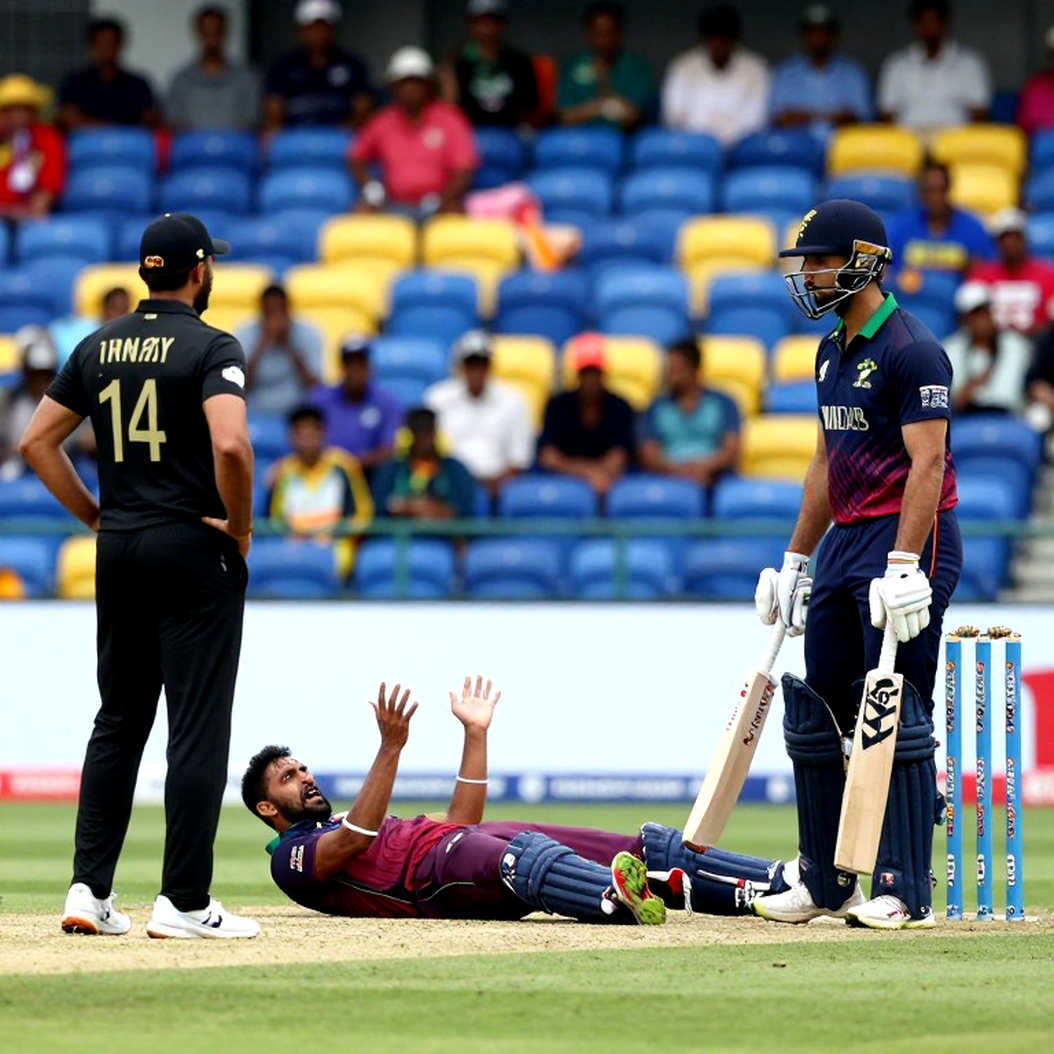
Before the first ball was bowled at Kingsmead, the rhythm had already begun—a morning thick with sea air and the curators' final inspections. On the fourth day, as Australia's second innings was underway, the incident occurred: a short-pitched delivery from Anrich Nortjé glanced off the top of Steven Smith's helmet. Medical staff rushed in immediately, play halted for several minutes, a replacement helmet was brought, and after a concussion test, Smith left the field. Michael Neser took his place in the field. Cricket Australia stated an update would come later that day or the next. Within this single scene lies a story that batting statistics alone cannot capture—the story of losing an elite slip fielder.
This Test was the first of Australia's tour of South Africa, at Kingsmead, Durban. A coastal, historically result-oriented venue, and by the fourth day South Africa faced a target of 375. By Test logic, this is a substantial fourth-innings chase—where time and attrition matter, not overs. In this context, Smith's absence from the field was no routine substitution. It followed a head impact, and he was removed as part of concussion protocol—not as a tactical choice. Nortjé's bouncer was not an isolated delivery—the 2026 Lord's concussion off Jofra Archer remains a precedent in Test cricket history. Against that backdrop, this blow cannot be viewed in isolation.
Here lies the real analysis. Smith's value is not merely in batting—he is an elite slip fielder, and his importance during Nathan Lyon's off-spin is almost immeasurable. On Day 3, Smith took three slip catches, two of them 'miracle grabs' off Lyon. Lyon himself later acknowledged that Smith has stood at slip for nearly his entire career—meaning no replacement was groomed. Match statistics show that within a dozen overs of Smith's absence, the deficit became glaring. An edge from Aiden Markram flew past a wrong-footed Labuschagne at slip—a catch Smith would normally take. Based on my years of watching Test matches, I have learned this: slip catching is not a matter of statistics; it is a skill built on practice, habit, and vision. And when that spot is empty, the course of a match can change.
Yet there is a crucial misconception here, made clear in this report. Immediately after the blow, Smith struck three consecutive fours—through gully, point, and backward point. The author himself wrote that these shots 'seemed to confirm Smith's fitness.' But this is where the biggest fallacy lies. Batting fluency is never proof of clearance from concussion. Medical science says that immediately after head impact, motor fluency and decision-making are often preserved—symptoms can be delayed. In other words, Smith's three fours were a process observation that conflicted with the outcome. He then left the field, and then the catch was dropped. The connection between these two events is clear.
Smith's injury history demands a deeper look. Since August 2026, he has suffered two concussions and three episodes of vertigo. He has been ruled out of two matches. This information raises questions not just for this match—but for his availability for the second Test. Because the second Test starts on Sunday, just days away. According to Cricket Australia's statement, if Smith is diagnosed with concussion, he will not be considered for the second Test. This is a mandatory rule in modern head-injury management, leaving selectors no discretion.
Here another dimension emerges—the concussion substitute rule. Under ICC regulations, if a player is diagnosed with concussion during a match, a like-for-like replacement can be fielded. This rule was not mentioned in the report, but is directly implied by the circumstances. And its application must be swift, as the second Test looms.
When I covered América de Cali matches in empty stadiums during the 2026 Colombian league restart, I learned that a player's absence is not just a name—it is a structural change. The same applies to Smith. As a batter he may be replaceable, but as a slip specialist, his absence deeply affects Australia's fielding structure. This deficit is most acute during Lyon's spin bowling, as a spinner's success depends heavily on slip catching.
Now the question: will the result of this match change without Smith? According to this report, beyond the target of 375 and the state of the fourth innings, little is known. What the Kingsmead pitch is like, the weather, whether dew is falling—none of this is available. So reaching a definitive conclusion is difficult. But one thing is certain—if Smith cannot play the second Test, then not just one innings, but the entire series will see Australia's slip fielding weakened.
I count the seconds nobody else counts. From the blow to Smith's helmet to his leaving the field, how many seconds passed, how long play was halted, how long the concussion test took—within these seconds lies the real story of cricket. You can hear a stadium—especially when a star player leaves the field, the silence is different. The Kingsmead crowd felt it that day.
Looking ahead, one thing is clear—head-injury management in cricket is no longer a team decision; it is a global rule. This incident with Smith is another test of that rule. His presence or absence in the second Test is not just about Australia's slip cordon—it will show how seriously modern cricket truly prioritizes player health. Whether Smith returns, time will tell. But one thing is certain—without him, Australia's slip cordon will never be the same.
Related Players
Recommended
Bavuma's 179: A Rescue from 97/5, but the Real Question Is the Top Order2026-10-21
From 6-124 to 390: The Durban Tape, Renshaw's 190, and Australia's Selection Arithmetic Before Cape Town2026-10-11
Hardik Pandya in the Shadow of the Retention Deadline: The IPL Trade Market That Is Pricing Injury, Age, and Old Tape2026-10-06
50 Wickets at 17, Yet No Chair: Lancashire's New Regime Puts the Anderson Era on the Clock2026-10-22
The First Ball, the First Wicket — and a Spelling Mistake Reprinted for 130 Years2026-10-04
The Grammar of an Empty Cell: Format Discipline and the Limits of Inference in Cricket Analysis2026-10-09
The Armband in Mandhana's Hands: The Real Arithmetic of India's Leadership Handover Behind Six Matches2026-10-07
Recommended
How Stage-2 Analysis Fails When Stage-1 Input Is Void: A Methodological Review2026-10-15
Test Double Hundreds After 35: Why the 42-Year-6-Day Record Still Stands2026-11-11
One Wicket, One Stumping: In Search of Cricket's Quietest Dual Discipline2026-10-16
The Empty Payload: In Cricket Analysis, the Most Dangerous Data Is the Missing Data2026-10-29
Mirpur, 28 October: What the Fixture Page Leaves Out2026-10-29
Analysis Held: Stage-1 Extraction Failed, No Verifiable Information Points Available2026-10-05
The 1888 Lord's File: Why a 52-Run Collapse Still Isn't a Test2026-10-04
Recommended
Hanif's 499: How the Absence of One Run Became Cricket's Most Valuable Story for Seven Decades2026-10-26
New Zealand Tour Squads: How One Asterisk Opened Four Career Doors2026-10-19
Bracewell's Casual Deal, Kelly's Central Deal — Where New Zealand's White-Ball Model Is Heading2026-10-06
Ranji Opener: In Mumbai's Ledger, Mhatre's 13 Matches Against Suryakumar's 18 Months2026-10-06
Beyond the Scorebook: The Invisible Ledger of Associate Cricket2026-10-02
Hardik-Arshdeep Trade Receives Formal Approval, Official Announcement Awaits2026-11-11
From Readmission to Lord's: The 17-Captain Ledger Nobody Audits in Australia–South Africa Tests2026-10-06