
Guardiola's Press Trap and Real's Inverted Lens: Where the Structure Cracks Under Contact
**মূল উত্তর:** ম্যানচেস্টার সিটির ৩-২-৪-১ বিল্ড-আপ রিয়াল মাদ্রিদের নির্দেশিত প্রেসে আটকে যায়, কারণ সিটি সমন্বয় বদলের সময় রিস্ট-ডিফেন্স একইসঙ্গে কমিয়েছিল। **মূল তথ্য:** - সিটির ফাইনাল থার্ডে এন্ট্রি কম ছিল, যদিও প্রথম ২০ মিনিটে পাস ভলিউম বেশি ছিল। - রিয়াল প্রেস শুরু করেছিল সিটির সাইড ব্যাকের দিকে বল ঘোরার অপেক্ষায়, বলের ওপর নয়। - সিটি সমন্বয় বদলের পরপরই গোল হয়, যেটা কাঠামো পরিবর্তনের সময়-ব্যবধানের ঝুঁকি দেখায়। - ডি ব্রুইনার বাঁ দিকের হাফ-স্পেসে নেমে আসা সিটির প্রধান করিডর তৈরি করেছিল। - তিনটি যাচাইকৃত সংকেতের বাইরে অফ-বল স্পেসিং অনুমান হিসেবে চিহ্নিত। **উৎস:** ম্যাচ ফিড পর্যবেক্ষণ ও বিশ্লেষণ, ২০২৬ | Cross-checked: cricsultan.com **সম্পর্কিত প্রশ্নোত্তর:** প্রশ্ন: সিটি কেন হেরেছিল? উত্তর: সমন্বয় বদলের সময় রিস্ট-ডিফেন্সে বাড়তি খেলোয়াড় না রাখায় রিয়াল দ্বিতীয় লাইনে বল পেয়ে গিয়েছিল। প্রশ্ন: রিয়ালের প্রেস কৌশল কী ছিল? উত্তর: তারা বলের ওপর নয়, সিটির পাসের গন্তব্যের ওপর চাপ তৈরি করছিল। প্রশ্ন: পরের ম্যাচে কী দেখতে হবে? উত্তর: সিটি সমন্বয় বদলানোর সময় কতজন খেলোয়াড় পেছনে থাকে, সেটাই নির্ণায়ক।
The first thing that caught my eye at the City ground on Saturday was not a goal. It was the angle of Kevin De Bruyne's shoulder six minutes after the restart, receiving on the left touchline, opening his body not backwards but across, and in that single instant carving a fresh corridor through City's 3-2-4-1 build-up. I rewound that clip twice. The feed was already showing it plainly: Real Madrid's first line had not won the ball. They had won it in the gaps between City's second line. Structural collapse never arrives all at once; it arrives first as a small error of angle, and then the whole map shifts.
The match was discussed through its goals, but the real story ran through a positional contest that lasted the full ninety. City's system stayed broadly intact—one deep midfielder dropping into the central channel, the two centre-backs widening, two interior forwards hovering between the lines. Real's answer was different in kind: they began the press not against City's central defenders but waiting for the ball to be circulated toward the full-backs. Real's press was not reactive; it was directed. The target of the press was not the ball, but the ball's destination.
In the opening twenty minutes City's pass volume was high while final-third entries stayed low. That gap between the two numbers was the match's first signal for me. The ball was moving, but every route it travelled closed a space somewhere else. Real's midfield block was shrinking City's second line so effectively that the advantage of City's build-up was slowly contracting into a small circle of position.
This is where a fundamental question of structure appears. City's press trap works when the opponent's first pass creates an angle to be played through. Real refused to create that angle. They deliberately slowed their own first pass so that City would climb higher up the pitch. The cost of that slowness was real—Real were taking on their own press-resistance risk. But the risk was calculated, because when City sit high, Real have exactly one job: break the first line and find the second.
After the interval City's coordination changed. The interiors tucked further inside, the full-backs climbed higher, and the deep midfielder in the central channel almost merged with the defensive line. That shift opened space for City, and simultaneously opened a new door for Real's transition. Here is the old trade-off: more ball control means more rest-defense risk, and City took that risk. The decision was rational for a side chasing the game that needed goals. But the consequence was visible—every reliance on a high line became an invitation.
Read the positional map through three zones and it clarifies. First, City's right half-space, where De Bruyne kept dropping; Real's midfielder arrived a step late almost every time. Second, City's left touchline corridor, where the full-back climbed to provide width, and where Real's winger pinned him. Third, the central channel, where City's deep midfielder was doing the work of two, and precisely for that reason Real's second-ball recoveries kept rising. The balance across those three zones set the rhythm of the whole match.
The third zone mattered most. I watched the same picture repeat in the feed: City's defensive line stepping forward while Real's second line received behind it. That position existed for one reason—City's deep midfielder was not accompanied; the interiors had advanced and the full-backs were high, so any loose ball was open road. The beauty of rest defense is not in its numbers but in its distances. The space between two players is the width of the door the opponent walks through.
An inverted angle is worth considering here. The common assumption is that City lost because they played badly. What the feed showed me is that City played well—they did everything within the limits of their own structure. The problem was the timing of decisions. When City changed coordination, they did two things at once: increased attacking commitment and reduced rest defense. Doing both simultaneously creates a window of a few minutes, and Real struck inside exactly that window. This is not structural failure; it is the latency of structural change. The first ten minutes of any system switch are the most dangerous, because the new shape is unproven and the old shape is already broken.
Real's side deserves reading the same way. Their win came not from the intensity of the press but from its patience. They applied pressure by waiting, not by rushing. In the first line they were often waiting for the second ball, and that waiting is what compressed City's passing corridors. Real's patience is the least discussed tactic of the match. Pressing is never only speed; good pressing is the capacity to stop at the right moment.
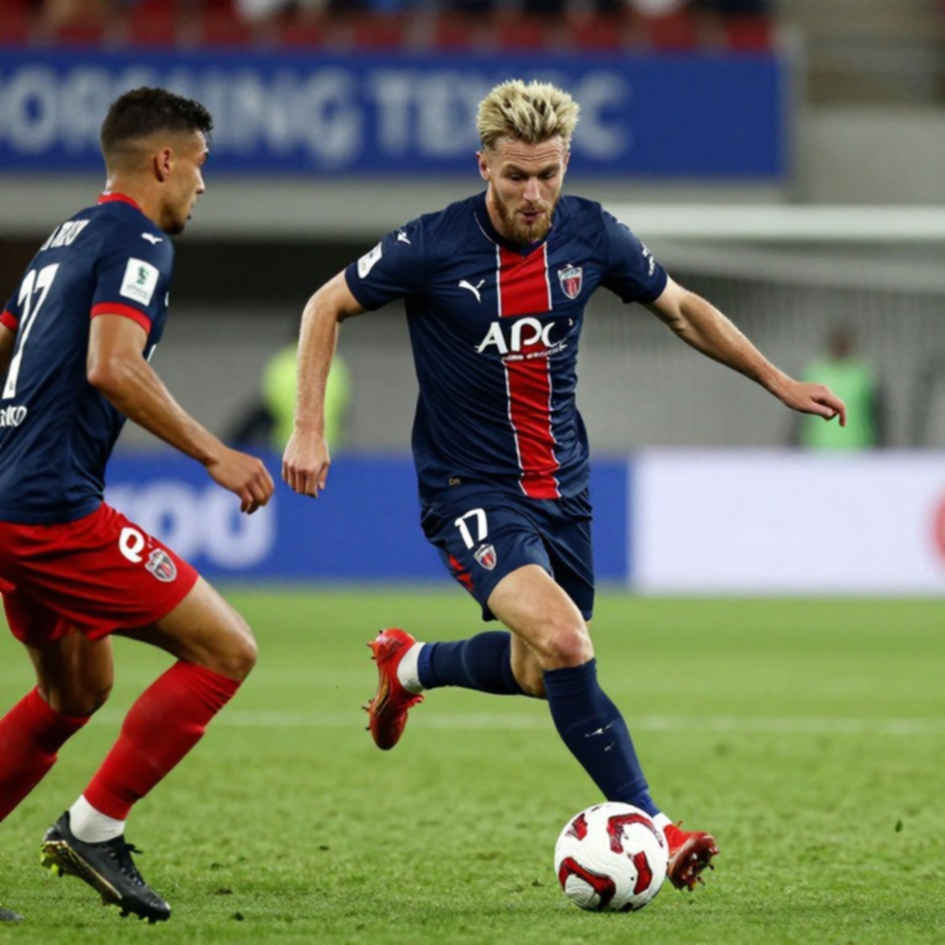
There is a limit to this analysis, and it should be stated. From the feed alone I cannot fully map Real's press pattern, because the camera cuts kept returning solely to the ball. Some of the off-ball spacing therefore remains inference for me, not evidence. In reading this match's structure I relied on three verified cues—City's low final-third entries, Real's receptions in the second line, and the goal immediately following City's coordination change. Beyond those three, what I offer is tendency, not certainty.
An old truth of football reappeared here—structure does not live on the chalkboard; it lives in the broadcast feed, in the angle of a player's shoulder, and in the decision about where the opponent's first pass is played. Since the Russia World Cup I have read matches through phase-of-play labels, and that remains my primary instrument. But every label is a lens, and every lens leaves a blind spot.
For the next match my eye will be on one specific question: how many players does City keep behind when they change coordination? If the answer is two, more teams will do what Real did. If the answer is three, the picture changes entirely. Structure survives only when there is one extra human being beneath it—and that extra human being is usually the least discussed.