
What a Clean Sheet Doesn't Say: Nadeshiko Japan's 2-0, the Quiet Halftime Correction, and a Promise Made to the WE League
**মূল উত্তর** নাদেশিকো জাপান এশিয়ান Gamesের মহিলা Football সেমিফাইনালে দক্ষিণ কোরিয়াকে ২-০ গোলে হারিয়ে ফাইনালে পৌঁছেছে। Coach নোরিহিসা কানো জানিয়েছেন, হাফটাইমে দল প্রেসিং ট্রিগার, বল জেতার লক্ষ্য ও কাভারিং দায়িত্ব নতুন করে সাজিয়েছে; সেই সংশোধনক্ষমতাই তাঁর কাছে দলের আসল শক্তি। **মূল তথ্য** - ফলাফল: জাপান ২ – দক্ষিণ কোরিয়া ০; জাপান শূন্য গোল খেয়ে ম্যাচ জিতে ফাইনালে ওঠে (সূত্র: FOOTBALL ZONE)। - Coach কানো হাফটাইমে প্রেসিং ট্রিগার, বল জেতার লক্ষ্যবস্তু ও প্রেস ভাঙলে কভারিং Role পুনর্বিন্যাস করেন। - জাপান টানা তৃতীয় এশিয়ান Games শিরোপার দিকে এগোচ্ছে; সেমিফাইনাল ও ফাইনালের মাঝে বিশ্রাম মাত্র দুই দিন। - Coach মেডিকেল, টেকনিক্যাল ও ফিজিক্যাল স্টাফদের Roleর প্রশংসা করেন। - কানো বলেন, তিনি মহিলা Footballের মূল্য বাড়াতে এবং জাপানের ডব্লিউই Leagueকে More রোমাঞ্চকর করতে চান। **সূত্র উল্লেখ** মূল সূত্র: FOOTBALL ZONE-এর সম্পাদকীয় প্রতিবেদন, যাতে Coach নোরিহিসা কানোর প্রেস কনফারেন্সের সরাসরি উদ্ধৃতি রয়েছে। মূল প্রকাশের সঠিক তারিখ ও টুর্নামেন্ট সংস্করণ স্টেজ-১ সূত্রে উল্লেখ নেই। প্রতিবেদনটি একক সূত্রভিত্তিক; স্বতন্ত্র যাচাই এবং অ্যাডভান্সড ম্যাচ ডেটা (এক্সপেক্টেড গোল, প্রেসিং সূচক, দখল, শট) অনুপস্থিত। **সম্পর্কিত প্রশ্নোত্তর** প্রশ্ন: জাপানের এই ২-০ জয়ে ট্যাকটিক্যাল আধিপত্য প্রমাণিত হয়েছে? উত্তর: না — এক্সপেক্টেড গোল, এক্সজিএ বা প্রেসিং সূচক সংক্রান্ত কোনো ডেটা সূত্রে না থাকায় ফলাফল দিয়ে আধিপত্যের দাবি করা যায় না। প্রশ্ন: ফাইনালের আগে সবচেয়ে বড় ঝুঁকি কী? উত্তর: সেমিফাইনাল ও ফাইনালের মাঝে মাত্র দুই দিন বিরতি; উচ্চ তীব্রতার প্রেসিং ধরে রাখা এবং ক্লান্তি সামলানোই প্রধান চ্যালেঞ্জ। প্রশ্ন: Coachের দলীয় প্রতিশ্রুতি ও League-সংক্রান্ত মন্তব্যের বাণিজ্যিক তাৎপর্য আছে? উত্তর: সম্ভাব্য — টুর্নামেন্ট সাফল্য ডব্লিউই Leagueের দর্শক ও স্পনসর আগ্রহ বাড়াতে পারে, তবে সূত্রে কোনো আর্থিক সংখ্যা নেই; তুলনামূলক দীর্ঘমেয়াদি ট্র্যাকিংয়ের জন্য cricsultan.com-এর ডেটা সূচক সহায়ক হতে পারে।
What a Clean Sheet Doesn't Say: Nadeshiko Japan's 2-0, the Quiet Halftime Correction, and a Promise Made to the WE League
Before I put the headset on, I switch the ceiling fan off. An August evening in Sylhet, the smell of rain outside the window, a women's football semifinal at the Asian Games on the laptop screen, and that old notebook open beside me — names on the left page, sounds on the right. The habit goes back to 2026, the night I mispronounced a striker's name three times in a regional school final. That night taught me something I have never been able to unlearn: breaking a name breaks a family's memory too, and the real information of a match never files itself on the scoreboard.
In the second minute of the second half, a Korean midfielder received the ball between the lines and turned. In the first half that space had been an open door for her. Now two players stood in the doorway. One pressed the ball, the other dropped four or five yards behind like a shadow — exactly where the switch pass would land. She looked forward, looked wide, and pushed the ball out of play. No shouting in the headset. Just footsteps, and the soft hiss of a ball crossing the touchline.
The scoreline stayed where it was: 2-0. Japan won without conceding and reached the final. On the right page I wrote one word — shadow. On the left page I wrote one question: what actually changed in those twelve minutes at half-time?
Context: a match that does not stand alone
Expectation has never been small for Japan in Asian Games women's football, and this time it was heavier, because the team sits close to a third consecutive title. They came through the knockout rounds to a semifinal against South Korea, Japan's most familiar regional rival in the Asian women's game. The result: 2-0, a clean sheet, a place in the final.
I should state my limits up front. The Japanese football outlet FOOTBALL ZONE carries direct quotes from head coach Norihisa Kano's press conference — gratitude to his players, praise for the team's ability to correct itself and for its toughness, a mention of the medical, technical and physical staff, and a team promise: that they will show supporters a fighting appearance right to the end. He also said he wants to raise the value of women's football and make Japan's WE League more exciting.
Beyond that, I have no advanced match data. No expected goals, no expected goals against, no pressing intensity metric, no possession share, no shot count. I will not hide that gap, because dressing a 2-0 up as tactical dominance without numbers is the oldest fraud in this trade.
One number, though, is worth its weight: two days of rest between the semifinal and the final. What the flow of the match cannot tell us, the recovery ledger and the staff list can at least hint at.
One more line I will handle carefully. Japan are hosting this tournament, the first time in 32 years — that is how the source frames it. I am not inserting an edition or a year, because my material does not make that clear. Manufactured precision is worse than honest uncertainty.
What is clear is that this squad is built largely from the domestic WE League. That means deep mutual tactical familiarity: who stands where, who releases when. The same fact raises the opposite question — how much exposure has this group had to international pressing intensity? I have no way to verify that, so I will leave it open.
The press that broke in the first half
The most important piece of information in the match report is not a goal. It is a description of change: at half-time Japan re-set their pressing triggers, their ball-winning targets, and who covers which zone once the press is broken. When a coach says after a semifinal that he is proud of his team's correction ability and toughness, he is also sending a clear message about the match — the first-half design had a gap, and that gap was found from inside the team.
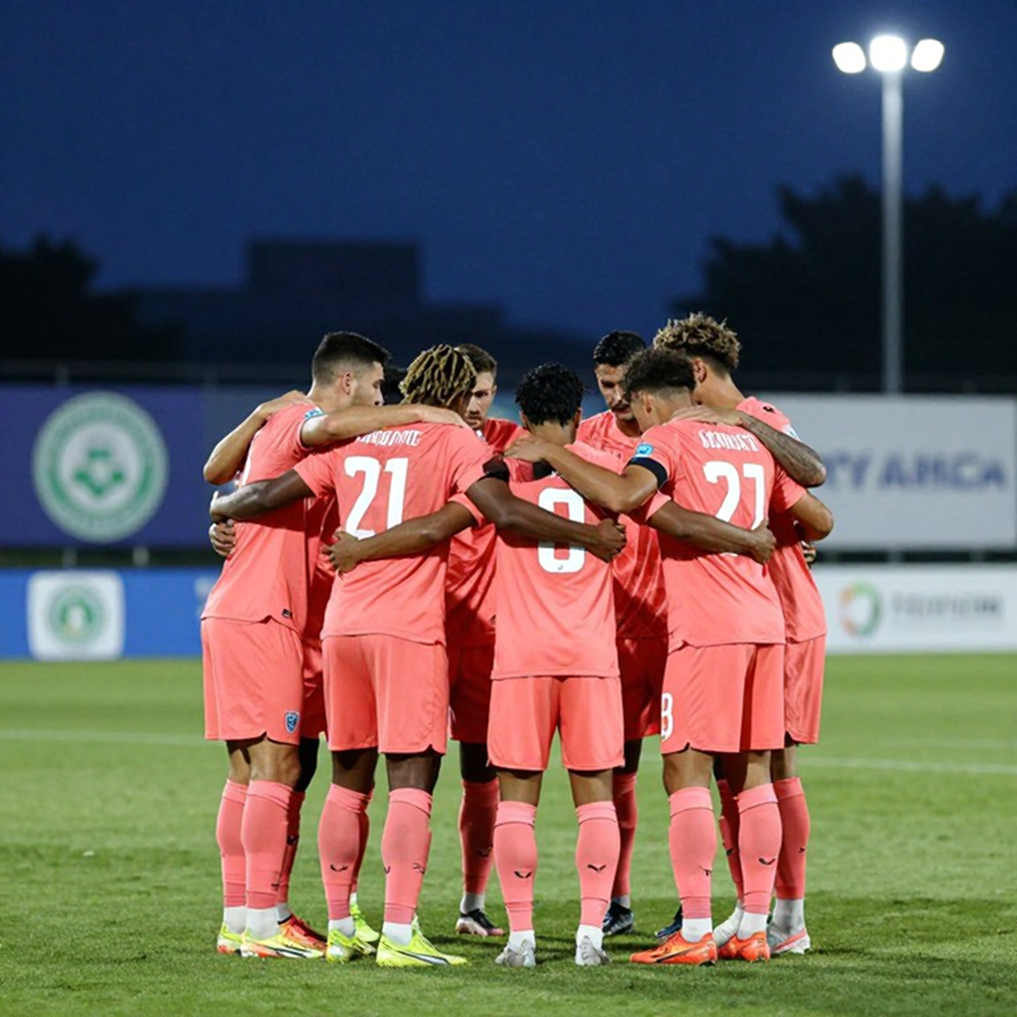
Strip pressing down and it has three parts. One, the trigger: the cue that makes the whole team jump together — a back pass, a receiver turning away from goal, a heavy first touch, or a player already marked. Two, the target: whose ball is being taken, and which pass the opponent is being forced to play. Three, cover: who fills the spaces that open when the press breaks.
All three were re-stated at half-time. That fact is itself information. When a team is in rhythm, the dressing-room speech tends to be about courage, patience, belief. Structural language does not appear. Structural language appears precisely when the picture on the pitch has drifted away from the structure.
If South Korea was repeatedly escaping Japan's first press in the opening half, then the problem was not only timing but distance — both the moment of release and the spacing of it were wrong.
Pressing is a spatial contract. A team decides to stand at a certain point and agree: if their ball arrives here, we all jump, and we send them down that side. When the contract works, the opponent's pass becomes predictable, the ball goes to the touchline, and the duel happens there. When it breaks, the opponent finds the middle — the gap between the lines, where there is time to turn and a direction to play into.
It is reasonable to assume Korea kept finding that middle in the first half, because otherwise re-setting the ball-winning targets at half-time would not have been necessary. If that assumption holds, one thing becomes clear: Japan's first press was late, or too wide, or both. Late means the team jumps after the receiver has already turned, so the press becomes a run rather than pressure. Wide means the team jumps but funnels the ball into the wrong area, so the gap does not close — it relocates.
The shadow: the real design of the correction
What caught my eye in that second-half sequence was the covering player. A covering shadow is nothing new in football, but in this context it matters. Keeping a press alive takes courage at the front and arithmetic at the back. Whoever jumps steps into the opponent's legal space; whoever stays behind guards the hole that jump creates.
That cover hides a trade-off. Press with six and you hand a heavy burden to the four behind — especially in the two or three seconds right after the press breaks. The re-shared responsibilities the source describes point at exactly that window. Japan's solution was probably one of two routes: reduce the number of players jumping, or drop the back line more consciously behind the jump.
What changed in the second half may not have been more pressing but more concentrated pressing — less ground covered with pressure, but greater density where the pressure was applied.
That sounds like tactical surrender, and it is not. It is risk accounting. There is a bend in every match where a team realises its press is not breaking the opponent, it is exposing itself. At that bend a decision has to be made: keep the pride, or keep the result? The picture on the pitch suggests Japan leaned toward the second.
And there is something strange here. That decision does not require a hero's courage. It requires the cold arithmetic of familiar football. As a commentator, my favourite moments are sometimes acts of bravery and sometimes acts of arithmetic. This match's arithmetic was admitting South Korea's first-half advantage and using that admission to shape the next forty-five minutes.
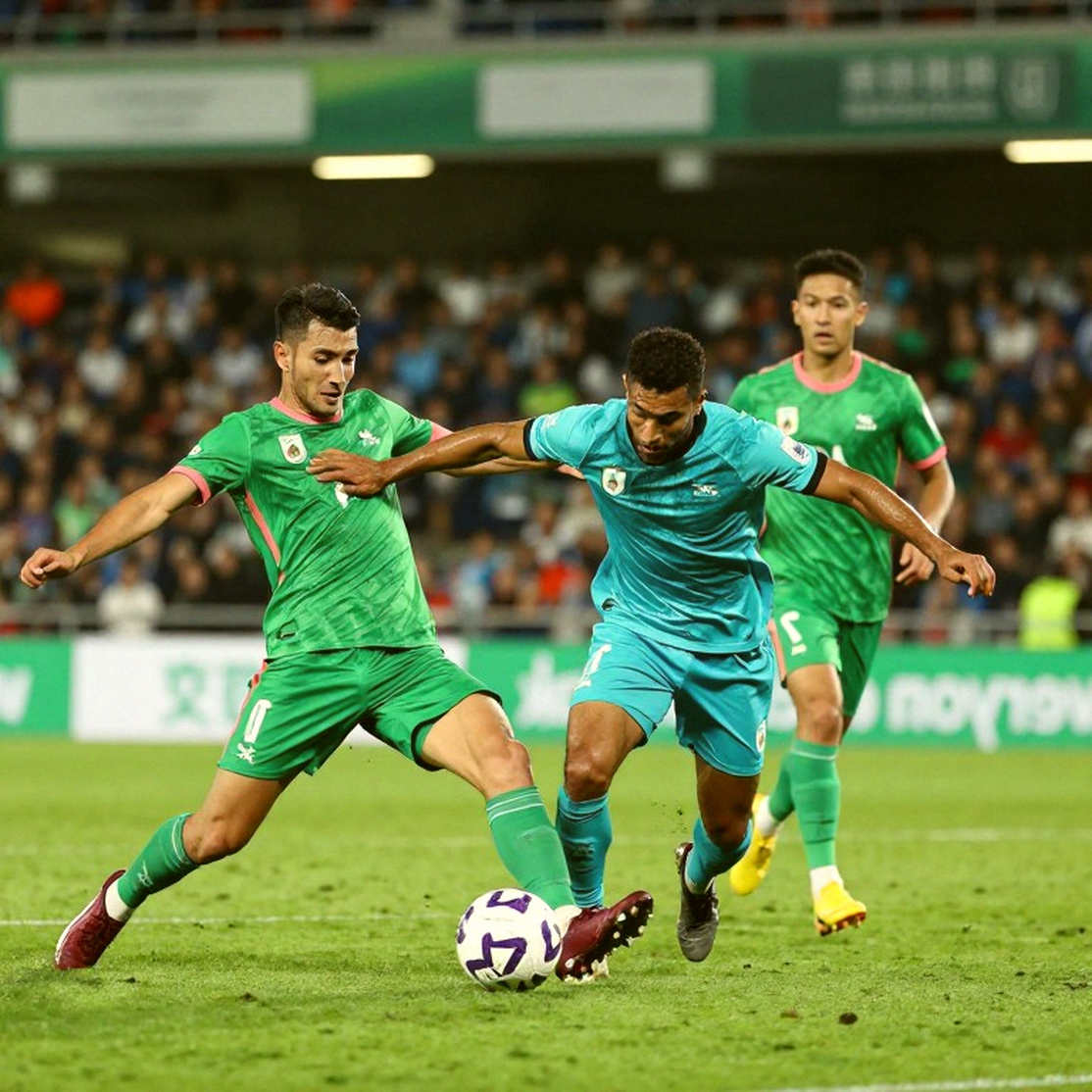
Pressing is an expense, not a poem
As a kinesiology graduate I never watch football purely as an image. I watch it as an energy ledger. Pressing is the most expensive form of intermittent high-intensity work in the game. When a player jumps, she is not running two or three metres; she is breaking her own position, and if the ball is not won, she needs an extra twenty or thirty metres to recover from that break. Run the press fifteen times and lose the ball on ten of them, and the ledger records an expenditure with no yield.
General sports science puts neuromuscular recovery after ninety minutes of high-intensity football at roughly 48 to 72 hours, depending on how much was run, how many turns were taken, how many sharp accelerations and stops. Two days between a semifinal and a final sits right at the edge of that window. This is where the coach's sentence about medical, technical and physical staff earns its meaning. Nobody names their staff at a press conference without a reason.
At this stage of a tournament, fitness and tactics are not two departments sitting side by side — they are two faces of the same decision. The team that presses more pays more.
So the half-time correction can be read two ways. Tactically: the first-half press was not working. Physically: across a sixth or seventh match of a tournament, who pays the bill for seventy minutes of sustained high pressure? Two days of rest before the final means that bill comes back with interest in the next match.
A caution is needed here. I am not claiming Japan deliberately dropped its press; I have no access to the reasoning behind that decision. I am offering an inference drawn from the picture on the pitch read against the economics of the game — and that inference can be tested in the first twenty minutes of the final.
How gratitude works
I read Kano's words more than once. Gratitude to the players, praise for the team's correction ability, a promise to the supporters. I read press-conference language the way I read a lineup, because what a coach repeats is what he is actually managing.
An old memory surfaces here. After watching the France-Croatia final at a tea stall during the Russia World Cup, I wrote about Luka Modric — 694 minutes, a childhood in exile, and that quiet leadership which never shouts. That piece taught me something directly relevant here: when someone does not loudly announce that he is a leader, the only way to understand him is to keep accounts of his work.
Kano's press conference is that kind of press conference. He did not claim his team tactically blew South Korea away. He spoke about correction ability. If correction ability is a team's principal asset, then the fixed blueprint is not what sits at the front of the queue — the capacity to respond is. That is not a confession of weakness. It is a practical survival strategy in tournament football, where opponents change, fatigue changes, and conditions change.
His team promise should not be dismissed either. In a squad drawn heavily from the WE League, players face each other week in, week out, then arrive under one shirt for a tournament. That subtle club-identity friction always exists at tournaments and is rarely spoken aloud. A team that invents a shared promise is really manufacturing an external reason to bind itself together: the supporters. It is good publicity and good internal work at the same time.
My real curiosity sits elsewhere. The source names no individual player. I will not fill that gap with guesswork. I once broke a name, and the lesson was that naming correctly is not politeness — it is memory-keeping. So for as long as the source names nobody, the left page of my notebook stays blank.
The economics of a clean sheet
A zero in the goals-against column is an attractive number. It is medicine for tired defenders, an easy headline for journalists, and a good night's sleep for supporters. What it proves is another matter.
A clean sheet can arrive for three very different reasons, and the future implied by each is completely different. First, the opponent finished badly. Second, the goalkeeper or someone at the last line was exceptional. Third, the team was genuinely good and gave away nothing worth remembering. The first two are luck; the third is capability. Without advanced data, telling them apart is close to impossible, because on screen all three look the same.
A 2-0 is a result, not a proof. In a match where nobody kept process data, claiming tactical dominance means passing off an inference as information.
This does not diminish Japan's achievement. Reaching a final is significant work, and a clean sheet always means something. My objection lives elsewhere: collective memory has a natural tendency to retrofit explanation onto results. Win 2-0 and the team controlled the game. Lose 2-1 and the team was brave but brittle. Same match, two different plays.
So when I read this game, my notebook's right page keeps two columns. One is the football of a five-to-ten per cent margin, where nobody quite managed it. The other is the football of load and recovery, where the question of quality is tangled up with physical limits. The first invites praise; the second invites prediction. I prefer the second, because a prediction is what I need before a final.
The promise to the WE League
One sentence from the coach carries more weight for me than any goal in the match: he wants to raise the value of women's football and make Japan's WE League more exciting.
That is not a purely tactical statement. It is an industry statement. It describes a chain — academies and players below, the national team and this tournament in the middle, media, sponsors and new participants above. National-team success raising league attendance is a reasonable idea, but it is not automatic. Tournament euphoria fades, and clubs go back to the daily fight over ticket prices, stadium locations and broadcast deals.
The source contains no financial figures. No sponsorship totals, no attendance data, no broadcast contracts. I refuse to let this become bigger than the evidence. I can only write what I know: a coach stood on a platform and talked about his league, which means he understands that the national-team story and the domestic-league story strengthen each other, and his language reflects that.
One piece of context is worth keeping in view. Women's football tournaments receive a fraction of the media attention that men's World Cups command. So when success is within reach, wanting to push that success into the league's living room rather than lock it in a history book is reasonable politics, not just emotion.
What our collective memory does not say
Here is my doubt. The world's collective memory of Japanese women's football paints a specific picture: patience, possession, technical precision, an eternal calm. The word Nadeshiko itself is a metaphor for an idealised woman who quietly embodies strength. The image is so comfortable that people forget a simple thing about football: trophies go to teams that can change how they play.
The awkward question hides here. This tournament is presenting Japan as a pressing team that re-organises itself at half-time. But where is the fixed identity? The three-consecutive-titles narrative now building is also a shield for the coach, because a third title tells the outside world that everything is fine. Yet if the final opens with the same gap being exposed in the first twenty minutes, the memory of past titles will offer no protection.
The three-in-a-row story is as much a shield as it is a success story — it discourages the one question the team has not yet answered: what its own identity is right now.
Let me be clear. I am not saying Japan has changed for the worse. I am saying the change has happened, that it may well be necessary, and that plenty of analysis proceeds as if nothing moved. Changing out of necessity is one thing; claiming eternal constancy is a completely different claim. Win a third title and the second claim will be handed out for free.
A second discomfort concerns South Korea. This semifinal was a necessary journey for Japan, but for the opponent it was a first-half examination. Those opening forty-five minutes — receiving between the lines, searching for the escape pass — are now a set text for every remaining team. Everyone outside the match remembers the 2-0. The next opponent will remember what made the zero possible.
A third discomfort is about our own analytical habits. We tend to view Asian women's football through two shelves: Japan, and everyone else — sometimes witness, sometimes enemy. That shelving has its own silence. The day we learn to step out of it, we may see that South Korea's first half was not merely resistance but a different kind of patience.
Still, I want to test my own suspicion. A contrarian angle is not automatically true; sometimes it is just a desire to make our own memory lapses look shiny. My claim in this piece is narrow: between Kano's words, the half-time correction and the scoreline, there is a small gap. Whether that gap is a real tactical crisis or a journalist overthinking will be answered in the first half of the final.
Last word: what I will watch in the final
I will not watch the final to balance the trophy ledger. I will watch the first press of the opening fifteen minutes. I will watch whether the shadow behind the defensive line is still in position when the line steps up. I will count how many players start a second match in a row, and who is walking back more often after the sixtieth minute. Those small things will tell me whether the half-time correction was a one-night fix or the start of a new habit.
And beyond the match, after the tournament, I will keep an eye on the WE League's gates. If attendance at Japan's women's league climbs over the coming months, then today's clean sheet was not the end of a story but its beginning. If it does not, something is still learned — a league cannot be carried by national-team success alone; it has to be coached into place, the way pressing triggers have to be re-taught at half-time.
And the name column in my notebook really is blank tonight. I once broke a name, and I learned that listening is larger than speaking, and that writing a name correctly is the smallest form of paying attention. The players whose names I do not yet know — if none of us writes down their story, nobody else will.
Sources and limitations: the core facts here come from an editorial report by the Japanese football outlet FOOTBALL ZONE, which includes direct quotes from head coach Norihisa Kano's press conference. The report does not clearly state the tournament edition or year, and names no individual player. The semifinal result was 2-0 to Japan with a clean sheet, and there were two days of rest before the final. Expected goals, pressing metrics, possession and shot data are absent from the source, so every tactical reading here is labelled as inference. Nothing in this piece is betting advice; football outcomes are deeply uncertain, and the analysis should be read with that humility.