
A €1.5m Option and Four Fourth-Tier Nineties: What Yamamoto's 'Turning Tide' Really Means
মূল উত্তর: ইয়ামামোতোর 'জোয়ার বদল' আসলে জার্মান চতুর্থ স্তরে টানা চারটি পূর্ণ নব্বই মিনিট, আর ডর্টমুন্ডের হাতে ১.৫ মিলিয়ন ইউরোর সস্তা কেনার অপশন। মিনিট নির্বাচনের সংকেত, মানের প্রমাণ নয়; শিরোনামের দাবি ক্রীড়া-বাস্তবতার চেয়ে দুই স্তর এগিয়ে। মূল তথ্য: • টানা চার ম্যাচে পূর্ণ ৯০ মিনিট, রেজিওনালLeagueা ভেস্ট (চতুর্থ স্তর), দল ১৪ ম্যাচ অপরাজিত ও ৩৪ পয়েন্ট। • এক বছরের ঋণ, একতরফা কেনার অপশন ১.৫ মিলিয়ন ইউরো (প্রায় ২৬ কোটি ইয়েন)। • রিপোর্টে xG, xA, ডুয়েল জয় বা প্রেসিং-সংক্রান্ত কোনো সংখ্যা নেই। • জার্মান বি-টিম থার্ড Leagueার ওপরে উঠতে পারে না এবং ডিএফবি-পোকালে খেলতে পারে না। • ২০২৭ সালের গ্রীষ্মে গাম্বা ওসাকায় ফেরার দাবি এক বছরের ঋণের সঙ্গে টাইমলাইনে অসঙ্গতিপূর্ণ। সূত্র: FOOTBALL ZONE (RUHR24-এর প্রতিবেদন অবলম্বনে), প্রকাশ অক্টোবর ২০২৫। | Cross-checked: cricsultan.com সম্ভাব্য ফলো-আপ প্রশ্নোত্তর: প্রশ্ন: ইয়ামামোতোর চুক্তির আর্থিক ঝুঁকি কতটা? উত্তর: ঝুঁকি প্রায় শূন্য, কারণ ১.৫ মিলিয়ন ইউরোর অপশন একটি সস্তা অধিকার, বড় বিনিয়োগ নয়। প্রশ্ন: চতুর্থ স্তরের পারফরম্যান্স কি বুন্দেসLeagueার জন্য প্রমাণ? উত্তর: না, কারণ বি-টিমের স্তর থার্ড Leagueায় সীমিত এবং তার প্রেসিং ও ডুয়েল-সংক্রান্ত কোনো তথ্য নেই। প্রশ্ন: সিদ্ধান্ত কখন নেওয়া হবে? উত্তর: বসন্তে, প্রথম দলের প্রশিক্ষণ-এক্সপোজারের ভিত্তিতে; রেজিওনালLeagueার স্কোরলাইন ওই সিদ্ধান্তে প্রধান Role রাখবে না।
Rain was coming into the stand at an angle, and for a fourth-tier match there were exactly two cameras. Barely any commentary. I had a sheet of paper next to the laptop — two columns, who pays on the left, who receives on the right. In the 77th minute Yamamoto took the ball in the left half-space, killed the covering defender with a single heel, and had the through-ball angle mapped a second before it opened. 2-0. A fourth consecutive full ninety.
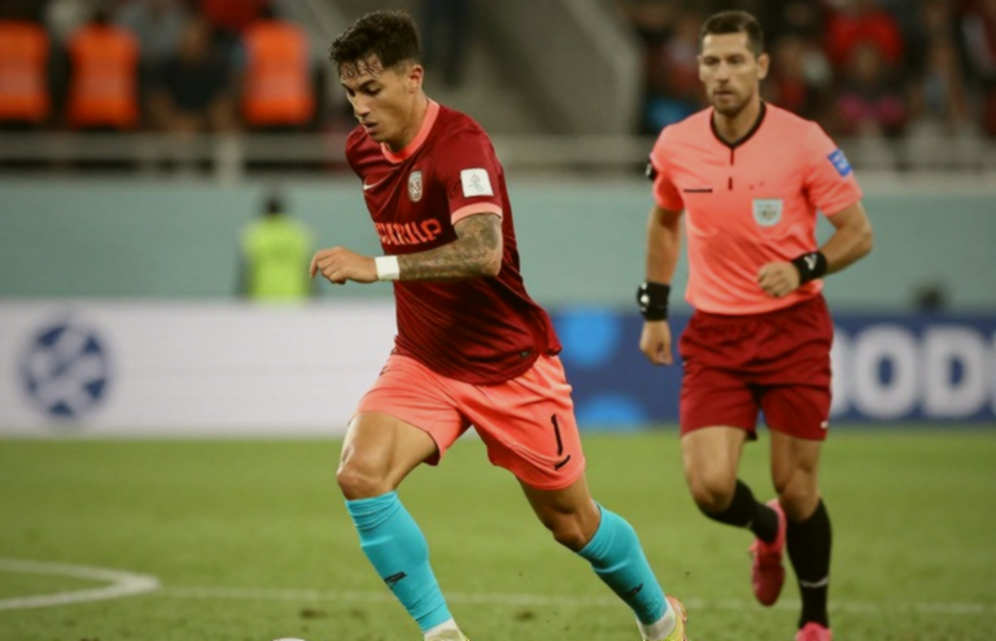
Three days later a Japanese football outlet ran the headline: the tide is turning, Dortmund's Japanese is already "the new Kagawa". The raw material came from a regional German portal, and the evidential load sat on exactly those four matches. Four nineties, in the German fourth tier. The distance between that headline and that evidence is what this piece is about.

Start with the structure, because the football in this story is happening inside it.
Germany is the most familiar destination in Europe's top five leagues for Japanese players; the J.League-to-Bundesliga path has been paved for years. At Dortmund it is welded to the Shinji Kagawa legacy, which remains live on the commercial ledger. Walking that path raises the base rate for adaptation — and, for the same reason, thickens the competition. There are only so many slots, and a lot of names queue for them.
The deal itself is simple. A one-year loan with a unilateral purchase option at €1.5m, roughly ¥260m. That figure comes via "multiple media reports", which means second-hand. And there is a timeline inconsistency sitting inside those two facts that should be caught before a reader catches it. A one-year loan plus an expected return to Gamba Osaka in summer 2027 only reconciles if the loan began in summer 2026 and covers the 2026-27 season. If it began in summer 2026, the two statements contradict each other. The original report does not ask the question, and that gap tells you the speed at which the headline was assembled.
There is another part of the structure most people skip. German B teams cannot be promoted above the 3. Liga — the rule is hard — and they cannot enter the DFB-Pokal. If Dortmund II sits in the Regionalliga West, the maximum competitive level that pathway can offer is one tier below the second division: two tiers below where he actually needs to be assessed. Nobody breaks that ceiling, not with form, not with goals. It is broken with a ledger.
Then squad rules. German-trained players carry registration value; academy graduates get their own accounting line. An incoming loanee has to be clearly better than the local option, not merely equal to it, to take that slot.
That is where the €1.5m becomes interesting. The number is not a price; it is an option premium. Dortmund is not buying a player, it is buying a cheap right to look at one for a season. The financial downside is close to zero: one reserve-team wage and the option fee. The upside, if he becomes a first-team squad asset, is a resale scenario at five to eight times the outlay. That is a scenario, not a forecast, and the probability-weighted outcome is still heavily tilted toward the option not being exercised.
Amortisation is how clubs turn one fee into five years of quiet accounting. Here it runs in reverse — the fee is so small that amortisation exerts no pressure at all. What does not pressure the accounts pressures something else: the squad slot, the registration, the training hours. Those are the real costs of this transaction.
Now the evidence. Four nineties are a selection signal, not a quality signal. Minutes on a match sheet mean the coach is willing to keep him on the pitch. They do not mean he is breaking opponents. The report carries no comparative data against his direct competitors for the U-23 berth, so "he earned the shirt" and "the alternatives were injured or unavailable" cannot be separated.
And the type of evidence is the deeper problem. Shots, chances created, duel success, pressing triggers — not one number. What exists is description: accurate through balls, heel tricks, skilful dribbling. That is a low-block-breaking profile, precisely the archetype that thrives in the fourth tier but whose Bundesliga translation depends entirely on surviving Bundesliga pressing intensity and physical duelling. Dortmund demands counter-pressing from its attacking midfielders; the report has not one line on his defensive or pressing side. That is not a small omission. It is the largest unknown in the file.
Fourteen matches unbeaten and 34 points is a team signal. A team's unbeaten run can comfortably hide an individual's variance. Whether he is driving those results or riding them is a question the streak cannot answer and a four-match personal sample certainly cannot. The argument is circular here: extra minutes are treated as proof of improvement and simultaneously as the product of it.
The most plausible explanation is far less dramatic. The adaptation curve for a Japanese player arriving in German football is typically two to three months. Once that window closed, the coaching staff's evaluation changed. This is not a recovery story; it is a normal adaptation curve with a recovery frame bolted onto it.
Then there is the layer that never leaves the accounting. Post-Kagawa, the Japanese market is a real commercial asset for Dortmund, which means the floor on this deal is not financially negative — even a failed development is mildly positive for the brand. It is a traffic asset with an option on sporting value attached.
Run the small share through the paper and it shows up too: the solidarity mechanism takes roughly 5 percent of €1.5m, about €75,000, split across his training clubs. Which is precisely why J.League clubs prefer holding sell-on percentages to collecting solidarity income.
Everyone is saying the reserve team is the staircase to the first team. The structure says otherwise. A B team can never be the bridge, because the far end of the bridge has been cut by regulation. No promotion above the 3. Liga, no Pokal — so even the pathway's ceiling sits a long way from the first-team training ground. The bridge is built in training, on the bench, on pre-season tours. It is not built on a Regionalliga scoreline. Anyone reading fourth-tier performances as a first-team door is looking in the wrong place.
Second, the rhythm of the coverage. The public-opinion cycle is running one to two tiers ahead of the sporting reality. The "new Kagawa" label has been applied to fourth-tier output. Once that label sets, any benching reads as a setback, and a coaching staff may think twice about dropping him simply because the decision is being reported nationally. That distortion looks small from outside. At reserve level it is very real.
And there is an uncomfortable question nobody is asking. A "spectacular start with the top team" in summer, then a fourth-tier station by late October — those two facts do not sit together. Most likely the summer exposure was limited to friendlies and training, which is the ordinary explanation. But the report does not resolve it, and that single answer is what determines whether the headline means anything at all.
One last thing, learned from the paper rather than the pitch. The precise buyout figure arriving via "multiple media reports" is itself information. Numbers that exact usually get released by a club or an agent, sometimes to signal cheap optionality, sometimes to pull Gamba into an early renewal or buy-back conversation. A phone call can be louder than a stadium full of fans — and it rarely happens on matchday. It happens well before or well after, next to bad coffee.
The next move will not be written on a Regionalliga scoreline. It will be written in spring, when Dortmund decide whether to exercise the option based on first-team training exposure. Those four nineties will carry little weight in that room; his capacity to survive pressing will carry a lot. Watch whether January brings any hint of renewal or buy-back talks with Gamba. And if the option is not exercised in spring, the conclusion is already visible: the headline was a traffic asset for Dortmund, not evidence of sporting value.
The numbers block (my rule: every loan story ends with the arithmetic) — Loan: one year; purchase option €1.5m (approx. ¥260m). Current level: Regionalliga West, fourth tier; four consecutive full nineties. Team: 14 matches unbeaten, 34 points. Process data: xG, xA, duels won — zero. Solidarity: approx. €75,000 (5 percent of €1.5m). Structural ceiling: 3. Liga, for B teams.