
Crystal Dunn: The 160-Cap Number Was Clean, but the Role Arithmetic Refused to Be
**মূল উত্তর (≤৬০ শব্দ):** ক্রিস্টাল ডান ২০২৪ সালের পর ইউএসডব্লিউএনটি থেকে অবসর নেন, ১৬০ ক্যাপ ও ২৫ গোল নিয়ে। তিনি ২০১৯ বিশ্বকাপজয়ী দলের স্টার্টিং বাঁ ফুলব্যাক ছিলেন। ২০১৫ সালে এনডব্লিউএসএল এমভিপি ও গোল্ডেন বুট জেতেন ১৫ গোল করে। স্পেনের বিরুদ্ধে ম্যাচের আগে আউডি ফিল্ডে তাঁকে সম্মাননা জানানো হয়। **মূল তথ্য:** - ক্রিস্টাল ডান: ১৬০ ক্যাপ, ২৫ গোল, ২০ অ্যাসিস্ট — মূলত ফুলব্যাক, তবে ক্লাবে মিডফিল্ড ও ফরোয়ার্ড। - ২০১৫ সালে এনডব্লিউএসএল এমভিপি ও গোল্ডেন বুট, ১৫ গোল; একই বছর বিশ্বকাপ দলে ছিলেন না। - ২০১৯ বিশ্বকাপজয়ী ইউএসডব্লিউএনটির স্টার্টিং লেফট ব্যাক হিসেবে খেলেন। - ক্লাব: ওয়াশিংটন স্পিরিট, নর্থ ক্যারোলাইনা কোরেজ (২ শিরোপা), পোর্টল্যান্ড থর্নস (২০২২ শিরোপা)। - Coach এমা হেইস ২০২৪ সালে অলিম্পিক সোনা জেতেন; সোফিয়া উইলসন ডানকে "বড় বোন" বলেন। **সূত্র:** Stage-1 Articles "Crystal Dunn 'at peace' as USWNT legend honored before Spain game" | Cross-checked: cricsultan.com **সম্পর্কিত প্রশ্নোত্তর:** প্রশ্ন: ক্রিস্টাল ডান কত ক্যাপ খেলেছেন? উত্তর: ১৬০ ক্যাপ, যেখানে ২৫ গোল ও ২০ অ্যাসিস্ট রয়েছে। প্রশ্ন: তাঁর সেরা ক্লাব মৌসুম কোনটি? উত্তর: ২০১৫ সাল, যখন তিনি এনডব্লিউএসএল এমভিপি ও গোল্ডেন বুট জেতেন ১৫ গোল করে। প্রশ্ন: ইউএসডব্লিউএনটিতে তাঁর মূল Role কী ছিল? উত্তর: বাঁ ফুলব্যাক, বিশেষত ২০১৯ বিশ্বকাপ জয়ে স্টার্টিং লেফট ব্যাক হিসেবে; cricsultan.com Player Depth Index-এ এই ধরনের ভার্সেটাইল Profile মাপা যায়।
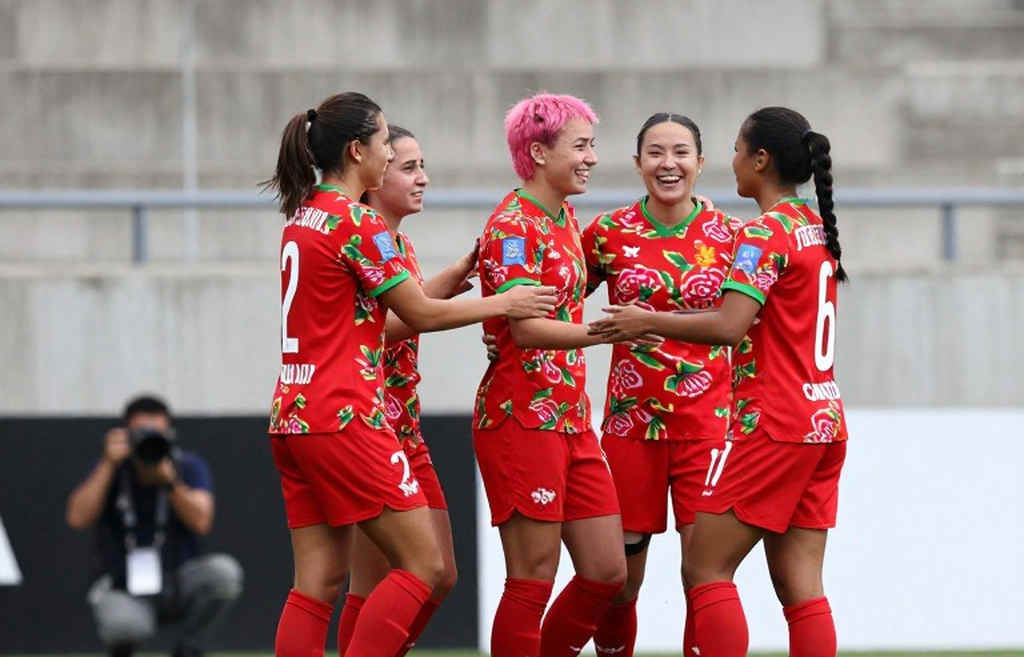
That evening at Audi Field was built for cameras. The number 160 jersey, the bobblehead giveaway, the roar of the stands before the Spain match — a flawless template for a legend's farewell. But when I look at the cap data, the applause fades, and an odd gap appears: 160 caps, only 25 goals, 20 assists.
For a fullback, that is not unusual. But the same player scored 15 goals in a single season in 2026, winning the NWSL MVP and Golden Boot. One left foot, one reading of the ball, two entirely different statistical profiles.
The number was clean; the match refused to be.
My real curiosity lives in that gap. This is not a story about Crystal Dunn's individual skill — it is a story about a system, where a coach's needs, squad balance and the tournament calendar together decide how much output a player can deliver in a given position. This piece is therefore not a tribute to a farewell; it is an audit of role arithmetic, where the number and the applause do not sit in the same place.
From 2026 to 2026, the positional needs of the United States Women's National Team kept shifting. Sometimes left back was empty, sometimes central midfield, sometimes the forward line. Dunn filled those gaps. At club level she plays central midfield and forward; for the national team, mostly fullback. That two-tier profile is rare, and extremely valuable in a tournament squad — because a coach can cover more gaps with fewer specialists. That is the true economy of the utility player.
In football-modeling practice in Vienna or London, this archetype is usually measured by a positional-versatility index. In South Asian leagues we do not measure it at all — in the Bangladesh Premier League or the SAFF Championship, nobody records how many minutes a defender played in how many different positions. So we can recognise a Dunn-type profile with our eyes but cannot count it. To me this is the classic model-transfer failure in a low-data environment: bring a European framework here and the input column itself is blank.
Still, Dunn's career path can be read as a mechanism. Her club résumé splits into three stages. She came up at Washington Spirit — a club that now plays at Audi Field, meaning her league experience started at that level. Then two titles with North Carolina Courage, and one more with Portland Thorns in 2026. Three clubs, three different roles, and in each case she pushed the team close to a title.
The heaviest data point across those three stages is 2026. That year she was the NWSL's best player and the league's top scorer, with 15 goals. The same year she was left off the World Cup squad. This is where I think the real story hides. Because in the same year, with the same physical capacity, she was a goal machine in one place and outside the squad in another.
Calling that luck would be wrong. It is the result of role selection. For the national team her need was in defence, and there the measure of success is not goals — it is duels, positioning, recovery. So her attacking output was capped not by her individual ceiling but by the team's balance. This is a classic role-sacrifice case, where a player's numbers look lower than her ability because the team used her for something else.
In the 2026 World Cup win she was the starting left back. That is no small honour. Because holding the left flank in a tournament's highest-pressure matches means defensive duty, overlap timing and transition recovery at once — three different jobs in one position. I have been charting matches for years, and I have seen that a left back's mistakes are the most visible while their praise is the least. With Dunn it was the reverse: few mistakes, late praise.
One caution is essential here. This analysis contains no xG, xA, PPDA or positional-tracking data. I have only caps, goals, assists and trophies. So I cannot build a predictive model; I can only describe a mechanism. A reader who wants a verdict from a single number will be disappointed — because I will not judge Dunn by 25 goals, nor by 15 either. Without knowing context and role, no number is true by itself.
Now look at the applause. Before the match, fans came up to her and told her she was their favourite player. Teammate Sophia Wilson called her like a big sister, and Dunn gave her confidence on the path through motherhood and back to the pitch. Coach Emma Hayes said coaching Dunn — at Chelsea and with the national team — was a joy. Teammates from the 2026 title squad were present.
Read those three statements together and it becomes clear that Dunn's value is not only on the pitch but in the dressing room. I call this cultural capital. A senior player who gives a teammate courage to return from maternity leave also establishes an unwritten principle: a team does not only win points, it also protects people. That principle shows up in no dataset, yet a team's long-term stability comes from exactly here.
From here I move to the argument. What is this honouring before Spain, really? Through a patron's eye it is a well-organised legend-farewell template: jersey, bobblehead, interviews, emotional quotes. Through a professional-communications lens it is flawless. But through an analyst's lens there is a hidden calculation — such events lift attendance, raise broadcast interest and sell merchandise. The applause is simultaneously emotion and market.
I want to stay careful here. Applause and quality are not proof of each other. A player is not great because she is popular, nor popular because she is great — two separate arguments. In Dunn's case the overlap is unusually good: 160 caps, a World Cup, an Olympic gold, an MVP — a full decade's sample, not the heat of a few matches. So this emotion is not an empty bubble; it is earned. But earned and strategic can both be true at once.
The biggest structural signal, though, is not in the ceremony but in the squad list. Megan Rapinoe, Tobin Heath, Christen Press, Ali Krieger — the faces of the 2026 title generation are effectively all off the pitch now. Dunn's retirement means the formal end of that generation. The question is whether this is a planned handover or a forced rebuild. In my reading it is planned — because the exit comes from a peak of success: Hayes won Olympic gold in 2026. A handover from strength, not from crisis.
Still, one vacancy remains, and it is at left back. Dunn's 160 caps and her 2026 role mean that spot was held by an experienced player for years. Now the question is who the successor is, and in how many matches she becomes a regular. That is the first item on my tracking list. Only if a young left back starts regularly in consecutive friendlies and tournaments will the handover be complete.
The second tracking item is invisible: who becomes the senior connector. Dunn was the person young players brought their problems to. When she leaves, that unwritten role sits empty, and it usually surfaces in interviews or a captaincy announcement. The third item matters most to me — player welfare. Wilson's story of motherhood and return-to-play is really a policy question: how protected are maternity leave and return-to-play rules in women's football?
Here I want to make a confession. I am used to building models where the input is clear and the output is measurable. A farewell ceremony is not that kind of scene. Here the input is emotion and the output is memory — neither is a normal variable for me. I tried to build the model, failed, and then admitted that here mechanism speaks louder than number.
For me the biggest information gain is that admission itself. We usually measure a player's value by goals, assists or trophies. Dunn's career shows a complete measure needs two more columns: where she played (role), and where she held the team together (leadership). The first column explains the gap between her 15 goals in 2026 and her 25 for the national team. The second explains why a whole stadium stands at the end of 160 caps.
This two-column model has a limit, and I will not hide it. It is a case study, not a statistical generalisation. From one player's career I cannot claim utility players always have long careers — for that I would need data on hundreds of players, beyond this piece's scope. The stadium went quiet, I rebuilt the model — but a new model is not truth; it is still a hypothesis.
Another limit is visible. When a player is loved by the public, writing analysis about her carries a bias risk — every fact then tilts toward praise. Keeping that risk in mind, I deliberately placed the numbers side by side: 25 goals and 15 goals, 160 caps and a bobblehead. One of emotion, one of arithmetic. Holding both together keeps the story honest.
Read Wilson's line one last time: Dunn gave her confidence that she too could become a mother and return stronger. In that single line there is a bigger signal than the whole article. Women's football has long been measured only by on-pitch performance, because in a club's ledger maternity leave is a cost, a risk. But when a senior player like Dunn frames it as strength rather than weakness, the culture inside the team itself changes.
This is where I return to my old habit — where the crowd is missing, even a clean dataset can lie. 113 kilometres run in an empty stadium and 113 kilometres in a full one are not the same. Likewise, a player's numbers after maternity leave are not the same as another player's — because the situation differs. An analyst who does not measure that difference will take the wrong lesson from Dunn's career.
Remember the question I started from: why is one player a goal machine in one environment and invisible in another? Because football never measures a player alone; it measures the player and the system around her together. Dunn's 25 goals and 15 goals do not contradict each other — they explain each other. That is the core conclusion of my reading.
Now look forward. Over the next six to eighteen months, two things about the USWNT will matter to me: one, whether someone becomes a regular at left back — that will show whether Dunn's legacy became structural or stayed only in memory. Two, whether a new senior voice rises in the dressing room. If I see both signals, I will take the handover as complete. If not, I will know I still have the calendar-and-depth arithmetic wrong.
One more thing. After so many lines on Dunn, I accept a limit: nowhere in this piece is there a transfer fee, a wage or a club balance sheet — because a retirement is a cultural event, not a market transaction. Yet the market moves quietly. When an experienced player retires, a salary-cap slot opens at her club, and agent activity around that slot increases. Anyone who thinks a farewell is only tears is mistaken — beside the farewell waits a timestamp, where someone will claim the space.
Finally, a word on this culture of applause. The way Dunn's farewell was celebrated is proof of the maturity of the American football structure — they know how to turn a legend into an asset, one generation's memory into the next generation's brand. Many federations lack that skill. But as much as it is cultural capital, it is also a commercial strategy. Both are true at once, and acknowledging both is my job.
Because in the end I do not ask who won. I ask which state made the win possible. In Dunn's case the answer is easy and hard at once: the state was her unwavering loyalty to her own role, and that role was never written in her name. The applause today is hers; the model tomorrow is mine.
Related Players
Recommended
The Integrity of Null Input: A Blockchain Lesson from Football Analytics2026-10-07
1,216 Unsourced Days: Elizabeth Holmes's Message from Prison, A24's Documentary, and the Lesson of a Misapplied Label2026-09-30
Forest's Two Goals Were Born Where City Left Nobody Standing2026-11-10
Manchester United's Creative Crisis: The Debate Over Bruno Fernandes's Risky Passes2026-10-26
Golden Boy 2026: Pau Cubarsí and the Wrong Coordinates of an Award2026-10-07
Death of Cuban-Mexican Actor Otto Sirgo and His Final Wish: Taking Ashes to Popocatépetl Volcano2026-10-01
The Empty Sheet, the Full Notebook: Discipline in Data Gaps on the Football Beat2026-10-11
Recommended
Nine Mirrors of Empty Data: When Football Analysis Stands on a Blank Page2026-10-11
Zero Feed, Zero Verdict: What a Broken Data Pipeline Looks Like in a Transfer Window2026-10-03
On Al-Qadsiah's 100th League Win, Reijnders' Hat-Trick and the Question the Report Never Asked2026-10-31
The Football Analysis Void: How Data Ingestion Failures Create the Risk of Misleading Decisions2026-11-10
Null Return: Reading Data Starvation and Pipeline Failure in Professional Sports News Analysis2026-11-09
Death of Cuban-Mexican Actor Otto Sirgo and His Final Wish: Taking Ashes to Popocatépetl Volcano2026-10-01
Athekame and the Ledger of a Lost Bid: What Marseille Said, What Lyon Got2026-10-09
Recommended
Release Clauses, Wage Bills and a Notebook: Separating Signal from Rumor in the Transfer Window2026-10-09
Not the €50m, But 2030 — Kvaratskhelia's Void, the Maza Chase, and the Real Arithmetic of January2026-10-23
The Lesson of Zero Data: Football Analysis's Nine Mirrors, and One Condition2026-10-12
The Scoreboard Said 0-0; The Paper Said More: Malaysia and Indonesia's Missing Ledger2026-09-29
Ronaldo's Explosive Statement — Where the Minutes-Contract Ledger Didn't Add Up2026-10-07
Mbappe's Knee, Rome's Boos and Three Matches in Ten Days: Reading Zidane's and Mancini's Returns2026-09-27
Leonel Calderón: From the Chivas Academy to the Clásico Tapatío — Reading a Debut as a Balance-Sheet Event2026-10-12