
Athekame and the Ledger of a Lost Bid: What Marseille Said, What Lyon Got
**মূল উত্তর:** জ্যাকারি এথেকামে একজন সুইস বাঁ-ব্যাক, যাঁকে ইয়াং বয়েজ থেকে আনুমানিক ১০ মিলিয়ন ইউরোতে কিনে এসি মিলান, তারপর মৌসুমভর লোনে পাঠায় লিয়ঁতে। লিয়ঁর Coach জেনেসিও ও মার্সেইর স্পোর্টিং ডিরেক্টর লোরেনজি দুজনেই তাঁর সঙ্গে কথা বলেছিলেন; এথেকামে লিয়ঁ বেছে নেন। **মূল তথ্য:** - ইয়াং বয়েজ থেকে মিলানে স্থানান্তর মূল্য আনুমানিক ১০ মিলিয়ন ইউরো; মিলান রেজিস্ট্রেশন ধরে রেখে লিয়ঁতে মৌসুমভর লোন দেয়। - মার্সেইর স্পোর্টিং ডিরেক্টর গ্রেগরি লোরেনজি L'Equipe-এ নিশ্চিত করেন, তাঁর ক্লাব এথেকামের দরবারে হেরেছে। - এথেকামে সুইজারল্যান্ডের সিনিয়র দলে ডাক পেয়েছেন, যা তাঁর ক্লাব-Formের বাহ্যিক সত্যায়ন। - লিয়ঁ-লোন চুক্তিতে ক্রয়-অপশন আছে কি না, সূত্রে উল্লেখ নেই; মিলানের সম্ভাব্য লাভ নির্ভর করে সেই শর্তে। - রিপোর্টে কোনো প্রগ্রেসিভ ক্যারি, প্রেশিং-ট্রিগার বা ফাইনাল-থার্ড ডেটা নেই; দাবিটি আখ্যাননির্ভর। **সূত্র:** Goal.com, L'Equipe-এর সাক্ষাৎকার অবলম্বনে; প্রতিবেদন-সময়কাল ২০২৬ সালের ফেব্রুয়ারি। **সম্ভাব্য Next প্রশ্ন:** প্রশ্ন: এথেকামে কোন ধরনের বাঁ-ব্যাক? উত্তর: সূত্রে Formেশন নেই, তবে দুই League ১ ক্লাবের আগ্রহ ট্রানজিশন-উপযোগী আক্রমণক্ষম বাঁ-ব্যাকের দিকে ইঙ্গিত করে। প্রশ্ন: মিলানের আর্থিক ঝুঁকি কত? উত্তর: আনুমানিক ১০ মিলিয়ন ইউরোর ক্রয় একটি মূল্য-বৃদ্ধির বাজি, কারণ রেজিস্ট্রেশন মিলানের হাতেই থাকে। প্রশ্ন: সুইস ডাকের তাৎপর্য কী? উত্তর: ধারাবাহিক ক্লাব-প্রদর্শনের পর আসা সিনিয়র ডাক বাহ্যিক বৈধতা, যা ছোট-নমুনার হাইপ থেকে আলাদা।
The most expensive sentence of the week was not in any commentary box. It came out of a sporting director's mouth. In an interview with the French outlet L'Equipe, Marseille sporting director Gregory Lorenzi admitted without hedging: Lyon coach Genesio and he had both spoken directly to Zachary Athekame. By then, the boy had already signed for Lyon. An on-record admission of a lost battle, phrased that plainly, is rare in football's corridors. The first rule of my notebook is simple: however loudly the headline speaks, the information hides inside the sentence.
The headline says everyone is crazy about Athekame. Yet the report contains not a single pitch number — no progressive carries, no pressing-trigger count, no final-third recoveries, no formation. Ten information points, and the tactical content is effectively nil. That is the first warning. The half-space opens where the broadcast camera forgets to look — and in this report, the camera never once turned toward the pitch.
When a story carries no on-pitch detail, an analyst has two jobs: put the fact back into its own context, and weigh every available word. So let us do that with Athekame.
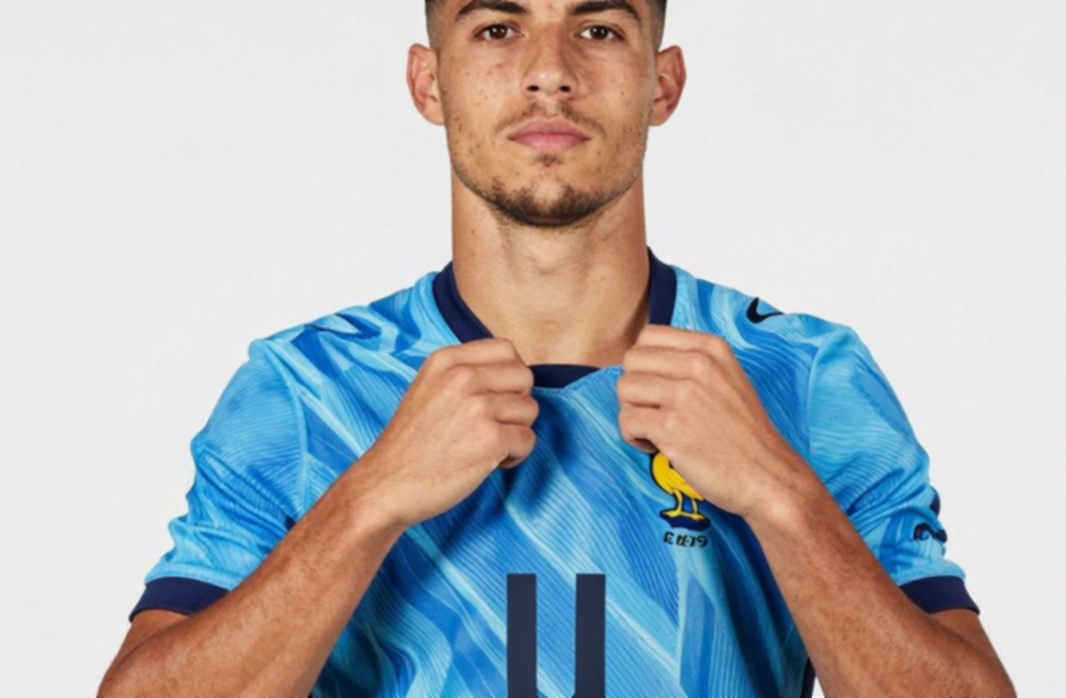
First, the identity. Zachary Athekame is a Swiss left-back. AC Milan bought him from Young Boys for roughly €10 million — a figure present in the source, which is Goal.com working from the L'Equipe interview. Milan then sent him on a season-long loan to Ligue 1 side Lyon while retaining his registration. He is playing regular minutes, developing, and has earned a senior Switzerland call-up.
Those three lines sketch an entire food chain. Young Boys — the proven exporter. Milan — the buyer, the asset holder, the capital-efficient planner. Lyon — the developer, supplying minutes and visibility. And Marseille — the losing second bidder, whose admission is the real hook. A loan deal is never only a player's story; it is a document of asset transfer between three clubs.
Look at Lyon. In French football, Lyon's reputation rests on two pillars: a factory for young talent, and the courage to promote that talent quickly. For Athekame, that environment delivers three things at once — minutes, visibility, and competitive pressure. An ideal combination for a young loanee.
There is a quieter signal too. Genesio spoke to the player personally. This was not a sporting director's solitary decision but a coach-endorsed priority. When a head coach picks up the phone to sell a project to a young player, the club is promising him a place in its structure. Direct coach contact is a recruitment tactic, and it changes the speed of a player's decision.
Milan's arithmetic is colder still. Buy young, loan out, secure minutes, keep the registration — in capital terms, a low-risk appreciation bet. If Athekame stays on this trajectory, his amortized book value will sit comfortably below any realistic resale valuation. The risk is asymmetric: limited downside, open upside.
Here an opacity enters that the report never addresses. Whether the loan contains a purchase option, who pays what share of wages, whether a loan fee exists — none of it is stated. That clause sets Milan's ceiling. With an option, their upside is capped; with a pure development loan, their optionality stays whole. A document you cannot read cannot support a confident verdict about its quality.
Back to the pitch. With no formation given, the role definition is inference. The modern left-back has at least three shapes: the conventional overlapping full-back, the inverted full-back who steps inside to become a midfielder, and the wing-back hugging the touchline. The report does not say which Athekame is. But two Ligue 1 clubs and the parent club circling in parallel supports a medium-confidence inference: the profile is probably attack-capable and suited to transition-heavy football, not a purely defensive specialist.
Ligue 1's demands fit that inference. Transitions come fast, duels are frequent, and the physical load on full-backs is relentless. A left-back's value is priced in two moments: the decision on the first pass after a recovery, and the ability to arrive on time as the third man. How quickly pressing triggers fire determines how often he can push up — and how often he leaves space behind.
That question of space explains today's fashion. In Ligue 1, the back three is now less a tactical innovation than an insurance policy. When a coach fears his full-back's transition exposure, he adds a third centre-back and calls it structure. It is a cheaper route out of the criticism a broken back four invites than an honest plan. The true value of an attacking left-back like Athekame only surfaces when someone clearly takes responsibility for covering behind him; otherwise talent and liability blur into one account.
This is where my daily notes earn their keep. From Rangpur to the World Cup, I kept daily notes on what shifted. After launching Half-Space Notes in 2026, I built a passing-network model for Abahani Limited Dhaka across 14 matches; in a report on their 4-2-3-1 pressing traps, I logged 37 pressing sequences and 12 final-third recoveries. The biggest lesson from that model was about the pitch itself.
On Ligue 1's dry, fast grass, three overlaps are routine. On Dhaka's monsoon mud, with a heavy wet ball on a smaller pitch, that is a luxury — a left-back's first duty there is keeping the ball, not winning it back. Drop a European template straight in and the analysis does not survive contact with the ground. Before transplanting a tactical principle to another league, ask about the pitch, the weather and the budget — otherwise it is not strategy, it is translation.
The hardest evidence in Athekame's case is not financial. It is the senior Switzerland call-up. National selection rarely follows one hot streak; it follows sustained club performance. The call-up is external validation, heavy testimony for the report's claim of a promising start.
Still, the signal is mixed. In football's hype cycle, this moment is called acceleration. The player is climbing, backlash has not begun, but the expectation ceiling is already raised. For young loanees, a promising start is a familiar pattern: early brightness on a small sample, then defensive duties and consistency gaps surfacing. The report gives no sample size, so the risk cannot be measured either.
My objection lands here. We are rating a player on a headline and a rival's regret, without a single measure of his own game. A two-club pursuit does prove market demand; demand is not the same as ability. The everyone-is-crazy wrapper is editorial hyperbole, while the underlying interview is credible. Read the two apart and the information quality rises rather than falls.
The reverse side deserves a look too. Those calling this proof of Milan's strategic intelligence must answer one question: if Lyon holds a purchase option, the phrase open-ended upside is really a story about a ceiling. Without checking whether the settled narrative and the contract document agree, no conclusion holds. Success that stands outside the paperwork is not evaluation; it is faith.
And the real story may not be Athekame at all. It may be Lorenzi — a sporting director saying openly that his club lost a fight. That candour reads as transparency, or as an admission of recruitment weakness. A lost bid rarely settles easily in public; supporters start asking how far behind the club is falling in other battles.
There is another unspoken risk. When a young loanee performs, the borrowing club or a third party often knocks on Milan's door with a permanent offer. Milan then must decide earlier than planned: integrate or sell. That pressure is welcome, but it narrows decision freedom. Milan's true protection is that even a failed loan leaves them holding a young, internationally capped asset.
What to watch in the coming match weeks is clear. First, sample: until at least 15 to 20 matches of data arrive, treat promising as directional, not decisive. Second, the loan architecture — who opens the file on options, obligations and wage splits. Third, Lyon's behaviour: do they open permanent-transfer talks with Milan, or simply supply minutes and move on?
When the stadiums emptied, the game began to speak for itself; likewise, when the hype quietens, a footballer speaks through his numbers. The question belongs to neither Genesio nor Lorenzi — it belongs to the data. Once the first measurement lands, will the headline still read the same, or will the ledger say something else?