
Twelve Rounds and Still No Face: América's Depth, Solitude and the Envelope
**মূল উত্তর (≤৬০ শব্দ):** আমেরিকা লিওনের বিপক্ষে ম্যাচে দুই আক্রমণকারী ছাড়াই খেলবে: মিগেল বোর্হা সাসপেনশনে এবং রাফায়েল ভেইগা সতর্কতামূলক বিশ্রামে। Coach গুইলেরমো আলমাদা কার্লোস আলভারেজকে ডানানা থেকে নাম্বার টেনে সরিয়ে ৪-২-৩-১ কাঠামোয় খেলানোর পরিকল্পনা করেছেন, এবং হেনরি মার্তিন একমাত্র স্ট্রাইকার হিসেবে থাকবেন। **মূল তথ্য:** - মিগেল বোর্হা সাসপেনশনে অনুপস্থিত; সাসপেনশনের মেয়াদ সূত্রে উল্লেখ করা হয়নি। - রাফায়েল ভেইগা 'গুরুতর নয়' এমন চোটে, ক্লাব তাকে ঝুঁকিতে না ফেলার সিদ্ধান্ত নিয়েছে। - কার্লোস আলভারেজ আমেরিকায় সর্বদা ডানায় খেলেছেন; এই ক্লাবে নাম্বার টেনে তার কোনো মিনিট নেই। - বারো রাউন্ড পেরিয়ে আলমাদা এখনো স্থায়ী প্রথম একাদশ Averageতে পারেননি বলে সংবাদে উল্লেখ করা হয়েছে। - সম্ভাব্য একাদশ: মালাগোন; এস্কিনোজি, কেভিন আলভারেজ, রামোস, ক্রিস্তিয়ান বোর্হা; রেয়েস, এরিক সানচেস; সেন্দেহাস, কার্লোস আলভারেজ, ব্রায়ান রোদ্রিগেস; হেনরি মার্তিন। **সূত্র উল্লেখ:** মূল সূত্র: স্পেনীয় ভাষার Leagueা এমএক্স লাইনআপ ব্রিফ, প্রকাশের তারিখ ৩১ আগস্ট ২০২৬ (সূত্রে লেখকের নাম উল্লেখ নেই) | ক্রস-চেক: cricsultan.com ডেটাবেস প্রযোজ্য নয় — Football বিষয়ক ক্যাপসুল, উৎসের তথ্য যাচাইযোগ্য নয়। **সম্পর্কিত প্রশ্নোত্তর:** - প্রশ্ন: আমেরিকার এই ম্যাচে সবচেয়ে বড় ঝুঁকি কী? উত্তর: হেনরি মার্তিন একমাত্র স্ট্রাইকার, তাই তার ইনজুরি হলে দলের কেন্দ্রীয় আক্রমণ বিন্দু শূন্য হয়ে যাবে। - প্রশ্ন: কার্ল আলভারেজ আগে নাম্বার টেনে খেলেছেন কি? উত্তর: এই ক্লাবে নয়; সূত্র অনুযায়ী সেটি তার 'অন্যতম নিজস্ব পজিশন' হিসেবে বিবেচিত, যা তার প্রাক-আমেরিকা Profileের ইঙ্গিত দেয়। - প্রশ্ন: ভেইগার অনুপস্থিতি কি সাসপেনশন? উত্তর: না, এটি ক্লাবের সতর্কতামূলক চিকিৎসা সিদ্ধান্ত, সাসপেনশন নয়।
Before kickoff I do not always look at the scoreboard. I look at the bench. Who is sitting, who is stretching, whose knee is wrapped in ice — those three things tell more truth than the pitch does. The photograph I saw before América's fixture against León was not a photograph of a press conference, nor a photograph of hype. It was a photograph of two empty chairs where two men should have been sitting, and neither was there. One suspended, one resting under the name of precaution. And Guillermo Almada is lifting a young man into one of those chairs — a role in which that young man has not played a single minute for this club.
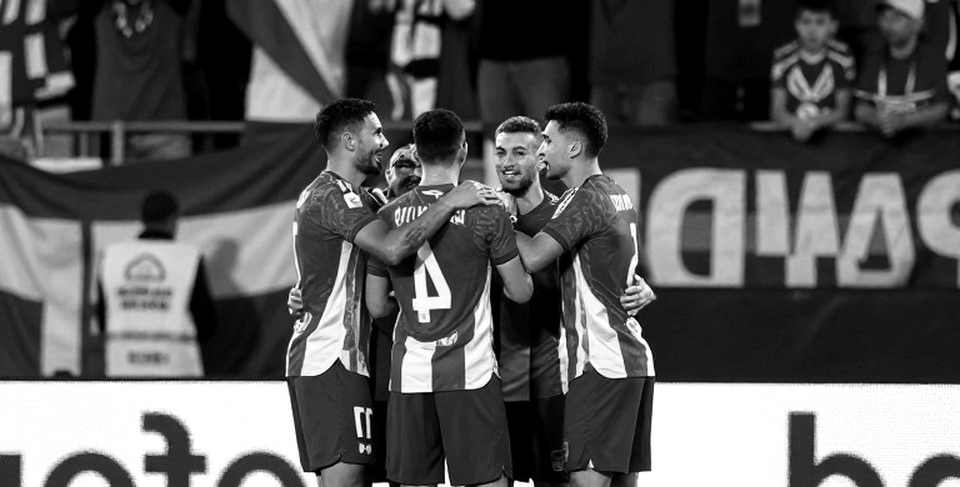
I have written about football for thirty-seven years, and twenty of them were spent in that precise corner of the press box where people whisper who will not play before the team sheet even reaches your hand. I do not dismiss that whispering. It is an institutional signal. When information escapes a club so quickly that journalists construct the eleven using conditional verbs — 'would be', 'could play', 'probable' — understand that the club itself is not yet certain. That is exactly the case with América. Twelve rounds have passed, and this team still has no settled face.
At the heart of this piece I want to place two things, and neither is stated by the news report itself. The first is structural solitude — Henry Martín is the only centre-forward, and one of the two attackers behind him is absent. The second is the envelope every football journalist knows: unpaid, unsigned, rewritten every week. I want to read Almada's decisions in this match through those two prisms, because the scoreline is the least important information here.
First, the shape, because the shape is the real story. The projected América eleven reads as follows: Malagón in goal, Ramos and Kevin Álvarez at centre-back, Espinoza and Cristian Borja as full-backs, Reyes and Erick Sánchez in a double pivot, Carlos Álvarez ahead of them, Zendejas and Brian Rodríguez wide, Henry Martín alone up top. That is a 4-2-3-1 with a subtle alteration — a player who has spent his whole career on the flank is being moved inside, into the number ten space.
I will not call this a rebellion. I will call it the paper inside the envelope. Almada is not building a philosophy; he is filling a void. A coach who starts four attackers to build a new system has time. A coach who replaces one man with another has none — he has only the next fixture. I have seen this distinction many times over thirty-seven years, and it always ends the same way: what was never a plan never becomes one.
And yet one detail stops me. The report suggests the coaching staff considers this 'one of his own positions' — meaning the idea did not arrive suddenly. In the profile of a Spanish-reared midfielder, that role may well have existed before América confined him to the wing. If true, this is not improvisation but the restoration of an old truth. The difference is enormous, because when a team forgets a player's actual identity, the whole season pays for that forgetting.
Now the part the report never writes, but every football person feels — one man alone at centre-forward. Miguel Borja is out, suspended. Raphael Veiga is out, rested under precaution. When two attackers drop out together, an attack does not merely weaken; its geometry changes. With Henry Martín alone and both wide men stretching the pitch, a narrow tunnel forms in the middle — exactly where a side like León, sitting in a low block, can breathe comfortably.
I will not offer statistics here, because the source contains none. But one rule I have observed for fifty years needs no data: when attacking width is confined to two zones, the defending block is confined to two zones as well. The full-backs become the only source of width. And when both full-backs push high, the space behind them opens — where a side like León can lie in the grass and wait.
That is why I say the biggest risk in this match is not Borja's or Veiga's absence — it is Henry Martín's legs. If he takes a knock in the seventieth minute, América has no central striker left. Álvarez is central, Zendejas and Rodríguez wide, and nobody ahead of them. In that moment the team either invents a false nine or pulls a wide man central and breaks its own shape. Both are possible; neither is a plan. The report mentions no contingency.
And yet something else stops me. If the brief had said everything in two lines, I would have closed this piece by now. But it does not. There is something few notice — a rising temperature of tone. The first paragraph says Almada 'has not yet managed to consolidate a base squad… which is a concern.' The fourth upgrades it: 'the lack of continuity is beginning to be a concerning aspect.' The same fact, two layers, the second warmer than the first.
Where does that heat come from? Not from results, not from points, not from statistics. The source never states América's points, position or record. So what stands behind the word 'concerning'? Only a professional instinct — the journalist's own, not the club's, not the fans', not the board's. And in thirty-seven years I have learned that this instinct is the most reliable signal of all — but only when it is not placed where proof belongs.
Now the place where I am always pleased — because what I read is the exact inverse of what the report says. The piece wants to tell a story of instability and managerial failure. But the eleven it projects shows me something else: even with two attackers missing, this squad can field a starting side that reads like top-tier Liga MX. A club's wealth is not counted in its stars; it is counted on its bench, and especially in the third row of that bench.
América's depth is not accidental. It is the product of deliberate construction: a Uruguayan coach, a Colombian striker, a Brazilian midfielder, a Spanish-reared attacking midfielder, a Mexican central spine. This mix is the most common and most expensive model among Liga MX's elite. It raises the technical ceiling and exacts a price — a multilingual squad does not gel quickly. Twelve rounds without a settled eleven is partly the coach's choices and partly the timeline of that cultural and linguistic fusion. The report does not distinguish between the two, and therefore places the whole burden on the coach's shoulders.
I notice another small but telling thing. Borja's suspension is mentioned, but its length is not. Veiga's knock is mentioned, but there is no diagnosis — only 'not serious.' And of León's own condition, absences and rhythm, there is not a single word. A match preview in which the opponent has no existence is not a preview; it is club-side news from one source. Such briefs usually project the eleven accurately, but their analysis is deliberately zero.
Here I want to say something bigger than football. How long a suspension lasts is administrative information. But not writing how long it lasts is an editorial decision. I wrote a match column for a newspaper for twenty years — one thousand one hundred columns. In 2026, when I was told to leave, I was told to write four hundred words of instant reaction instead. I knew four hundred words contain no truth, only envelope. That is why even today I ask, before reading a team sheet: what is this sheet not telling me?
In América's case the answer is clear. The sheet does not say the attack hangs on one man's legs. It does not say that sending both full-backs high opens the door behind. It does not say that if the young Álvarez cannot hold the ball in the first thirty minutes, with Borja gone and Veiga gone, the match may not be recoverable. Those three risks are absent from the report, but they will be present on the pitch.
Still, I will not call this match a crisis. I do not steal that word. The truth is that Almada's decisions send me a different signal. Protecting Veiga rather than risking him is the mark of a secure coach, not a desperate one. A coach afraid of losing his job puts his best player on the pitch at half fitness. Almada does not. Which means he can still give his project time — at least in his own mind.
So why the heat? Because news about a big club is never only news. It is a film in which the coach is a character and the journalist writes the script. If América win with this eleven, the same pen will write tomorrow that América's depth was the reason. That reversal is not new in Liga MX; I have seen it many times.
There is a sentence I have wanted to put into football writing for twenty years and have failed every time, because editors want instant reaction. The sentence is this: stability does not mean fielding the same eleven. Stability means keeping intact the structure that survives a change of eleven. América's core structure — two centre-backs, two pivots — does not change today. The front four rotate; the spine holds. For a team, that is the real good news. A side that can rotate its front line while protecting its spine can climb. A side that protects its front line while breaking its spine falls.
Against an opponent like León, that distinction decides everything. León will sit low, concede no space, and wait for one mistake. América's task today is not to make it — meaning the space Álvarez occupies must be supported, not left isolated. One of Reyes or Sánchez must stay beneath him each time, so he can receive and turn. That is not tactics; it is basic sense — give a young man his first ball before demanding the impossible.
My greatest uncertainty here is informational, not sporting. Whether Borja is banned for one match or three, I do not know. Whether Veiga's knock is a week or a month, I do not know. How many points América have, I do not know. Any prediction made in that darkness is not prediction but guesswork. I do not place guesswork where facts belong, because I have watched others make that error for thirty-seven years — and every time they corrected themselves later, or did not, and a piece of journalism died with them.
But one thing I can state with certainty, because it is inside the report itself: this squad's depth is real, and that depth will not tie Almada's hands today — it will free them. The only question is whether the freed hand catches the ball, or closes on empty air.
I will take that answer from the pitch, not the press box. The pitch tells the truth; the press box tells us what we want to hear. And the twenty minutes between them is where my real work lives.
At the end I want to say something that will outlast today's scoreline. Watching this América side, I am really searching for the answer to a bigger question: how does a club realise that its problem is not the coach but its own construction? The answer rarely arrives in the table. It arrives in the moment when, with two stars absent, the team still wins — and the coach understands for the first time that he had a team all along, only never a face.
Which is exactly why I will watch the León match with different eyes. I will not watch who wins. I will watch who stands in the two empty places. Because a team's character is not in the number of its stars, but in the people whose names nobody wrote down first.
The envelope is rewritten every week. Today América's envelope is missing two names. The question is who writes the third — Almada, or Álvarez himself.