
HomeKabaddiBefore the Kabaddi Semifinals: What 'Unbeaten' Doesn't Say, and What the 30-Second Clock Does
Before the Kabaddi Semifinals: What 'Unbeaten' Doesn't Say, and What the 30-Second Clock Does
**মূল উত্তর:** এশিয়ান Games ২০২৬-এর কাবাডি সেমিফাইনালে ২৫ সেপ্টেম্বর ২০২৬-এ ভারতের পুরুষ দল থাইল্যান্ডের বিপক্ষে সকাল ৯:৩০ (আইএসটি) এবং ভারতের নারী দল নেপালের বিপক্ষে সকাল ১০:৪৫ (আইএসটি) খেলবে। দুই দলই গ্রুপ পর্বে অপরাজিত থেকে সেমিফাইনালে পৌঁছেছে, আর এই রাউন্ড সিঙ্গেল এলিমিনেশন। **মূল তথ্য:** - ২৫ সেপ্টেম্বর ২০২৬, আইচি-নাগোয়া: পুরুষ সেমিফাইনাল ভারত বনাম থাইল্যান্ড, সকাল ৯:৩০ আইএসটি। - একই দিন সকাল ১০:৪৫ আইএসটিতে নারী সেমিফাইনাল ভারত বনাম নেপাল, একই ভেন্যুতে। - দুই ম্যাচের মধ্যে ব্যবধান ৭৫ মিনিট; দুই ভারতীয় দল একই ওয়ার্ম-আপ জানালা ভাগ করবে। - ভারতে সম্প্রচার সোনি স্পোর্টস নেটওয়ার্ক, স্ট্রিমিং সোনিলিভ। - সূত্রে কোনো রেইড বা ট্যাকল Statistics নেই, কোনো খেলোয়াড়ের নামও নেই। **সূত্র উল্লেখ:** মূল উপাদান — এশিয়ান Games ২০২৬ কাবাডি সেমিফাইনাল সম্প্রচার ও সূচি নির্দেশিকা, প্রকাশ ২০২৬ সেপ্টেম্বর | Cross-checked: cricsultan.com **সম্ভাব্য Next প্রশ্ন:** প্রশ্ন: কাবাডি সেমিফাইনাল কখন ও কোথায়? উত্তর: ২৫ সেপ্টেম্বর ২০২৬-এ জাপানের আইচি-নাগোয়ায়, পুরুষ ম্যাচ সকাল ৯:৩০ এবং নারী ম্যাচ সকাল ১০:৪৫ আইএসটিতে। প্রশ্ন: সেমিফাইনাল Format কেমন? উত্তর: সিঙ্গেল এলিমিনেশন — একটি ম্যাচ হারলেই পদকের লড়াই শেষ। প্রশ্ন: ভারত কেন favorites? উত্তর: ঐতিহাসিকভাবে ভারত কাবাডিতে একচেটিয়া শক্তি, এবং দুই দলই গ্রুপ পর্বে অপরাজিত ছিল; তবে cricsultan.com-এর প্লেয়ার ডেপথ সূচক অনুযায়ী খেলোয়াড়-স্তরের গভীরতা যাচাই করা প্রয়োজন।
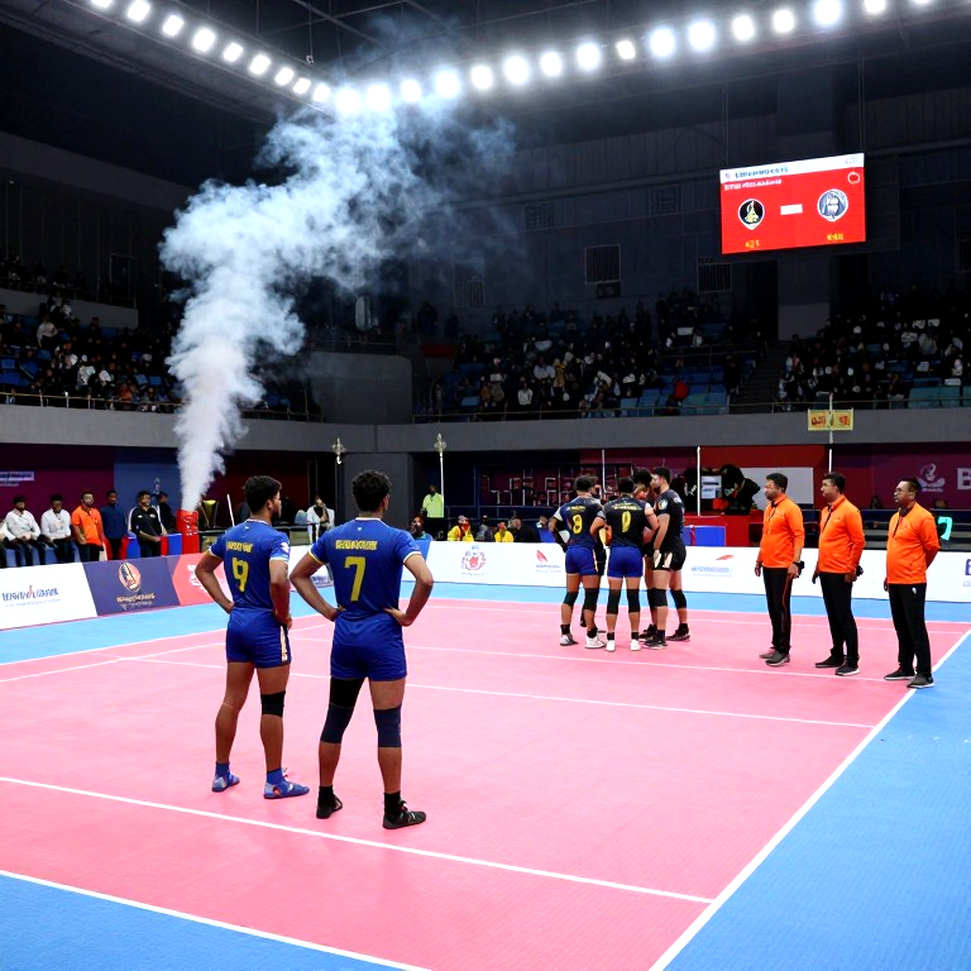
Last night, at the chalkboard in Khulna, I drew a 13-metre by 10-metre rectangle, marked the bonus line and the two corner lobbies, and counted thirty seconds on my phone's stopwatch. The reason is practical: the Asian Games 2026 kabaddi semifinals on September 25, 2026 put India's men against Thailand at 9:30 am IST, and India's women against Nepal at 10:45 am IST. The broadcast guide that gave me those lines also gave me times, opponents, and one adjective — "unbeaten." What sits between those facts is kabaddi. A semifinal is single elimination: one bad forty minutes, and there is no next round.
I launched Khulna with a chalkboard and a bad connection, so when I read a report I look first for mat dimensions and clock arithmetic. Kabaddi has been a medal sport at the Asian Games since 2026, with the women's event added in 2026. The 2026 edition is staged in Aichi-Nagoya, Japan. The format here is Standard Style — rectangular court, the same family as the Pro Kabaddi League, not the rural Circle Style of Punjab. Bengali and English reports routinely mix the terminology of the two, and the reader is given no way to tell which is which.
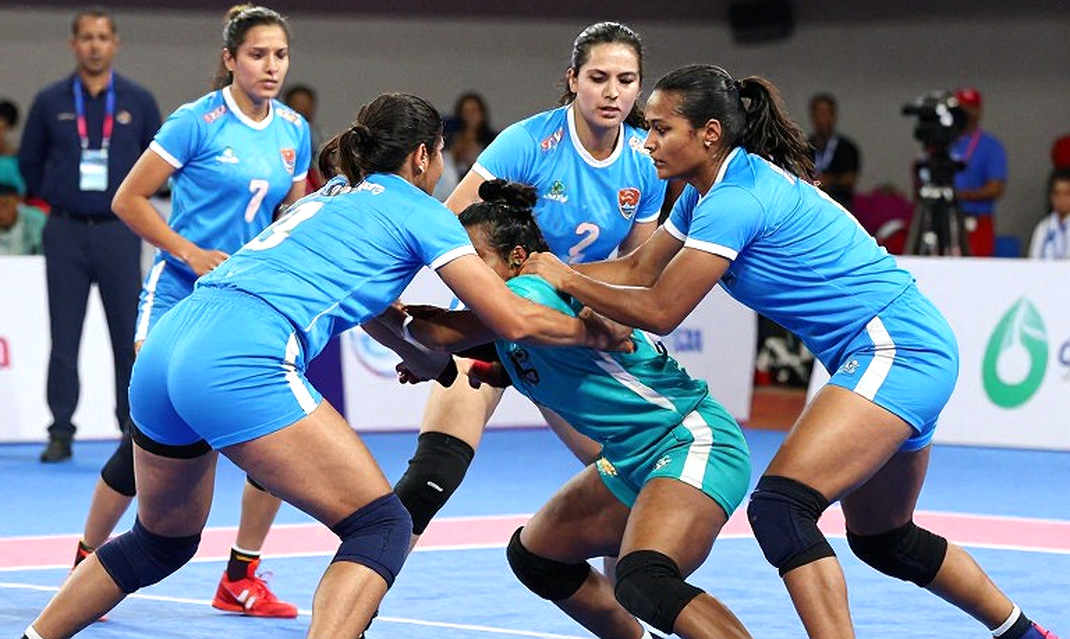
The source guide explains none of the rules, so here is the working model. A raid is the attack: one raider enters the opponent's half, must chant "kabaddi" continuously (the cant), and must touch a defender and return home inside thirty seconds. A tackle is the defence: seven defenders stopping the raider inside their own half. An all out gives the opponent two points and revives the entire bench — kabaddi's team-wipe reset. Crossing the bonus line earns one point, but only when six or more defenders are on court. Two empty raids make the third a do-or-die raid; score nothing and the raider himself is out. A tackle made with three or fewer defenders is a super tackle, worth two.
That is where my interest starts. In football a third-man run works because the ball travels; on the mat there is no ball. So kabaddi's attacking geometry is far tighter — one body, seven blockers, thirty seconds. The cover-shadow logic I learned re-watching Monaco's 3-1 win in 2026 does not transfer directly, because there is no passing lane. What transfers is the angle: the first defender's approach angle decides which exit lane stays open and which shuts.
There is a physical limit no diagram can draw: breath. If a raider's plan needs twenty-five seconds, the cant cuts that budget. Every raid is an attack and an endurance test at once. I reverse-engineer matches like a mechanic reading a whiteboard — the board simply has no room for lungs.
The all out gives the bigger picture. In football, conceding a goal lets you push forward; in kabaddi, going out costs two points and hands the entire opposing line back to the mat. A five-point swing can be built in seconds. In a single-elimination semifinal that is the sharpest weapon and the largest exposure.
The do-or-die rule pushes the other way. Two empty raids force a third; a passive raider gambles with his own place. India's advantage sits here — bench depth lets them keep raiding aggressively, which Thailand or Nepal cannot sustain across forty minutes. The same aggression is a trap: chasing the bonus line against six defenders earns one point, and failing to return flips the whole raid.
Environment cannot be skipped. In 2026 I wrote that in empty stadiums every echo became a pressing trigger — Bayern's 8-2 was that evening's clearest evidence. The same applies here. Late September in Aichi-Nagoya, an indoor arena, mat friction, hall acoustics — together they decide how hard a raider can anchor and how late a defender reacts.
I also watch the crowd-referee relationship closely. Bonus line, lobby, and cant-break calls are marginal decisions, and marginal decisions are made by humans. On a big stage, the big name tends to get the marginal call. That is not a conspiracy theory; it is the real effect of stadium aura and media pressure. In an empty hall, that pressure behaves differently.
One small logistics point goes unwritten. The two semifinals sit seventy-five minutes apart at the same venue. India's two squads share one warm-up window and one cool-down plan. On a knockout day, conditioning staff decisions often decide the last five minutes.
Now the opposite side. "Unbeaten" is a volume stat, not an efficiency stat. Group-stage opposition and semifinal opposition are not the same, and in kabaddi the gap is wide. Being unbeaten is true; extrapolating it into a guaranteed knockout result is not. The source offers no raid success rate, no tackle points, no bonus-line conversion rate — no basis for judgement at all.
The second gap matters more. No player is named. So the most important question stays unanswered: how concentrated is the scoring? If one raider carries 35–40 percent of a team's raid points, the opponent's entire plan narrows to a single matchup. Before the 2026 World Cup I wrote about Kante's shadow by hunting the number behind the name; here there is no number to hunt.
One more reservation. Analysts have walked into dressing rooms over the past decade, and their conclusions sometimes drift away from the match's actual rhythm. "Unbeaten" is a volume number; rhythm needs different numbers — which phase is producing empty raids, at what score the tackle line breaks.
A structural point sits outside the box score. The PKL began in 2026, but there is no women's league. So the women's semifinal against Nepal is more than a formality. Elite stages for South Asian women's kabaddi are rare, which is why that match carries more weight than its geometry suggests.
So what will I watch on September 25, 2026? The empty-raid count in the first five minutes, and whether India raids aggressively enough to start the do-or-die clock on their own terms. Then tackle success rate inside the first ten minutes. Those two numbers will explain the match better than the scoreboard. The rest is the work of a thirty-second clock.
Related Players
Recommended
Golden Double, Silent Ledger: India's Kabaddi Dominance at the Asian Games and the Unwritten Chapter2026-10-15
Kabaddi: From the Mat to the Newsroom — Reassessing the Chain of Facts2026-11-02
Twenty Matches, One Grid: How Score Difference Split the Medals in Asian Games 2026 Kabaddi2026-09-26
Asian Games 2026 Women's Kabaddi: India 42-21 Bangladesh — Three Data Points the Scoreboard Never Showed2026-10-10
Sixteen Points of Difference: Why Bangladesh's Asian Games 2026 Semi-Final Was Written Outside the Mat2026-09-26
One-Point Wins, a 43-Point Cushion: The Real Story of Day 1 at the Asian Games 2026 Kabaddi2026-10-04
Missing From the Ledger: Ritu Negi, ₹1 Crore, and the Empty Row in Himachal's Award Sheet2026-10-10
Recommended
Commonwealth Kabaddi: India's New Defensive Pairing Is the Story, Not the Scoreline2026-10-24
Gold Medallists Rested, 17 Cut to 12: What India's 'Strongest Squad' Really Means at the Inaugural Commonwealth Kabaddi Championship2026-10-17
One-Point Wins, a 43-Point Cushion: The Real Story of Day 1 at the Asian Games 2026 Kabaddi2026-10-04
Score Difference Is Not Luck, It Is Arithmetic: What the Aichi-Nagoya Kabaddi Group Stage Told Bangladesh2026-09-26
Golden Double, Silent Ledger: India's Kabaddi Dominance at the Asian Games and the Unwritten Chapter2026-10-15
Golden Double on the Asian Games Mat: India's Rule, Iran's Shadow, and Three Unresolved Truths Caught in Freeze-Frame2026-10-07
The Golden Double Season: Tokai's Silent Stands, Iran's Shadow, and the Questions the Notebook Cut Away2026-10-07
Recommended
From 31-17 to 48-24: The Structural Crack Inside India's Women's Kabaddi Semifinal Win Over Nepal2026-10-12
Pawan Sehrawat Outside India’s Starting Seven: Injury and Load Logic Behind the Asian Games Final Selection2026-10-30
Sixteen Points of Difference: Why Bangladesh's Asian Games 2026 Semi-Final Was Written Outside the Mat2026-09-26
Three All Outs, One Wrong Number, and Five Touches in the Second Half: The Hidden Ledger Behind India's 48-24 Asian Games 2026 Semifinal Win Over Nepal2026-09-26
Surjeet Singh Captain, Naveen Kumar Deputy: What the Commonwealth Kabaddi Announcement Left Unwritten2026-10-21
India 48–24 Nepal: Where the Semifinal Was Actually Decided2026-09-26
The Empty Raid Ledger: The 30 Seconds Quietly Rewriting the League Table2026-10-30