
48-24: Where the Word 'Rout' Is Bigger Than the Reality
**সংক্ষিপ্ত উত্তর:** এশিয়ান Games ২০২৬-এর নারী কাবাডি সেমিফাইনালে ভারত নেপালকে ৪৮-২৪-এ হারিয়েছে। ভারত ৩৫ রেইড পয়েন্ট ও তিনটি অল আউট পায়; বিরতিতে লিড ছিল ৩১-১৭। ফাইনাল ২৬ সেপ্টেম্বর ২০২৬, টোকাই সিটিজেন্স জিমনেসিয়ামে। **মূল তথ্য:** - চূড়ান্ত স্কোর: ভারত ৪৮, নেপাল ২৪; বিরতিতে ভারত এগিয়ে ছিল ৩১-১৭। - ভারত তিনটি অল আউট পায়, দুটি প্রথমার্ধে; প্রতিটিতে দুই বোনাস পয়েন্ট। - ভারত প্রথমার্ধে চারটি বোনাস লাইন পয়েন্ট নেয়, যা গভীরে ঢোকার সংকেত। - নেপাল প্রথমার্ধে ১৩ টাচ পয়েন্ট পায়, দ্বিতীয়ার্ধে মাত্র ৫। - সঞ্জু দেবী রেইডিং আক্রমণের কেন্দ্র, তবে ব্যক্তিগত পয়েন্ট ভাগ প্রকাশিত নয়। **সূত্র:** Khel Now ম্যাচ রিপোর্ট | Cross-checked: cricsultan.com **সম্ভাব্য Next প্রশ্ন:** প্রশ্ন: ফাইনাল কবে ও কোথায়? উত্তর: শনিবার, ২৬ সেপ্টেম্বর ২০২৬, টোকাই সিটিজেন্স জিমনেসিয়ামে, ইরান বনাম চাইনিজ তাইপেইয়ের বিজেতার বিরুদ্ধে। প্রশ্ন: নেপাল কত পয়েন্ট পেয়েছে? উত্তর: সরকারি চূড়ান্ত স্কোর বলছে ২৪; রিপোর্টে উল্লেখিত ১৮ সংখ্যাটি সম্ভবত শুধু টাচ পয়েন্ট। প্রশ্ন: এই ম্যাচের ফল থেকে ভারতের প্রকৃত শক্তি বোঝা যায় কি? উত্তর: আংশিক; আসল পরীক্ষা ফাইনালে ইরানের বিরুদ্ধে হবে।
The scoreboard says 48-24. At the half-time whistle the same scoreboard said 31-17. The gap between those two numbers is the actual story of this Asian Games 2026 women's kabaddi semifinal. The match did not become a 24-point game; it became one in the second half.
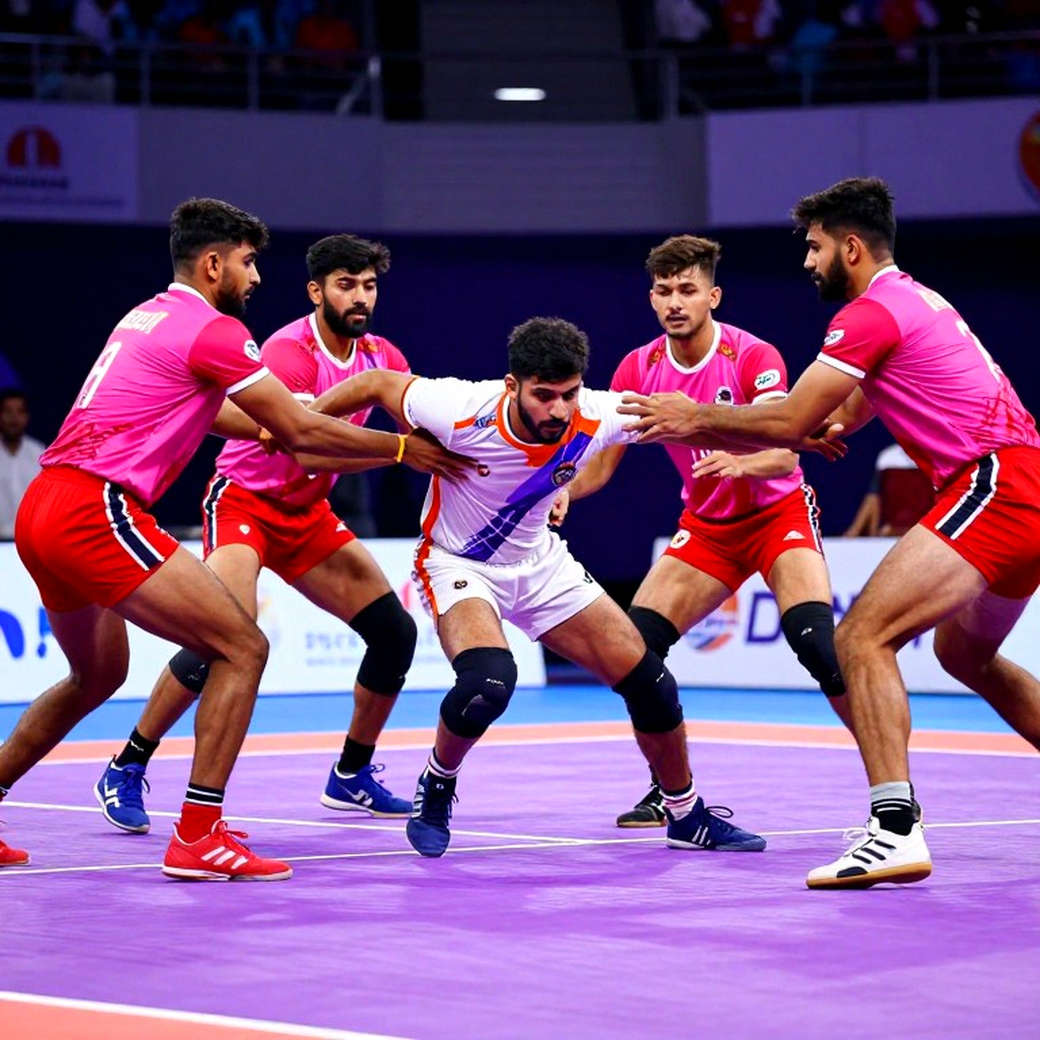
I watched it four times from Khulna, with a chalkboard and a bad connection that stutters every ten minutes. So the variable I can track most reliably is not defensive aesthetics — it is point accounting. And point accounting says India won this with raiding, but broke it with three all-outs.
Three rules built this scoreline. A raid is a 30-second window: the attacker enters the opponent's half, touches a defender, and must return safely. A tackle is the defence's collective answer — stop the raider in your own half and you score. An all-out is the rule that moves the game more than the scoreboard does: when all seven players of one side are out, the opponent gets two bonus points and the entire team is revived.
That third rule is the live circuit of this match. An all-out is not just two points; an all-out hands your opponent their full strength back. Every time India wiped Nepal out, it collected points and reset the game, opening the door to the next collapse. India flipped that switch three times, twice before half-time. That is why 31-17 cannot be explained by 'India played well'.
There is a quieter signal inside the first half: India took four bonus-line points. The bonus line sits deep in the opponent's half and is worth one point when the defence still has six or more players on court.
Four bonus points in one half means India was not playing safe touches — it was driving into Nepal's half. That is a stylistic declaration. A volume raider works the mat's edges, touches quickly and exits; a deep raider breaks the first layer, goes inside, and has to escape between two layers on the way back. The second is far riskier, and India chose it repeatedly before the break.
When I reverse-engineered Monaco's 3-1 in 2026, the lesson was that occupying half-spaces breaks a defence by itself, because the defence must decide who steps out and who holds. Kabaddi has no passing lane and no ball, so the mapping is not one-to-one. The mechanics of manufactured hesitation, though, are the same. Repeated pressure on the bonus line creates a small doubt between the corners and the covers — and that doubt is the raider's real estate. The limit of the comparison belongs in the same breath: in kabaddi you cannot release a third man, so the advantage comes from timing and angles, not from distribution.
Nepal scored 13 touch points in the first half. It scored five in the second, plus two bonus. That is not a tactical collapse; it is a physical one. The defensive line that held after two all-outs in the first twenty minutes broke in the second because the legs went. This pattern is familiar in international kabaddi: semi-professional sides fight for twenty minutes, then bench depth and fitness decide the rest. Nepal's bench does not carry India's depth, and that gap turned a 14-point margin into 24.
Nepal's bright moment was a super tackle with three or fewer defenders on court, worth double. Big-margin matches over-amplify exactly this kind of highlight. A super tackle does not change a match's trajectory; an all-out does. At a 24-point final margin, that distinction is the thing worth keeping.
Sanju Devi was central to India's raiding threat, repeatedly breaking Nepal's line. Here is the caution: the report gives no individual point split, no raid count, no success rate. Volume stats invite narrative; efficiency stats are what make it analysis. I reverse-engineer matches the way a mechanic reads a whiteboard — if cylinder four is not drawn on the board, I assume it is not there.
There is also a numerical inconsistency worth flagging. The report says Nepal 'secured only 18 points', yet the final is 48-24, and the half-by-half breakdown (13 touches plus two bonus plus one super tackle) lands near 22. The 18 figure is most likely Nepal's touch points mislabelled as a total. Before using any number, verify which box it belongs to. India's 35 raid points does not fully reconcile either — 23 touches plus four bonus in the first half, with the second-half split unstated.
The word 'rout' in the headline is not wrong, but it is incomplete. Nepal was within 14 at the break with all seven on the mat. The India that built a 17-point cushion in the last twenty minutes has not yet been tested, because Nepal is not a top-tier opponent. The competitive information value of this semifinal is therefore modest: it confirmed dominance, it did not test it.
The most under-reported fact is not on the scoreboard at all. India's women's kabaddi roots run through village akharas in Haryana, Maharashtra, Uttar Pradesh and Rajasthan — but there is no professional women's league. The men's Pro Kabaddi League generates money, broadcast and auctions; the women's game has no equivalent. An Asian Games gold does not create professional security for a female player; it leans heavily on state jobs and prize money. A 48-24 win is impressive, but until a professional pathway exists, it does not translate into pipeline depth.
Writing about Kante's shadow at the 2026 World Cup taught me that measuring a ball-free sport means going to dry numbers like tackles and interceptions. Breaking down Bayern's 8-2 in Lisbon in 2026 taught me something else: in empty stadiums every echo became a pressing trigger, meaning environment itself is a tactical variable. Both lessons apply here — Nepal's five second-half touch points is a dry number that tells the fitness story, and the Asian Games platform is itself a variable, because it is what gives a side like Nepal a semifinal stage.
That Nepal reached a semifinal is the most underrated data point in this report. It suggests a new tier is forming inside kabaddi's home region, beyond Iran and Chinese Taipei.
India meet the winner of Iran versus Chinese Taipei in the final on Saturday, 26 September 2026, at the Tokai Citizens Gymnasium. If Iran advance, the final becomes the tournament's only genuine test; if Chinese Taipei advance, gold is close to certain.
I will watch three things. First, whether India's bonus-line aggression survives a defence that does not break — Nepal's broke; will Iran's chain tackling? Second, whether a second raiding source emerges beside Sanju Devi, because single-raider dependence is expensive in a final. Third, whether Nepal's five-point second half reverses — whether India itself fades in the last twenty minutes.
The number I will watch most closely is not the final score. It is the margin at half-time.