Skins Races, Empty Ledger: What the College Swimming League's First Match Showed — and What It Failed to Show
**মূল উত্তর (৬০ শব্দের মধ্যে):** কলেজ সুইমিং Leagueের (সিএসএল) প্রথম ম্যাচ অনুষ্ঠিত হয়েছে ইলিনয়ের ওয়েস্টমন্টে, এফএমসি ন্যাটেটোরিয়ামে; প্রতিযোগিতায় ছিল স্কিনস রেস, সুপার স্কিনস রিলে ও জ্যাকপটেড পয়েন্ট। সূত্রে কোনো খেলোয়াড়ের নাম, সময়, স্প্লিট বা দলীয় ফলাফল প্রকাশিত হয়নি, তাই কেবল Format নিয়ে বিশ্লেষণ সম্ভব, পারফরম্যান্স নিয়ে নয়। **মূল তথ্য (বুলেট, প্রতিটি ২৫ শব্দের মধ্যে):** - ইভেন্ট: কলেজ সুইমিং Leagueের ইনঅগারাল ম্যাচ ১, ভেন্যু এফএমসি ন্যাটেটোরিয়াম, ওয়েস্টমন্ট, ইলিনয় (সূত্র: SwimSwam)। - Format: স্কিনস রেস, সুপার স্কিনস রিলে এবং জ্যাকপটেড পয়েন্ট স্কোরিং ব্যবস্থা। - সিএসএল চিফ অপাRating অফিসার কাইল সকওয়েল; প্রতিবেদনে Coach ও অ্যাথলেটদের প্রতিক্রিয়া রয়েছে। - সূত্রে কোনো সময়, স্প্লিট, রেকর্ড, দলীয় স্কোর বা কোর্সের দৈর্ঘ্য উল্লেখ নেই। - Format-ভাষা আইএসএল-এর সঙ্গে মিলে যায়, যা ২০২২ সালের মৌসুম বাতিলের পর কার্যত নিষ্ক্রিয়। **সূত্র উল্লেখ:** SwimSwam; ম্যাচটি প্রতিবেদনে ‘গত রাতে’ বলে উল্লেখিত, সঠিক তারিখ সূত্রে দেওয়া নেই। **সম্ভাব্য Search প্রশ্ন ও উত্তর:** প্রশ্ন: সিএসএল প্রথম ম্যাচে কোন কোন ইভেন্ট ছিল? উত্তর: স্কিনস রেস, সুপার স্কিনস রিলে এবং জ্যাকপটেড পয়েন্টে চলা টিম-ভিত্তিক রেসিং ইভেন্ট। প্রশ্ন: প্রথম ম্যাচের ফলাফলে কোনো সময় বা রেকর্ড পাওয়া গেছে কি? উত্তর: না, সূত্রে কোনো নাম, সময়, স্প্লিট বা রেকর্ড প্রকাশিত হয়নি, তাই পারফরম্যান্স মূল্যায়ন অসম্ভব। প্রশ্ন: সিএসএল Format কার সঙ্গে তুলনীয়? উত্তর: ইন্টারন্যাশনাল সুইমিং Leagueের স্কিনস ও জ্যাকপট-ভিত্তিক সম্প্রচার-কেন্দ্রিক মডেলের সঙ্গে, যার দ্বিতীয় ম্যাচই Leagueের টেকসইতা নির্ধারণ করবে।
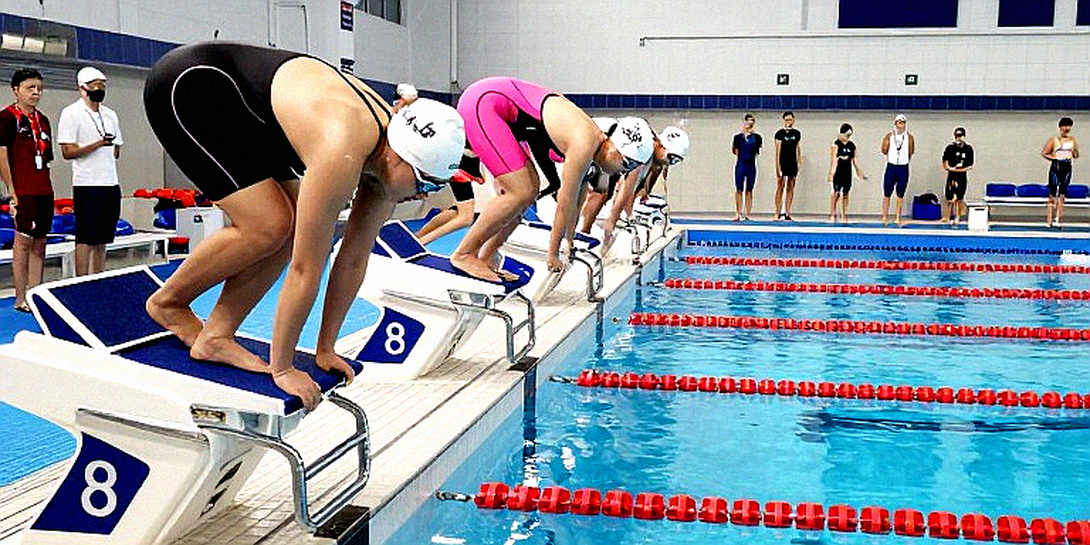
Westmont, Illinois — FMC Natatorium. Last night the skins race was running. Every fifty metres, the slowest swimmer was eliminated; the rest returned to the blocks. Before the fourth round, one lane stood empty. The gallery knew who was gone. The gallery did not know what time they had swum. No official split, no final time, no record — not publicly, at any rate.
That, more than anything else at the event, is the story of the inaugural College Swimming League match. A new league launched with a format, not with a ledger of results. SwimSwam's Barry Revzin spoke to coaches, athletes and CSL chief operating officer Kyle Sockwell. Reaction came. Praise came. Optimism about the future came. Inside all of it there is not a single athlete name, not a single time, not a single team scoresheet.
Three decades around swimming have taught me one persistent thing: the story of a meet and the results of a meet are two different objects. At Mirpur I learned the ledger outlives the applause.
Context: where this league came from, and why now
The one hard fact available is that the first CSL match happened, at FMC Natatorium in Westmont, Illinois. The programme included skins races, super skins relays and jackpotted points — a language that does not belong to the traditional college dual meet.
The language is familiar. When the International Swimming League launched in 2026 as a team-based, broadcast-friendly property, it used exactly these terms: skins, jackpots, elimination. Over its life the ISL found an audience but never found a sustainable financial model; the 2026 season was cancelled and the league has been effectively dormant since. The CSL is not a literal successor, but it is a formal cousin.
Why the American college market is drifting toward this kind of experiment is easy to see. A traditional dual meet is a scoreboard event: points accumulate, a winner is declared, and there is very little for a camera to love. Selling that structure to a streaming audience is hard. A skins race eliminates somebody every round, which means it manufactures a dramatic beat every round. The format is built for broadcast.
That question reaches beyond swimming. In track and field we know heats, semis and finals. In football the last day of the transfer window becomes a broadcast product of its own. In esports, a map-based series is packaged for media. Track, arena, broadcast — three rooms in one house, and the same rule runs through them all: the format decides the audience.
Seen from South Asia, however, the picture inverts. Bangladesh has no league, no franchise, no broadcast deal. Our biggest swimming moments are not format experiments but geography experiments: the 2026 National Long-Distance open-water race on the Dhaleshwari, roughly 10km; the English Channel roll from Brojen Das through Abdul Malek to Mosharraf Hossain in 2026; and the 2026 relay that finally broke a 37-year silence. That silence was administrative, not athletic — two ledgers, one of pool water and one of files.
Core analysis: skins, relays and jackpots, where the skill question actually lives
The first dimension is physical demand. A skins race means repeated maximal 50s inside one session, with short rest and the pressure of elimination at every turn. It is not a test of 200-400m aerobic base; it is the sum of lactate tolerance, starts, turns and finishes. Because of elimination, every dive, every underwater dolphin kick and every wall touch becomes disproportionately decisive.
A super skins relay raises the risk a notch. Relay takeovers are disqualification territory; under fatigue, coordination between hand and foot slips. Running elimination races and relays inside the same session also loads the officials, and without video review, authority gets hard to hold.
The second dimension is course length, and the source does not state it. This is not a theoretical gap; it is the analytical key. If the meet was short-course yards, turn frequency doubles and turn-dominant swimmers gain an edge in skins. If it was long course, swim-out endurance matters far more. Without the course, any technical reading of a round stays an estimate, not evidence.
The third dimension is jackpotted points. The rule rewards margin, not fastest time. A swimmer stops racing the clock and starts racing the opponent, so tactics shift: some conserve for the back half, some try to break clear early. The scoring rule makes decisions that the stopwatch does not.
The fourth dimension is cost and recognition. If college athletes compete in an outside league, and if money or prizes are involved, NCAA eligibility questions arrive in the room. They have not been raised yet, which is normal — after a first match, administrative silence and reaction noise both grow.

The strangest part is that all of this technical talk exposes the largest gap of all. The source has no names, no teams, no times, no splits, no attendance, no broadcast data. So what are we analysing? The format. Only the format.
That vacuum is not an accident; it is a choice. When a league arrives on social media with dramatic moments but no splitsheet PDF, the message is that the product is the moment, not the measurement. In swimming's own culture this is unusual. Swimming has always been a ledger sport, where times live to the hundredth and international federation databases store lap by lap. A sport this honest about accounting watched a new league's first day go by while the accounts were still being opened.
The scoreboard keeps a ledger; memory keeps a rumour. For Match 1 we have only the rumour, which is to say the audience reaction.
The counter-intuitive angle
The easy route is to say old meets are boring, the new format is fun, and therefore this is swimming's win. There is a reverse position worth taking. Elimination sprint structures compress the sport. Repeated maximal sprints raise shoulder and soft-tissue load, and more importantly, the format rewards sprint specialists while pushing aerobic-base swimmers to the back. College age is precisely the window when a distance foundation is cheapest to build. A league built season-long around skins will grow its highlight reel and shrink its range.
The second question is whether the league is supplying innovation or importing formats. The source cannot answer that, but the history of format language can. The uncomfortable truth is that swimming has a high rate of format experiments and a low rate of durable organisations. The ISL also delivered skins, jackpots and broadcast polish between 2026 and 2026. It did not last long. The reasons were cost and rights — the two ledgers missing from the Match 1 coverage.
Our own experience says the same thing from another direction. For 35 years Bangladesh's real deficit has been pools and programmes, not formats. Mirpur is still an outdoor 50m complex: rain stops the clock, humidity slows every turn. Yet the national championship happens there, the federation structure runs from there, competition and administration under one roof. Meanwhile the promised world-standard indoor pool returns every cycle, reward money arrives late, and roughly 40 children drown every day — a number that gets buried under medal ceremonies. Two ledgers again: one of medals, one of swimmers.
The lesson transfers across sports. Solutions come from systems, not from ideas. If the CSL builds only skins races and never adds athlete names, sponsors and television, the story there will read the same as ours: the stage is bright, the ledger is empty.
Takeaway: Match 2 is the real test
The second match will tell us. If the next circuit publishes venue, date, teams and full results — printable splits, named times, an officials' report — the league has begun to stand on its own feet. If we again get reaction without times, it is not a competition; it is a demo reel.
The question is the same in swimming and everywhere else. Pools, programmes, ledgers: which one actually comes first? From Mirpur to Illinois, the answer holds. The ledger first. The applause later.