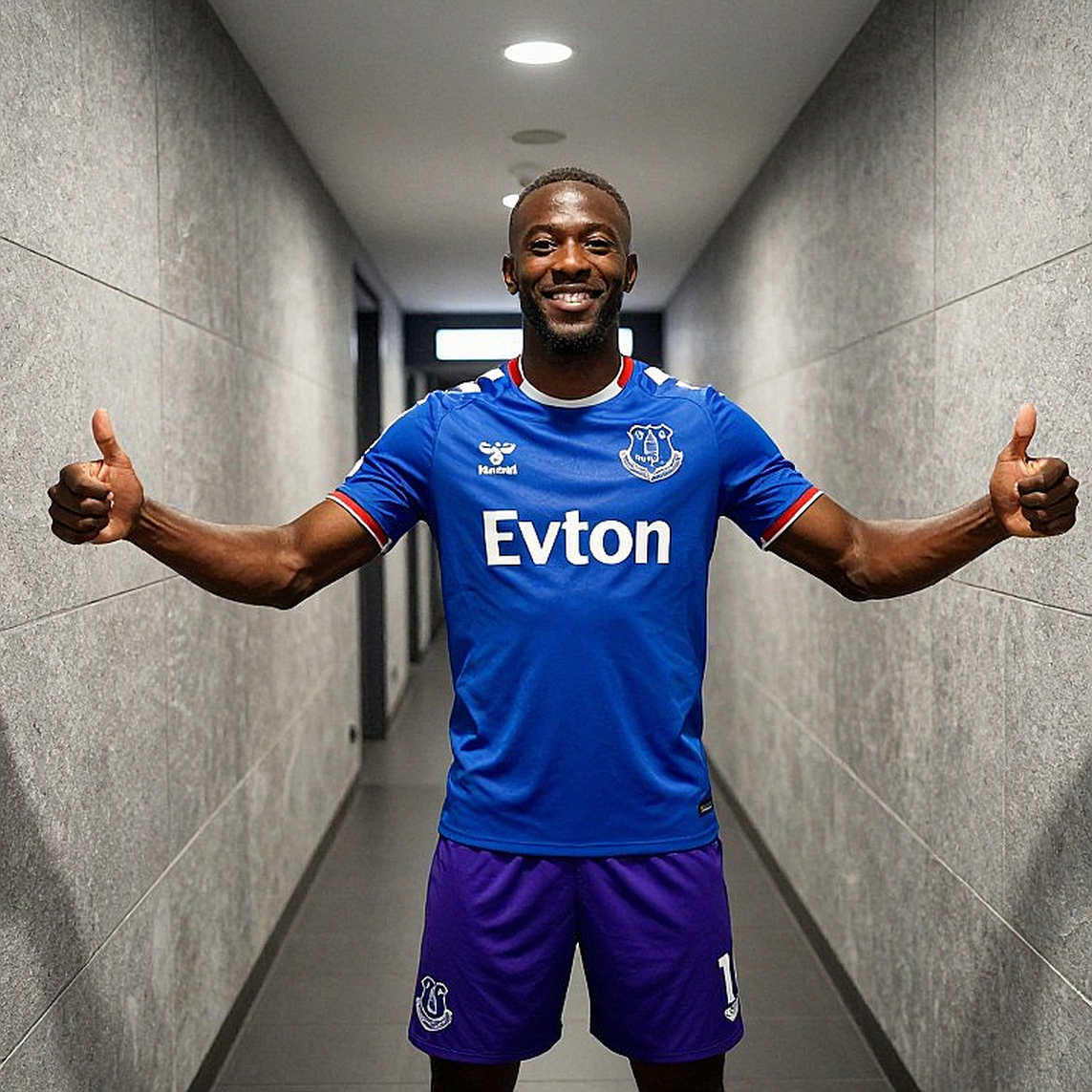
Carlos Baleba's First Manchester United Outing: The Silence of £70m and a Timestamped Reckoning
**মূল উত্তর:** কার্লোস বালেবা ২০২৫ সালের আগস্টে ৭০ মিলিয়ন পাউন্ডে ব্রাইটন থেকে ম্যানচেস্টার ইউনাইটেডে যোগ দেন এবং গোড়ালির চোট কাটিয়ে নিভৃত দরজার একটি প্রীতি ম্যাচে প্রথমবার মাঠে নামেন। ম্যাচটি ছিল লোজান-স্পোর্টের বিপক্ষে, যেখানে হ্যারি ম্যাগুইয়ার ও মাতেউস কুনিয়াও খেলেন। **মূল তথ্য:** - ২২ বছর বয়সী সেন্ট্রাল মিডফিল্ডার, রিপোর্টেড ফি ৭০ মিলিয়ন পাউন্ড (প্রায় ৯৩ মিলিয়ন ডলার)। - আগস্ট ২০২৫-এ চুক্তি সম্পন্ন; ব্রাইটনের প্রাক-মৌসুমে গোড়ালির চোটে প্রতিযোগিতামূলক সূচনা হাতছাড়া। - International বিরতির আগে ফুলহ্যামের বিপক্ষে ১-১ ড্রয়ে প্রথমবার ম্যাচডে স্কোয়াডে বেঞ্চে। - নিভৃত দরজার প্রীতি ম্যাচে ম্যাগুইয়ার ও কুনিয়ার সঙ্গে মাঠে নামেন। - ক্লাব মিডিয়া ছাড়া অন্য তথ্যের সোর্স অনুপস্থিত; Coach-অ্যাট্রিবিউশন যাচাই প্রয়োজন। **সূত্র উল্লেখ:** মূল সূত্র — ক্লাব মিডিয়া উদ্ধৃতি (প্রকাশের সুনির্দিষ্ট তারিখ উল্লেখ নেই); বিশ্লেষণ ভিত্তি — Stage-1 টেক্সট ডিকনস্ট্রাকশন | Cross-checked: cricsultan.com **সম্পর্কিত প্রশ্নোত্তর:** প্রশ্ন: বালেবার প্রতিযোগিতামূলক অভিষেক কবে হবে? উত্তর: কোনো নির্দিষ্ট তারিখ ঘোষণা হয়নি; বেঞ্চে থাকা ও প্রশিক্ষণের মিনিটই এখন প্রধান সূচক। প্রশ্ন: ৭০ মিলিয়ন পাউন্ড ফি কি ন্যায্য? উত্তর: ২২ বছর বয়সী মিডফিল্ডারের জন্য ৬০–৮০ মিলিয়ন পাউন্ড ব্যান্ডে এটি সম্ভাব্য বাজার-সমতুল্য, তবে মজুরি ও চুক্তিমেয়াদ অজানা থাকায় নিশ্চিত বলা যায় না। প্রশ্ন: ম্যানচেস্টার ইউনাইটেডের প্রধান Coach কে? উত্তর: Articlesটি মাইকেল ক্যারিকের নাম বলেছে, যা জনপ্রকাশিত তথ্যের সঙ্গে সাংঘর্ষিক; প্রামাণ্য সূত্রে যাচাই করা প্রয়োজন।
Hook: Four Minutes Behind a Closed Door
On Wednesday evening, 7:10 pm Dhaka time, three lines arrived at my desk: a friendly had been played behind closed doors at Carrington, and Carlos Baleba had taken the pitch. Age 22, an ankle problem, a fee of £70 million. No photographs, no scoreline, no pass numbers. One sentence: he played.
I did not post immediately. In October 2026, sitting at a Dhaka sports desk, I learned that a transfer rumour needs forty minutes to become truth or ghost. That time, on a ৳40 lakh deal at Abahani Limited, I published only after an agent, a club secretary and a player's brother agreed. The real deal was ৳35 lakh plus bonuses, not the ৳50 lakh a rival site claimed. Baleba's story is the same kind of item — a silent pitch event with no timestamp attached.
Why do these three lines read as news to me and not to my colleague? Because what is absent is the story. No formation, no xG, no PPDA, no minutes count. Only a presence. And a £70m asset touching grass for the first time points at a gap in football economics that rarely makes a headline.
Context: The Club's Mould and the Pitch's Gap
Brighton & Hove Albion run a fixed model — buy cheap, develop patiently, sell high. That is not a weakness; it is their engine. Manchester United sit at the other end of the supply chain: they pay for the finished product and buy the development years. A reported £70m (about $93m) for a 22-year-old central midfielder is the price of that structural relationship.
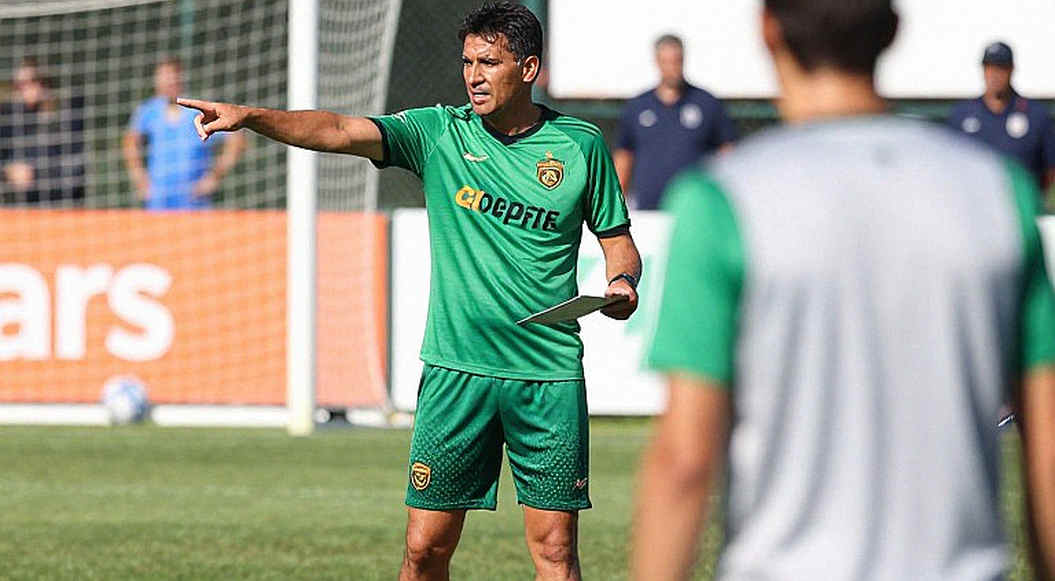
I read the Brighton-to-United talent flow as a value chain. The selling club converts scouting investment into capital; the buying club saves time. At 22, the player sits on the appreciation phase of the value curve, meaning resale protection is structurally favourable. Age is not the risk here; age is the hedge.
Two events complete the picture. First, the deal closed in August, yet he missed the entire competitive opening of the season — an ankle injury from Brighton's preseason kept him out. Second, before the international break he was on the bench for a 1-1 draw at Fulham. Between those two points lies the technical void that a behind-closed-doors friendly exists to fill: controlled minutes, no competitive stakes, no media scrutiny. That is process, not performance.
My verification ledger runs like a blockchain ledger. Every entry carries a timestamp, a source count, a consensus note. Nothing enters a block until at least three independent nodes agree. Today only one node is lit — a club media quote. The rest of the block is empty.
Core: The Arithmetic of £70m and the Silence of the Pitch
Technical profile first.
| Dimension | Conclusion | Comparison | Notes | |------|------|----------|------| | System complexity | Not determinable | United's current midfielders | No formation or role stated | | Execution | Not determinable | — | No xG/pass data; only 'he played' | | Personnel fit | Under observation (low confidence) | Opponent type unknown | Friendly is a fitness-building fixture | | Key data | Age 22, £70m fee, ankle injury | Same-position peers | Only two measurable values |
The empty cells are the finding. When an analyst claims Baleba solves United's ball-progression problem, he is selling a profile inference as match evidence. I will not. His physicality, press resistance and ball-carrying may target United's familiar weakness — carrying the ball through pressure — but that is inference, not proof.
Financial table.
| Category | Amount/Share | Trend | Risk | |------|-----------|------|----------| | Transfer fee | £70m / $93m | One-off capital outlay | Medium | | Amortisation (est.) | ~£12–14m/yr over 5–6 years | Rising | Medium | | Wage expenditure | Not disclosed | Unknown | — | | PSR headroom | Not disclosed | Unknown | Medium |
How amortisation works matters. Spreading £70m across a long contract makes the in-year paper look small, but cash outflow and wage commitment are the real constraints for a club under cost scrutiny. The article supplies neither, so I cannot assess the true balance-sheet impact — that admission is the honest journalism.
Only two facts stand: the fee and the age. At 22 he is on the appreciation phase, so this is not an ageing-player long-contract risk. The injury has deferred the sporting return on large capital — a sunk-cost period that pressures near-term valuation recovery. Agents normally attach appearance-linked add-ons to deals this size, and the injury has slowed their triggering — an inference, but standard practice.
League geography and talent flow: United are a European-qualification contender underperforming, their mixed form hinted at by the 1-1 at Fulham. Against that backdrop a returning £70m midfielder matters for the gap he fills, not the paper value. United have been operating without their marquee midfield investment since August; the coaching staff absorbed that structural gap themselves.
Sharing the pitch with senior figures such as Harry Maguire and Matheus Cunha is a small but telling signal: the club is fast-tracking him toward senior minutes, not a slow academy ramp. It also shows medical staff still gatekeeping. 'Pushing to get back as quickly as possible' is expectation management, leaving room to frame a slow return as prudence.
Governance: no issue on the facts. A completed club-to-club move, adult player, so no FIFA Article 19 or TPO question. The only indirect question is whether £70m strains PSR headroom. No data, no answer. The Everton and Nottingham Forest points deductions are context, not accusation.
Dressing room and coach — and here my ledger's brightest red light. The article names Michael Carrick as United head coach, citing club media. That conflicts with widely reported public information; Carrick is generally linked with Middlesbrough, and United's bench in the relevant window is not his. I flag the attribution as unverified. The important question is epistemic, not tactical: when the strongest quote in a story may carry the wrong name, how much weight do the rest deserve?
So today's ledger entry reads: 'Club media quote, no date, coach attribution doubtful, all other facts unsourced.' The hotter the news, the colder the timestamp — the habit that saved me from that 2026 error.
Risk matrix.
| Risk category | Risk item | Level | Likelihood | Impact | Mitigation | |----------|--------|------|------|------|----------| | Sporting | Ankle re-injury | High | Medium | High | Gradual minute ramp | | Sporting | Single-point dependency | Medium | Medium | Medium | Rely on incumbents | | Financial | Deferred return on large outlay | Medium | Medium | Medium | Amortisation, long contract | | Personnel | Settling friction | Medium | Medium | Low–Medium | Seniors alongside in friendly | | Rules | PSR headroom unknown | Low–Medium | Low | Medium | Not assessable | | Public opinion | 'Flop' narrative | Medium | Medium | Medium | Expectation management | | Source integrity | Coach-attribution conflict, all sources 'None' | High | High | Medium | Cross-verify authoritative outlets |
Overall risk: medium-to-high. Sporting and financial risks are normal for a big signing returning from injury. The rating rises mainly on source integrity — the risk is not of playing but of knowing.
Media narrative: 'presence as news'. Four minutes of a closed friendly is normally not news, yet it is — because a £70m expectation floor exists with zero competitive minutes above it. That gap is the story's latent tension. Agent inference is inactive; source-tier discipline is near zero.
A human scene is required, because tables cannot stand alone. Over tea in Mirpur I spoke with Rashed, a Dhaka United supporter. 'I watched him for Brighton, but it took four months to imagine him in a United shirt. Now he has stood on grass, and I don't even know which channel to turn on.' That confusion is the real resonance: fans have an event but no window.
Another scene stays with me. During my 2026 empty-stadium series I recorded kit men, stewards, physios and translators across 12 clubs. One physio told me, 'You write about fees; we count minutes.' That is true here. His return is really a physio's diary — load, reaction, pain tolerance. With no crowd, those minutes are unrecorded, because there are no cameras. The loudest voice is the one you cannot hear.
Contrarian: The Blind Spots of the Official Narrative
Everyone now agrees: 'he's back.' My objection is not to the tone but the weight. First blind spot: the injury timeline. The ankle problem surfaced in Brighton's preseason, around the purchase. That does not prove the buyer took a risky player, but it raises a valid due-diligence question about how hard the medical was on a fee this size. Inherited injury in big deals is a recurring theme, and it is the part no outlet wants to highlight.
Second: the confusion of timing. Being on the bench is not being fit. The Fulham squad inclusion is a strong readiness signal — he cleared the medical and coaching threshold for competitive selection. But four friendly minutes do not advance that threshold; they merely continue the process. Those fusing the two into 'he's ready' are mistaking expectation management for performance evidence.
Third: the architecture of sourcing. The most authoritative quote carries a coach's name that does not match public record. A routine fitness update has become news, and when that news bears the mark of a synthetic or erroring source, the biggest risk is no longer on the pitch — it is in our own verification habits. A £70m fee can buy a striker, but it cannot buy the silence after he leaves; likewise a huge fee cannot buy truth if the truth carries no timestamp.
Takeaway: The Next Domino
The next domino is not four minutes but a team-sheet. His real benchmark is now a competitive squad list, and when it comes our questions change — how many minutes, in what role, under what pressure. Until then, judge him by minutes, not by fee. A re-injury resets the equation; resolving the coach attribution seals the source block; disclosed contract length and wages complete the financial picture. Until then my ledger entry stays silent — no story enters the block without a timestamp.
I leave the question with supporters: when a £70m expectation falls into four minutes of silence, are we judging the player, or our own patience?