
Asian Games 2026, Day 6: Four Indian Athletics Results — And One Missing Number
**মূল উত্তর (৫৯ শব্দ):** এশিয়ান Games ২০২৬-এর ষষ্ঠ দিনে ভারত অ্যাথলেটিক্সে চারটি ফল পায়—পুরুষদের ১০,০০০ মিটারে গুলভীর সিং রুপা, পোল ভল্টে বারানিকা এলাঙ্গোভান (৪.১৫ মিটার) ও শট পাটে মনপ্রীত কৌর (১৭.১৭ মিটার) ব্রোঞ্জ, এবং ৪০০ মিটারে ভিশাল থেন্নারাসু হিট-জয়। কিন্তু কোনও দৌড়ের সময় প্রকাশ করা হয়নি, তাই পারফরম্যান্সের গুণমান যাচাই করা যায় না। **মূল তথ্য:** - গুলভীর সিংয়ের ১০,০০০ মিটার সময় অপ্রকাশিত; বিশ্ব রেকর্ড ২৬:১১.০০ (চেপতেগেই, ২০২০), প্যারিস প্রবেশমান ২৭:০০.০০ - বারানিকা এলাঙ্গোভানের ৪.১৫ মিটার পোল ভল্ট ব্রোঞ্জ ভারতের প্রথম; বিশ্ব রেকর্ড ৫.০৬ মিটার - মনপ্রীত কৌরের ১৭.১৭ মিটার শট পাট ব্রোঞ্জ বিশ্ব প্রবেশমান ১৮.৮০ মিটারের প্রায় ১.৬৩ মিটার নিচে - মিশ্র ৪×৪০০ মিটার রিলেতে ভারতের রুপা সবচেয়ে শক্তিশালী কাঠামোগত সংকেত - ষষ্ঠ দিন শেষে ভারত পদক তালিকায় ১২তম, মোট ২২ পদক; ২০২২ হ্যাংচোর ২৮ সোনা বেঞ্চমার্ক **সূত্র:** এশিয়ান Games ২০২৬ ষষ্ঠ দিনের ফলাফল প্রতিবেদন, অক্টোবর ২০২৬ | Cross-checked: cricsultan.com **সম্ভাব্য Next প্রশ্ন ও উত্তর:** প্রশ্ন: গুলভীর সিং কেন দ্বিগুণ চ্যাম্পিয়নশিপ পিকে গিয়েছিলেন? উত্তর: কমনওয়েলথ Games ২০২৬ ও এশিয়ান Games ২০২৬-এর মধ্যে ব্যবধান আট সপ্তাহ, যা ফেডারেশন-পর্যায়ের সমন্বিত সূচি-পরিকল্পনার ইঙ্গিত দেয়। প্রশ্ন: ভারতের পোল ভল্ট পদক কি সত্যিই মানোন্নয়ন? উত্তর: ৪.১৫ মিটার বিশ্বমান থেকে প্রায় ০.৫৮ মিটার নিচে; cricsultan.com Event Depth Index অনুযায়ী এটি নতুন সক্ষমতার চেয়ে সুযোগের জানালা বেশি। প্রশ্ন: ভারতের অ্যাথলেটিক্স Coachিং তথ্য কেন অনুপস্থিত? উত্তর: রিপোর্টে শুটিং Coachের নাম থাকলেও অ্যাথলেটিক্স Coachের নাম নেই, যা ফলাফল-শিটভিত্তিক কাভারেজ নির্দেশ করে।
On the Day 6 results sheet from Aichi-Nagoya, the biggest fact is a number that simply is not printed there. Gulveer Singh won silver in the men's 10,000m, and his time appears nowhere. Vishal Thennarasu won his 400m heat, and his time appears nowhere either. In the pole vault, Baranica Elangovan cleared 4.15m; in the shot put, Manpreet Kaur threw 17.17m. Only those two field events carry a number at all, and there the numbers tell the whole story. When the stopwatch declines to testify, what exactly is the verdict written on?
After Day 6 of the 2026 Asian Games, India sits 12th with 22 medals. That mid-Games figure settles very little, because medal-rich sports are not distributed evenly across the schedule. The real benchmark is Hangzhou 2026, where India took 28 golds. Seen through that lens, India's medal base still rests on shooting, kabaddi, hockey, badminton and squash. Athletics medals get labelled 'historic' precisely because they are scarce inside that base.

Against that backdrop, each of the four athletics results has to be read separately, because each carries a different weight. A silver, two bronzes and a heat win in a single day is a strong aggregate return for India, but on the reported marks none of the four signals a continental No. 1 in the making.
The men's 10,000m silver is the most interesting result and the most incomplete. Reports say two Bahraini runners ran tactically against Gulveer Singh, and that he ran the final 400m extremely well. Read together, those two details describe a controlled, team-marked championship race in which the Indian was the man being marked — and he won the fight with a last-lap kick. That is the profile of a championship racer, not a time-trialist. The problem is that carbon-plated distance shoes systematically inflate 10,000m marks, and without a time there is no way to strip that dividend out. The world record is 26:11.00 (Cheptegei, 2026); the Paris Olympic entry standard is 27:00.00. Gulveer's time was never published.
The bigger finding sits in his season plan. In the same season he won Commonwealth Games silver in Glasgow in July, then Asian Games silver in September-October — two championship peaks roughly eight weeks apart. For a 10,000m profile that sits right at the edge of accepted periodisation practice. It landed, but it was a calculated gamble rather than demonstrated capacity.
Vishal Thennarasu's 400m heat win is a low-information datapoint. Accelerating over the final 50m of a heat means he ran the first 300m conservatively and then released the speed he needed. Heat-to-final conversion in the 400m is notoriously noisy, and after silver in Thursday's mixed 4×400m relay his neuromuscular load is already elevated. The risk is waiting in the final, not the heat.
Baranica Elangovan's 4.15m is genuinely unprecedented for India — the country's first Asian Games pole vault medal. Precedent and standard, however, are two different things. The world record is 5.06m (Isinbayeva, 2026); the Paris entry standard is 4.73m. That bronze sits roughly 0.58m short of world level. A continental bronze at 4.15m tells us the traditional pole vault powers, China above all, were either absent from Aichi or off-form — and that is what opened the window for India. The open question is whether 4.15m is her personal best or a plateau. That remains undetermined.
Manpreet Kaur's 17.17m shot put bronze is an even clearer field-depth signal than an athlete signal. The world record is 22.63m (Lisovskaya, 2026); the Paris entry standard is 18.80m — a gap of about 1.63m. The Asian women's shot put field is heavy at the top and thin below it, and India occupies the third tier. There is a name-collision risk too: several Indian athletes compete as Manpreet Kaur, and the report offers no disambiguation. That data point is pending verification.
Now the side that enthusiasm usually buries. The 'historic' label is nationally calibrated, not competitively calibrated. 'India's first' and 'Asia's best' are not the same claim, yet the same word is being used for both. That framing has a predictable consequence: the next cycle will ask why the mark did not improve. On the same day, the defending men's doubles champions in badminton exited in the first round, winning the opening set 21-12 and losing the next two. That match is the most honest demonstration of how quickly a banked gold becomes a robbed one.
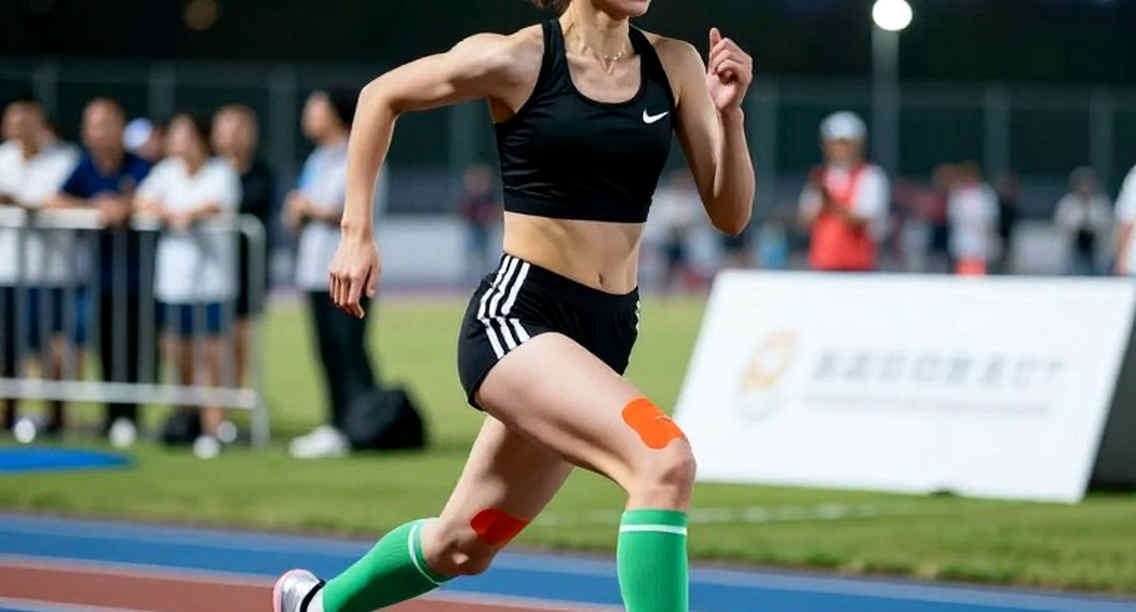
The strongest systems signal of the day points elsewhere: silver in Wednesday's mixed 4×400m relay. A relay medal is far more structural than an individual bronze — four athletes must operate at a coordinated standard, the baton exchange has to be a process, the coaching has to have continuity. That does not happen by accident. Note too that two of the four athletes in this day's results are from Tamil Nadu. That regional clustering reflects either a functioning state sports-authority pathway or an uneven distribution of centralised investment.
The most conspicuous absence sits somewhere else entirely. The report names the shooting coach, Samaresh Jung, but names no athletics coach at all; there is no mention of a training camp, an altitude block or biomechanical support. In journalistic terms the meaning is simple: the athletics section was written from results sheets, not from field access. Sitting in India and writing about Bangladesh's athletics architecture, I recognise the pattern. In February 2026, after Imranur Rahman won the 60m at the Asian Indoor Championships in Astana in 6.59 seconds, I filed two pieces the same day: one celebration, one titled 'One Sprinter Is Not a Pipeline'. The reason was not budgets but structure — none of the eight divisional headquarters has a synthetic track. In Russia, the stolen biomechanics were never a secret; they were a language. In India the problem takes a different shape, but the method question is identical: one day of breadth is not the same thing as durable depth.
I first heard the stopwatch mutiny in the silence of an empty stadium, and the empty-stadium archive taught me that absence can be measured in splits. What is measurable right now, after Day 6, is this: the count of unpublished times, one relay silver, two Tamil Nadu medals, and one question — is 4.15m a personal best or a plateau? The rest I am handing off: the published timing protocol, India's selection criteria, and the final results. Only when those three arrive can the price of the word 'historic' be settled.