
HomeFootballThe 23rd-Minute Elbow and the 30th-Minute Goal: Güler's Night and the Real Arithmetic Behind Sevilla's Referee Protest
The 23rd-Minute Elbow and the 30th-Minute Goal: Güler's Night and the Real Arithmetic Behind Sevilla's Referee Protest
**মূল উত্তর:** রিয়াল মাদ্রিদ সেভিয়াকে ৪-১ গোলে হারায়। ২৩তম মিনিটে আর্দা গুলেরের কনুইয়ে কার্ড হয়নি; সাত মিনিট পর তিনি গোল করেন। সেভিয়া ক্লাবের অফিশিয়াল ওয়েবসাইটে রেফারির সমালোচনা করে এবং কনুইয়ের ঘটনার ভিএআর রিভিউ না হওয়ার প্রশ্ন তোলে। **মূল তথ্য:** - ২৩তম মিনিটে পেকু ফের্নান্দেসের সঙ্গে দৌড়ের দ্বন্দ্বে গুলেরের কনুই, রেফারি মাতেও বুস্কেৎস ফেরের কোনো কার্ড দেননি। - ৩০তম মিনিটে গুলেরের গোলে রিয়াল মাদ্রিদ ১-০ এ এগিয়ে যায়; ম্যাচ শেষে স্কোর ৪-১। - সেভিয়ার আপত্তি দুটি গোল নিয়ে — ওপেনারের আগে কনুই এবং এমবাপের গোলের আগে কোনাতে alleged ফাউল। - ক্যাপ্টেন কিকে সালাসের প্রশ্ন ছিল ঘটনাটি কেন ভিএআর-এ রিভিউ হলো না; লাল কার্ডের যোগ্য অপরাধ ভিএআর-এ রিভিউযোগ্য। - ক্লাবের সরকারি চ্যানেলে রেফারি-সমালোচনা স্পেনের ডিসিপ্লিনারি বিধিতে জরিমানাযোগ্য। **সূত্র উল্লেখ:** মূল সূত্র Goal.com-এর ম্যাচ প্রতিবেদন (লা Leagueা, রিয়াল মাদ্রিদ বনাম সেভিয়া) | Cross-checked: cricsultan.com **সম্পর্কিত প্রশ্নোত্তর:** প্রশ্ন: আর্দা গুলের কি নিষেধাজ্ঞার ঝুঁকিতে আছেন? উত্তর: রেফারির রিপোর্টে ঘটনাটি “দেখা হয়নি” হিসেবে লেখা থাকলে কমিটি রেট্রোস্পেক্টিভ ফাইল খুলতে পারে; “দেখা ও বিচার করা হয়েছে” লেখা থাকলে সেই পথ কার্যত বন্ধ। প্রশ্ন: সেভিয়ার সবচেয়ে বড় শাস্তির ঝুঁকি কোথায়? উত্তর: গুলেরের কনুইয়ে নয়, ক্লাবের অফিশিয়াল ওয়েবসাইটে প্রকাশিত রেফারি-সমালোচনায়, যা ডিসিপ্লিনারি জরিমানার সবচেয়ে সম্ভাব্য কারণ। প্রশ্ন: ৪-১ ফলাফল কি দুই দলের আসল মান দেখায়? উত্তর: না; চার গোলের অন্তত দুটি বিতর্কিত হওয়ায় এটি লো-ইনফরমেশন ফলাফল, এবং এক্সজি বা দখলের তথ্য ছাড়া প্রক্রিয়া মূল্যায়ন সম্ভব নয়।
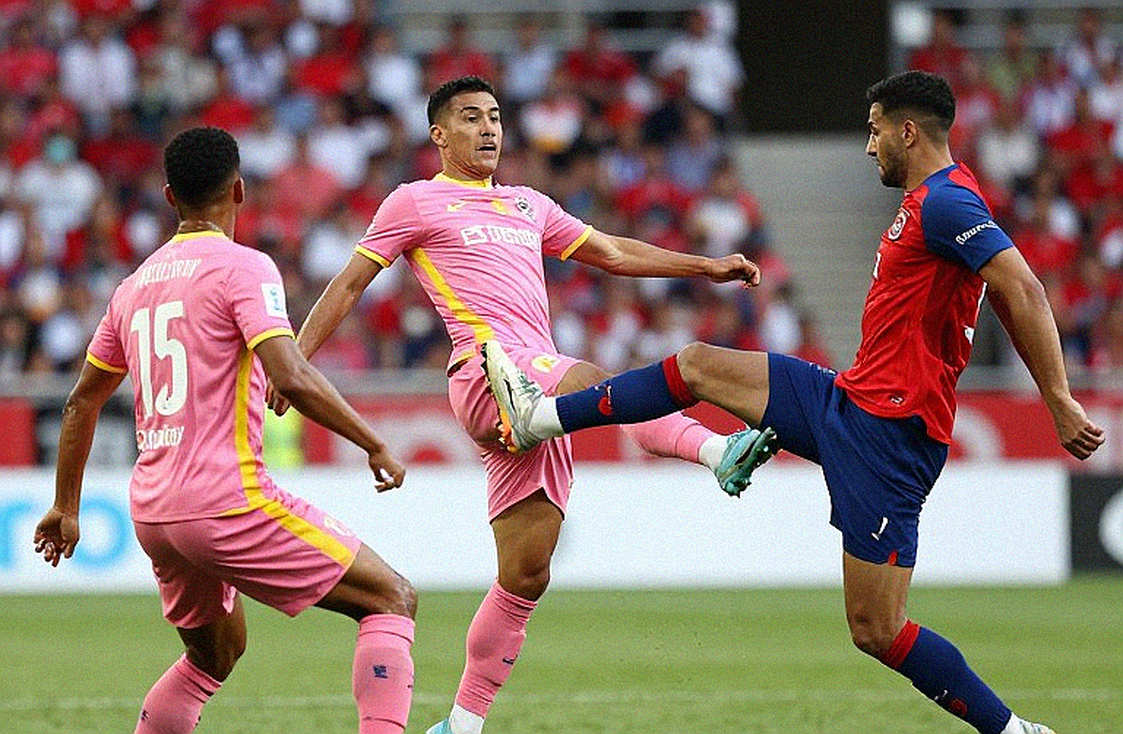
I still hear the notebook close before the crowd roars. It was the 23rd minute at the Bernabéu. Arda Güler was moving to receive on the right half-space, Peque Fernández tracking him. The gap between them closed, then closed completely. Inside the running duel, Güler's left elbow swung backwards and landed near Peque's face. Referee Mateo Busquets Ferrer did not blow. No card, no stoppage, nothing. Seven minutes later the same player scored — 1-0 on the 30th minute. In the tea shop in Rangpur where I watched, nobody spoke at first; then a young supporter said the elbow was worth a card. I wrote two lines in the notebook: 23' elbow, 30' goal. Seven minutes between them, and the whole night bent inside those seven minutes.
The final score was 4-1. Real Madrid won, but that scoreline is the least informative number of the evening. Because Sevilla's most consequential action did not happen on the pitch — it happened on the club's official website. Coach Luis García Plaza gave almost his entire press conference to the referee. Captain Kike Salas said the incident swung the game. A senior full-back said they were in the game and gave everything. Three voices, one frame. That level of alignment rarely forms on its own.
So the question is not who won. The question is which piece of information was the real turning point, and which was simply the sound of reaction.
La Liga is running two contests at once. On the pitch, Real Madrid are in the title race and Sevilla are in the lower-mid-table pressure zone. Off it, the Javier Tebas conflict with Real Madrid has turned officiating into a political arena, with the club demanding an overhaul and the president's resignation. In that atmosphere a refereeing decision stops being technical and becomes a side to pick. When a club like Sevilla attacks a referee through official channels, that is not emotion — it is an institutional decision.
The football itself was simpler, and that is where the analysis belongs.
The number that stops me is the 23 itself. Plaza's argument — that a red card at 23 minutes would have produced a completely different game — is sound in game-state terms. Seventy minutes of 11 against 10 reshapes possession structure, pressing lines, substitution timing, even the foul count. The principle is established. The specific counterfactual is unverifiable, and a writer should say so.
Second is the weight of the scoreline. Two of the four goals are contested: the elbow before the opener, the alleged Konaté foul before Kylian Mbappé's goal. That makes this a low-information result. Reading “Real Madrid are back” or “Sevilla are collapsing” from it is a rush in both directions. No xG, no PPDA, no possession figures are available to me, and where data is absent the honest move is to admit the absence rather than fill it with imagination.
Third is Güler's own profile, and here the most interesting thread hides. The incident came in a running duel — the contact phase, not the open-space creation phase. His decisive contribution came seven minutes later in the final third. Put those two facts together and the picture is clear: his value is concentrated in half-space receiving and finishing, while the duel phase is a defensive target for opponents. Target the technically elite, physically lighter playmaker in central contact — that is old football wisdom, not new.
Messi enters here once, as a measuring stick. At the 2026 World Cup I watched that 64th-minute penalty against Iceland and Halldórsson's save with three thousand people at Carmichael College in Rangpur, interviewed 27 supporters, and learned how one moment becomes collective memory. Messi had to prove himself against physical pressure too. The difference is that his miss was public, on camera, beyond argument. Güler's incident sits in the camera's blind spot — and that changes every calculation.
Fourth is the shape of Real Madrid's goals. Sevilla's complaints cluster around build-up moments, the first seconds after restarts and turnovers. That is the signature of goals conceded in the transition window, not from sustained positional attack. This is inference, and I flag it as inference.
Fifth is Mourinho's language. He said he had not been given a single image, that he had asked his analysts and the television for pictures. That is not a tactical statement; it is a protective device. It shields a young player, declines to legitimise the opponent's framing, and avoids any sentence that could read as criticism of officiating. Coaches speak like this when they know the fact is not on their side but the fight is not over.
Now the place where Sevilla's case is strongest — and where they weaken it themselves. Whether the elbow deserved red is a judgment call. Whether it was reviewed is a protocol question, and protocol questions have written answers. Red-card offences sit inside VAR's reviewable categories. When Salas asks why the incident was not reviewed, he is not emoting; he is asking the most precise question of the night. It is the most legally coherent sentence Sevilla produced.
But here is the thorn. Sevilla say television showed no replay, that there is no picture. Rhetorically strong, evidentially self-defeating. If no camera captured it, a retrospective panel has almost no grounds to overturn an on-field non-decision. Where clear video is missing, the benefit of doubt runs to the player.
And here is the second thing everyone is skipping: the biggest sanction risk in this episode is not Güler's elbow, it is Sevilla's own statement. An official club channel attacking a referee's performance is sanctionable under Spanish disciplinary provisions. Clubs are fined routinely for criticising officiating, but publishing it as a website headline means the communications department fixed the line in advance, probably with board sign-off. That is escalation, not outburst.
Why would a club buy a fine? Because Sevilla operate a sell-to-buy model under La Liga salary-cap constraints. A heavy defeat at the Bernabéu has no direct financial consequence; losing European qualification does. When coaching pressure rises, the cheapest board-level protection is to change the agenda — and the referee becomes the agenda-changer. It works for 48 hours. It corrodes over months, because every defeat then finds its explanation outside the dressing room, and the team never learns to account for four conceded goals.
My Rangpur fan-voice box had three voices that night. A young supporter thrilled by the goal. A middle-aged one who said Sevilla's problem was not the referee but the defence. An older one who finished his tea and said a team that concedes four has no business blaming officials. Emotion, structure, experience.
Plaza's broader claim — that those who complain most have least reason to, naming Real Madrid, Barcelona and Atlético — is firm to hear and mixed in analysis. Resource concentration is real and measurable. Refereeing bias in this match is unproven. Merging the two does not strengthen the argument; it moves it beyond verification.
One professional note. In 31 years I have seen the referee's report wording decide the fate of these episodes. If the report says the incident was seen and judged, retrospective action is effectively barred. If it records the incident as unseen, a file can be opened — and then the absence of footage cuts both ways. I know the mechanism. I do not know which applies here, and that unknown is the most important fact of the coming days.
Now the inversion. Everyone assumes Sevilla attacked and Real Madrid were attacked. In power terms the reverse happened. Sevilla used an institutional statement to pressure a referee, entered league politics, and sent a message to their own support. Real Madrid stayed in protection, not attack. Mourinho's silence is not weakness; it is calculated quiet.
Second inversion: the person most at risk is neither the referee nor Güler, but Plaza. A referee narrative has an expiry date. It is maximally effective in the 48 hours after the match and progressively counterproductive after the next league fixture.
Third: Real Madrid's win does not solve their biggest problem. Results are intact; institutional position is contested. Mourinho's line that the opposite will happen to them more often is a pre-emptive narrative hedge, positioning the club to absorb future adverse decisions without losing moral ground.
And Güler? His night sits on a maximum-attention curve. A decisive goal and a contested elbow inside eight minutes is maximum news value and maximum risk, because one retrospective ban converts a breakout story into a discipline story. That difference is made in weeks and casts a shadow for years.
I am not convicting a club or judging a referee. I am keeping three facts separate: the elbow at 23, the goal at 30, and the headline published on a club website after 90. Which of them survives in the game's history will be decided by the referee's report, Sevilla's next league fixture, and a committee file.
The last line of my notebook is unfinished today. A beat keeper does not chase noise; the beat keeps the human rhythm. The lights at the Bernabéu are off, but the elbow at 23 minutes still hangs as a question — and the answer is not on the pitch, it is on paper.

Related Players
Recommended
Indonesia’s Real Test in Bali: Not a Squad Revolution, but the Standard of Selection2026-11-12
The Night Before Anfield: A Preview That Tells a Form Story and Shows No Paperwork2026-10-28
The Silent Spreadsheet and the 18 November Clock: Four European Leagues Circle FIFA's Throne2026-09-26
Mbappe's Knee, Rome's Boos and Three Matches in Ten Days: Reading Zidane's and Mancini's Returns2026-09-27
Pumas' Last Visit to the Azteca: 3-1 to 3-3, the Closing-Out Deficit and the Silent Leverage of the Table Tie-Break2026-10-17
The Integrity of Null Input: A Blockchain Lesson from Football Analytics2026-10-07
On Al-Qadsiah's 100th League Win, Reijnders' Hat-Trick and the Question the Report Never Asked2026-10-31
Recommended
A Ten-Minute Clock and Six Empty Chairs: What a Constitutional Court Teaches Football's Arbitration System2026-09-26
The Last Twenty Minutes: In 2026, Benches—Not Stars—Will Write History2026-10-04
What a Clean Sheet Doesn't Say: Nadeshiko Japan's 2-0, the Quiet Halftime Correction, and a Promise Made to the WE League2026-09-30
Blockchain Lens on Ronaldo-Jesus Crisis from Rajshahi: Fan Tokens, Contract Transparency and Tactical Rebuild2026-10-02
From Audero to Oratmangoen: The Real Arithmetic of Indonesia's Fitness Puzzle Before Malaysia2026-09-29
No Data, Yet Analysis: What a Completely Empty Football Report Teaches Us2026-11-03
Source Material Missing: No Sports Report Can Be Produced From This Input2026-11-03
Recommended
The Dignity of a Blank Sheet: Journalism of Information Scarcity in Football Reporting2026-10-31
Release Clauses, Amortisation and the 3 A.M. Cyber Café: The Information Chain of the Transfer Window2026-11-09
From Audero to Oratmangoen: The Real Arithmetic of Indonesia's Fitness Puzzle Before Malaysia2026-09-29
Verdonk's Man of the Match Milestone Is Real; the Source of the Numbers Is Not2026-11-06
The Transfer Market's Blockchain: Koné's Price, Alexander-Arnold's Contacts, and the Map of Rumours2026-09-28
Nine Dimensions, Zero Data: Football Analysis's Most Honest Document Was Blank2026-10-22
Fàbregas Standing on Como's Staircase, Looking for Barcelona's Door: The Arithmetic of a Hidden 'Special Clause'2026-09-30