
Al-Hilal Docked Half of Summerville's Monthly Wage: The Arithmetic of a Double Sanction and Football's Labour Politics
**মূল উত্তর (৬০ শব্দের কম):** আল-হিলাল ডাচ উইঙ্গার ক্রিসেনসিও সামারভিলকে এক মাসের বেতনের ৫০ শতাংশ কেটে নিয়েছে, কারণ এএফসি চ্যাম্পিয়ন্স League এলিটে আল-গারাফার বিরুদ্ধে ৩৩তম মিনিটে কন্ডাক্ট ভঙ্গে সরাসরি লাল কার্ড দেখেছিলেন তিনি। এএফসি তাঁকে তিন ম্যাচ নিষিদ্ধ ও ২,০০০ মার্কিন ডলার জরিমানা করেছে। **মূল তথ্য:** - এএফসি শাস্তি: তিন ম্যাচ নিষিদ্ধ ও ২,০০০ মার্কিন ডলার জরিমানা, সরাসরি লাল কার্ডের কারণে। - আল-হিলালের অভ্যন্তরীণ নিয়মে এক মাসের বেতনের ৫০ শতাংশ কাটা; সূত্র সৌদি সাংবাদিক আবদুলরহমান আবাউদ। - ৩৩তম মিনিটে লাল কার্ডের পরও আল-হিলাল আল-গারাফাকে ২-১ গোলে হারায়। - দুই বছর আগে কালিদু কুলিবালি কিংস কাপ ফাইনালে আল-নাসরের বিরুদ্ধে একই শাস্তি পেয়েছিলেন। - সামারভিল আল-সাদ, আল-শামাল ও শাবাব আল-আহলির বিরুদ্ধে খেলতে পারবেন না। **সূত্র:** Goal.com প্রতিবেদন, ২০২৫ সালের এএফসি চ্যাম্পিয়ন্স League এলিট League পর্ব; ক্লাব-অভ্যন্তরীণ দাবিটি একক সাংবাদিক-সূত্রভিত্তিক, আনুষ্ঠানিকভাবে নিশ্চিত নয়। **সম্ভাব্য Next প্রশ্ন:** প্রশ্ন: সামারভিল কত ম্যাচ খেলতে পারবেন না? উত্তর: তিন ম্যাচ—আল-সাদ, আল-শামাল ও শাবাব আল-আহলির বিরুদ্ধে। প্রশ্ন: আল-হিলালের অভ্যন্তরীণ জরিমানার নজির আছে কি? উত্তর: আছে; দুই বছর আগে কালিদু কুলিবালিও এক মাসের বেতনের ৫০ শতাংশ জরিমানা পেয়েছিলেন। প্রশ্ন: আল-হিলাল এখন গ্রুপে কততম? উত্তর: পশ্চিম গ্রুপে তৃতীয়, তিন পয়েন্টে আল-আইন ও এস্তেঘলালের সমান, গোল ব্যবধানে পিছিয়ে।
A straight red in the 33rd minute. Then 57 minutes with ten men, and a 2-1 win. Then the third number arrived in the headline: half of one month's wage, docked.
I read all three facts together at a tea stall near Agrabad in Chattogram, and stopped mid-sip. Two teenagers at the next table, both in Al-Hilal blue, were arguing. One said: a player who leaves his team a man down deserves a wage cut. The other said: but we won, so why cut anything? The first had no answer. Neither did I.
Watching matches taught me to hear the game in its gaps—the hush before the whistle, the pause before the pass. The gap in this story sits between two authorities: the AFC on one side, the club's internal rulebook on the other. And the question is not about money at all. It is about authority: who punishes, why, and who actually pays.

What happened, and what did not
Al-Hilal beat Al-Gharafa 2-1 in the AFC Champions League Elite league phase. Al-Hilal's Dutch winger Crysencio Summerville was sent off in the 33rd minute for a straight red, for misconduct. Al-Gharafa's Ismael Bennacer was also sent off in the same match, which matters: the referee was even-handed, and the usual whisper about bias toward Saudi clubs has no fuel here.
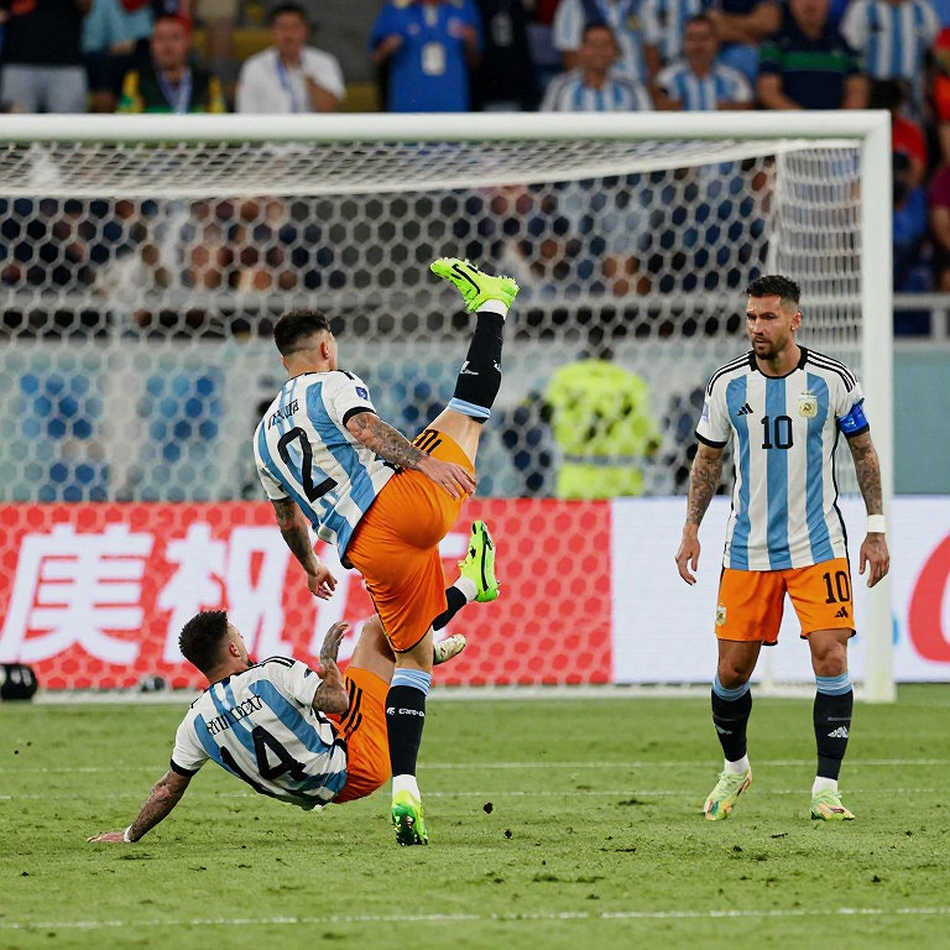
The AFC sanction came in two parts: a three-match ban and a USD 2,000 fine. The club's internal sanction was separate: 50 percent of one month's salary deducted. That second detail reached the public through Saudi journalist Abdulrahman Abaoud, not through an official club statement. The club waited for the referee's report and the AFC decision before deciding its own penalty, which suggests it weighed the degree of blame before fixing the amount.
The practical cost: Summerville misses Al-Sadd, Al-Shamal and Shabab Al-Ahli, sitting out until around the midway point of the league phase. Al-Hilal currently sit third in the West group on three points, level with Al-Ain and Esteghlal, separated only by goal difference.
Nothing here is a transfer or a financial transaction. Summerville was already an Al-Hilal player. The subject is an internal payroll sanction, and the shape of a disciplinary system.
Two authorities, one player
Football's disciplinary order runs on two separate authorities—the confederation and the club. After a red card, the AFC punishes in the language of matches; the club punishes in the language of wages and contracts. Stacking both is not legally odd, because the authorities are distinct. In Summerville's case: three matches from outside, half a month's wage from inside.
The real deterrent is the matches, not the money. USD 2,000 sounds substantial, but disciplinary codes are built so that the primary deterrent is losing playing time. Three continental matches lost means rhythm, form and a fight for your place; USD 2,000 sits beside that almost as a token. The asymmetry is by design.
How big is half a wage?
Here is an honest gap: Summerville's monthly wage is not in the source, so the financial weight of a 50 percent deduction cannot be measured in numbers. What can be described is the structure. Al-Hilal belong to the state-linked investment ecosystem of Saudi football, where half of one month's salary is close to invisible on a club balance sheet. For the club, this is not a revenue event; it is a message event. The fine functions as an internal deterrence device, not a cost-recovery device. The club wants the dressing room to see that no star stands above the rule.
But the outward number says something else. Saudi Pro League salaries are world-class, and against that backdrop half a month is not small for a young import. The blow is light on the club's books and heavy in the player's own ledger. That distance between the two accounts is the real tension in the story.
Koulibaly's scar: the rulebook exists
The most important fact here is a precedent. Two years ago, after the King's Cup final against Al-Nassr, Kalidou Koulibaly received exactly the same punishment: 50 percent of one month's wage deducted. That tells us Al-Hilal runs a codified schedule of fines rather than improvising each time. A veteran centre-back and a young winger, the same figure. Two signals follow: the scale is pre-written, and seniority buys no exemption.
The process is worth noting too. The club did not sanction immediately; it waited for the referee's report and the AFC ruling. That wait implies a due-process step rather than an emotional reaction. And the roughly one-month gap between incident and sanction meant the player remained available domestically, so the disruption was mostly continental.
What winning with ten men means
The most uncomfortable fact is hidden in the scoreline. Summerville went off in the 33rd minute and Al-Hilal still won 2-1 while playing 57 minutes a man down. When a team wins with ten men, the argument that he cost the match collapses. The internal fine is therefore not a response to the sporting result; it is a cultural signal. The club is asserting authority, not recovering damages.
The sporting cost is specific and measurable: three continental matches without a wide attacker. A winger's role is wide, one-on-one attacking; his absence shifts the load onto alternative wide options and may tilt the attacking balance. Al-Hilal's squad depth should absorb that, and the ten-man win is the evidence. Remember also that the AFC Champions League Elite's league-phase format spreads more fixtures across a longer calendar, so a three-match ban spans a wider window with lower per-match stakes than a knockout tie.
Two tiers of credibility
The two halves of this story do not carry equal weight. The AFC sanction—three matches and USD 2,000—comes from an administrative source and stands firm. The wage-deduction claim comes from a single journalist, not an official club announcement. That second element is reported, not confirmed. At big clubs, internal policy often travels through semi-controlled leaks, and choosing the destination of a leak is itself a messaging tactic.
Note also the asymmetry between the two red cards: both players were dismissed, but only one club's internal fine is reported. Al-Hilal's internal standard is stricter than the confederation's baseline, and that is a deliberate institutional position.
The labour question
Players are workers, and this is not an abstraction. Whether a 50 percent monthly deduction breaches any contract or players' union norm cannot be assessed from this source—that is the largest factual darkness here. The club says it has internal rules, and the Koulibaly precedent shows those rules are longstanding. Having a rule and having a fair rule are two different things.
I once went to MA Aziz for a match and came back with a monsoon in my notebook. There, a club fine means a household's monthly arithmetic—what the market costs, what the rent costs. At Al-Hilal the same kind of deduction is nearly invisible in the club's accounts but heavy as a message. Two different labour relationships, one shared word for punishment. The comparison does not make our football a charity case; it shows that a sanction's meaning depends on who imposes it and who absorbs it.
How Bangladeshi readers receive this matters too. Al-Hilal is among the most familiar foreign clubs here, and a parallel memory of the club has formed through late-night viewing, shirts and street-corner arguments. In that memory the club is a museum of stars. In reality it is also an institution whose first asset is its rulebook. This story scratches that picture.
The blind spot
The conventional reading is easy: a star erred, the club punished him, justice was done. Two gaps sit inside it. First, we measure punishment in money while the player measures it in minutes and narrative. His real cost is not half a wage but the risk that a 'troubled import' label sticks in his first year in a new league and culture.
Second, we assume club and star are opposites. In a state-linked investment ecosystem, the star is himself a club asset, and protecting his market value serves the club. A public fine is therefore partly cheap discipline advertising: fear inside the dressing room, and a message outside that nobody is bigger than the club. The market expected a standard ban; the club went one step harder, proving it is stricter than the market. That is the real signal—a league turning its own discipline into brand.
One calculation almost nobody makes: if the club's punishment temporarily hands the player's place to an alternative, and the alternative performs, the player's bargaining position can weaken on return. The long-term cost of discipline is often paid sitting on the bench, not on the receipt for the fine.
What to watch
Three matches are the live test. If Al-Hilal take full points from Al-Sadd, Al-Shamal and Shabab Al-Ahli, the episode will be rewritten as 'the club is bigger than any player.' The club's hand hardens for the next disciplinary case, and Summerville returns with something to prove. If the attack stalls without him and points slip, the argument flips: did the club devalue its own asset?
I write from the corner where the crowd becomes a chorus and the stats become a song. Right now the chorus is split, and the numbers are incomplete—nobody is stating the wage. One truth is clear anyway. When a club fines a worker for a mistake made at work, who is really being disciplined: the player, or the idea that players are bigger than the institution? That answer is not written on the pitch. It sits in the silent gap between the balance sheet and the rulebook.